

Solubility & Taste Masking Service
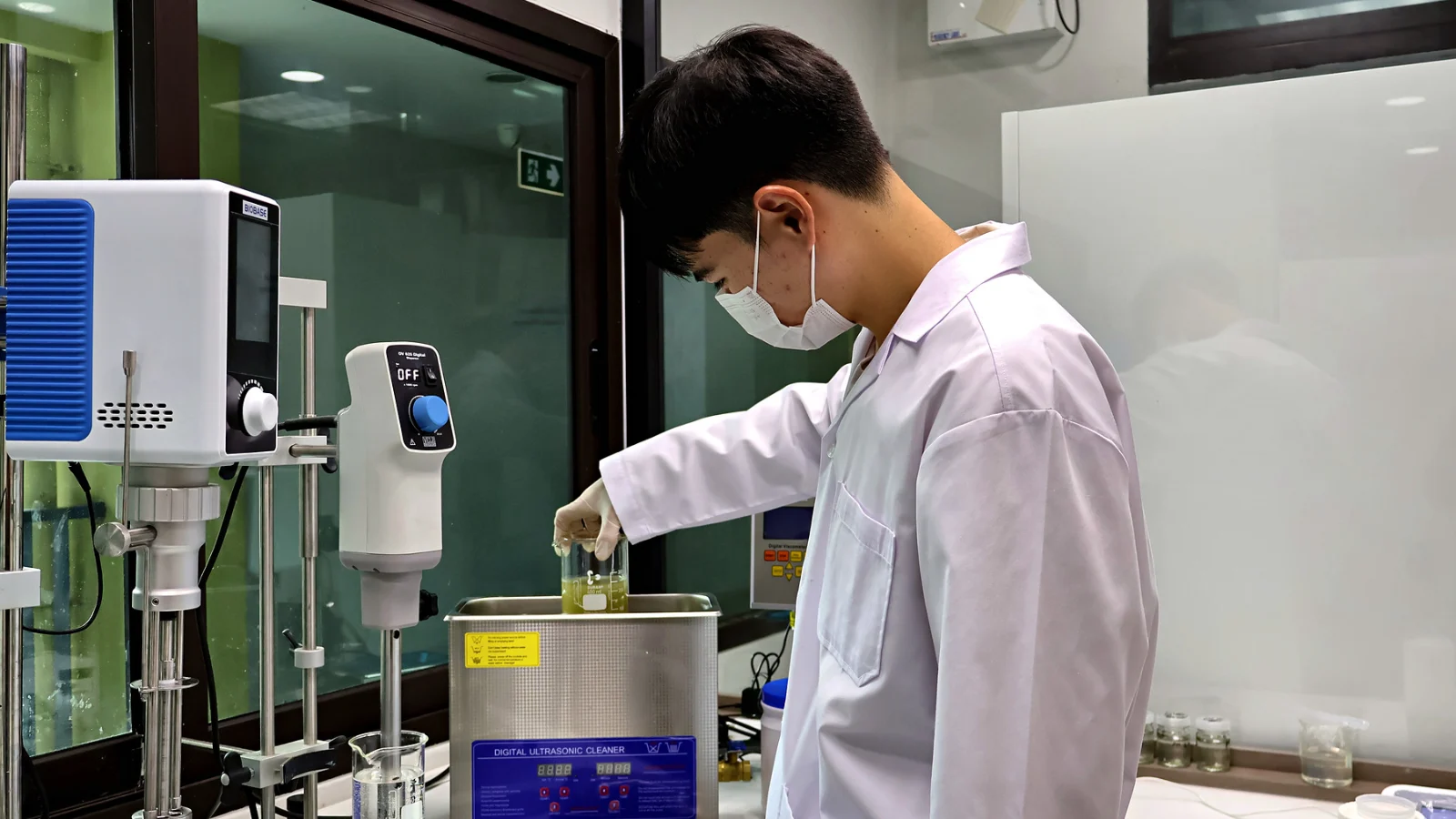
Solving the problems that stop a good formula from selling
Where projects fail most often is not the lab, but the tasting table
We have seen this pattern so often we know it by heart. The formula has passed chemical testing beautifully, the active compound content is on target, every safety test has passed, the documents are complete, and then the project stops when the team sits down to taste it.
Or the other version: everything passes, the product goes on sale, and repeat purchases never come. When customers are asked, it turns out that when they mix it there is sediment at the bottom of the glass, or the smell is so strong they cannot drink it.
Neither problem is minor, because both directly affect repeat purchase, the figure that decides whether a brand survives, and they are why brands withdraw products midway more often than many people think.
This service solves both in the same process, because the techniques used to fix solubility often help with taste at the same time.
Why active compounds are often bitter
The explanation lies in molecular structure.
Many bioactive compound groups, especially alkaloids and phenolics, have structures that bind well to the bitter taste receptors on the tongue. Biologically this makes sense, because bitterness is nature’s warning signal for potent substances.
The practical consequence is that bitterness tends to go hand in hand with potency. The more you raise the active compound percentage to give the product a selling point, the more the bitterness tends to rise with it.
That is why we recommend planning for taste when setting the extract specification, not fixing it after production, because a late fix has fewer options and costs more.
Solubility, which is often discovered too late
There are two kinds of solubility problem that people often confuse.
The first is a compound that does not dissolve in water at all from the start, found in hydrophobic compounds such as curcuminoids and fat-soluble pigments. This is obvious from the very first trial.
The second is harder: the compound dissolves at first and then precipitates later. This may happen after standing for a few hours, after a change in temperature, or after mixing with other ingredients in the formula. Problems of this kind are often discovered only after the first lot has been produced, because laboratory trials are too short to reveal them.
We test for both before delivery, looking at both immediate dissolution and stability after standing for the agreed period.
Our approaches
Coating creates a thin layer around the powder so the compound does not touch the tongue directly while drinking, and the coating breaks down after passing through the mouth. It is a low-cost method well suited to drink powders.
Encapsulation encloses the compound within particles, solving taste and solubility at the same time. It is the most effective option for compounds with both problems, but costs more and requires compatibility testing with the formula.
Taste modifiers reduce bitterness signalling without adding sweetness. They suit formulas that need to avoid sugar or keep energy content low.
Complexation binds the target compound to a carrier molecule with a central cavity, hiding the hydrophobic compound inside. The result is better water solubility and reduced taste at the same time.
Format change In some cases the most economical solution is not to modify the compound but to switch from a drink powder to a capsule or coated tablet, which removes the taste problem entirely at no extra processing cost. We will tell you if our assessment says this is the answer, even if it means less work for us.
The price you pay beyond the service fee
Every method above involves a trade-off, and we always tell you in advance.
The first is a lower active compound percentage in proportion to the material added. If you have already agreed with your end customer to deliver an extract with an active compound content no lower than a certain value, you need to calculate backwards before starting.
The second is additional ingredients on the label. Every substance added must appear on the ingredient label, which may affect a brand positioned on naturalness, or consumers who avoid certain ingredients. We choose materials from the list of permitted food additives (Notification of the Ministry of Public Health (No. 293) B.E. 2548, 2006) and provide the full names that must be used on the label.
The third is a larger amount per serving. As the active compound is diluted, the amount of powder per sachet may need to increase to deliver the same amount of compound, which affects both pack size and cost per unit.
Our workflow
Finding the real cause We start by testing whether the problem comes from the extract itself, from other ingredients in the formula, or from interactions between them. This step matters because often what needs fixing is not the extract but the order of mixing or the pH of the formula, which can be fixed at no extra cost.

Choosing approaches and running comparative trials We trial at least two approaches in parallel so you can see what each one trades for what, and decide on real data rather than descriptions.
Tasting tests For projects where taste is the main issue, we can arrange structured tasting tests, because the opinions of two or three team members are not enough to decide something that affects sales.
Production and confirmatory analysis We produce using the chosen approach, then analyse and compare active compound content and solubility before and after.
What you need to prepare
The problem extract, with the amount used in the formula; an outline of the end formula, so we can see whether other ingredients help or worsen the problem; and a clearly defined acceptable level, such as dissolving clear in room-temperature water within a set number of seconds, or bitterness at a level most testers accept.
All ingredient restrictions, such as no sugar, allergen-free, halal or free from animal-derived ingredients, because these rule out many options, and finding out late means repeating trials.
If the formula will be produced at a supplement contract manufacturer, send the factory’s requirements too, because some have restrictions on raw materials they accept onto the production line.
What you will receive
The modified extract, with samples for tasting tests and trials in the real formula; before-and-after comparison data on both solubility and remaining active compound content; details of the added ingredients with the names to be used on the label; and recommendations for adjusting the end formula if needed.
A testing sequence that avoids going back to fix things again
Solubility and taste-masking work has one particular characteristic: every fix tends to create a new problem. Adding a solubiliser may change the taste, adding a masking agent may change stability, and changing the pH to improve solubility may make the active compound break down faster. Getting the testing sequence right therefore saves many rounds of work.
Our sequence starts by confirming the compound’s basic behaviour: how much dissolves in the medium that will actually be used, at the temperature the product will actually face. This step sounds basic but is often skipped, because many teams test in distilled water at room temperature and then run into trouble when the real formula contains sugar and acid and has to be refrigerated.
The second step is to identify what the problem taste actually is: bitter, astringent, harsh, or an aftertaste lingering in the throat, because each is solved in a different way. Lumping them together as a bad taste and adding flavouring is why so many products end up so sweet that it masks everything and leaves no character.
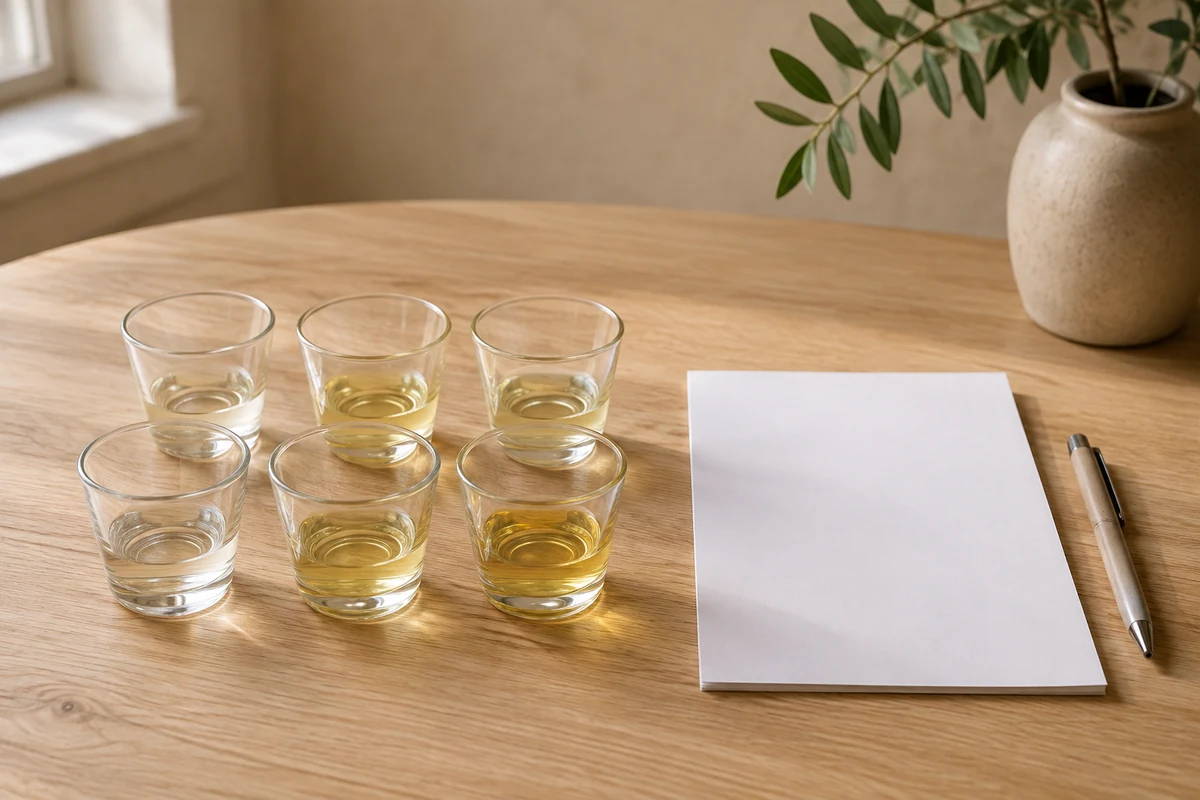
The third step is to test options in parallel, not one after another, because trying one method and waiting for results before trying the next stretches a project out by months unnecessarily. We set up trial sets covering three to four approaches at once, and have tasters assess them in a single round.
The final step is to test the stability of the formula that passed tasting before declaring it finished. A formula that tastes good on day one but changes taste by the third month is not finished, and this is where many projects go wrong, concluding after the first tasting round without any data over time.
What should be defined before starting all of this is the criterion for what counts as a pass, because people judge taste differently, and having three team members taste it and conclude it is fine is not reliable data. Our method is to set a minimum number of tasters, use an evaluation form with a clear scale, and always compare against a reference product already on the market, so that the word better has a real point of comparison, not just a vague feeling.
Frequently asked questions (FAQ)
Q: How much does taste correction reduce the active compound content?
A: It decreases in proportion to the material added. We always report clear before-and-after figures so you can adjust the dose in the formula correctly and do not put the wrong figure on the label.
Q: Can I add sweetness instead?
A: In some cases, but sweetness cannot fully mask bitterness, especially bitterness that lingers in the throat after swallowing. Adding sweetness also limits appeal to consumers who avoid sugar, the fastest-growing group in the health market, so it is usually not the best long-term solution.
Q: How do you test whether it has really improved?
A: We test on two fronts. The first is solubility, which can be measured as a number. The second is tasting by a panel of testers, which we can arrange if you need empirical data to support a decision or for presentations.
Q: Is the modified compound as stable as before?
A: It needs to be tested, because adding certain materials can change the stability of the active compound in either direction. We recommend running stability testing alongside if the product has a long shelf life (International Council for Harmonisation of Technical Requirements for Pharmaceuticals for Human Use, 2003).
Q: How long does it take?
A: We divide the time into two phases: trialling and comparing approaches, and full production after you have chosen an approach. The number of working days for each phase is stated in the quotation.
Next step
Send a sample of your extract and the end formula to [email protected] or LINE @zubbbiotech. We will identify the real cause of the problem and come back to you as soon as possible with at least two solutions, the trade-offs of each, and an indicative price range.
Contact us and request a quotation
Send us the details of your project via Contact us or LINE @zubbbiotech · Tel. +66 89 056 5651 · +66 97 297 1777 · Email [email protected]
References
- Notification of the Ministry of Public Health (No. 293) B.E. 2548 Re: Dietary supplements, as amended. (2006, February 2). Royal Thai Government Gazette, 123(Special Part 18 Ngor).
- International Council for Harmonisation of Technical Requirements for Pharmaceuticals for Human Use. (2003). Stability testing of new drug substances and products Q1A(R2).