

Purification & Concentration Service
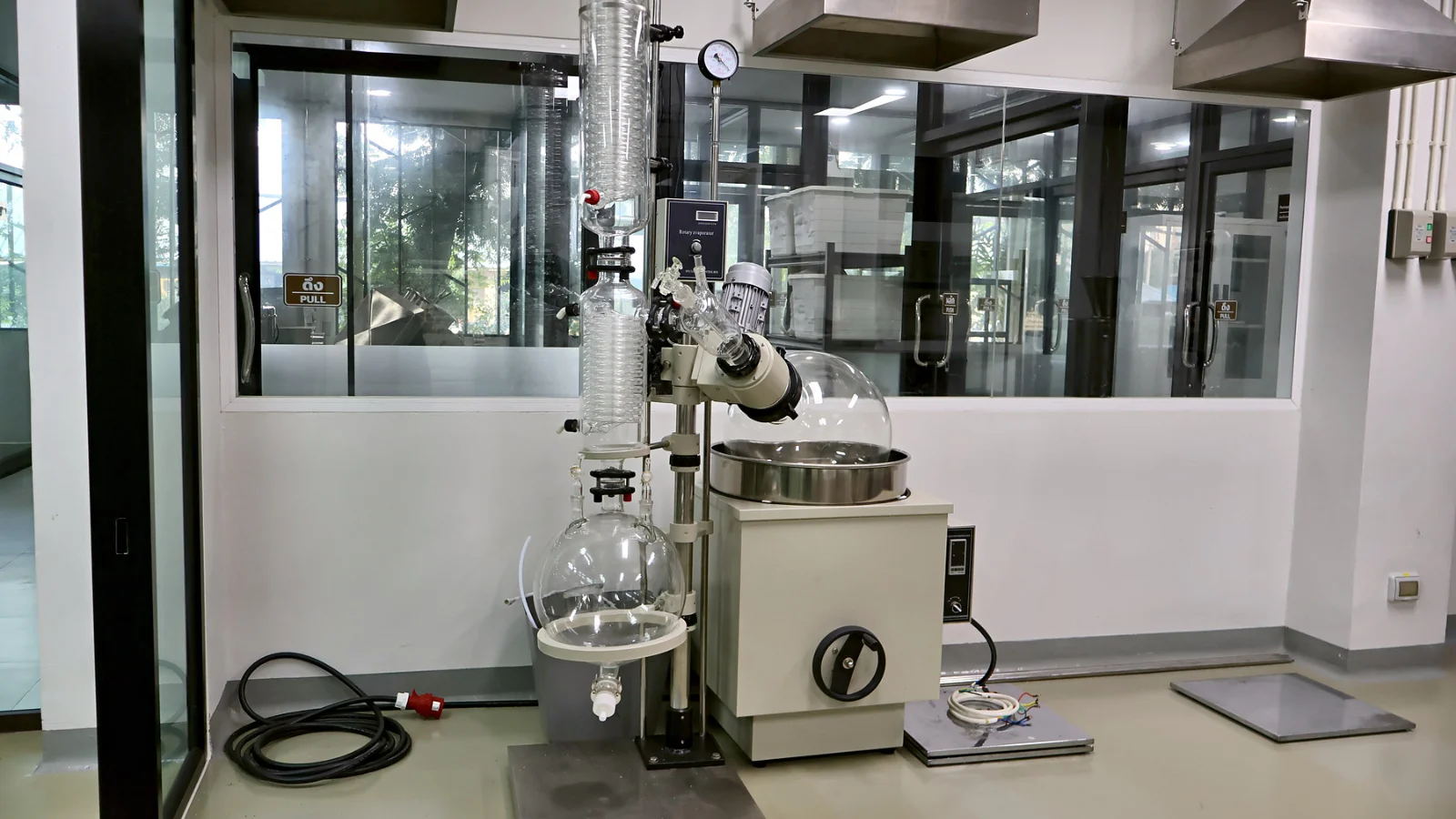
When your existing extract is not yet at specification
What a crude extract contains besides the compound you want
The extract from the first step is not a pure substance but a mixture of everything the solvent could draw out of the plant.
The active compound you want is usually a small proportion of it. The rest is sugars, soluble fibre, minerals, organic acids, chlorophyll and other compound groups that came along. For many product types this is perfectly adequate and there is no reason to do anything more.
But there are situations where a crude extract will not work. The first is products with limited space. A capsule holds only as much powder as it can hold; if the active compound proportion is low, consumers have to take several capsules a day to reach the required amount, which affects both cost and convenience.
The second is formulas that need clarity. Serums and beverages that must be clear turn cloudy immediately if a large amount of crude extract is added. The third is when the end customer has already set a specification, and that specification is higher than a single extraction step can achieve.
This service is the step that brings a crude extract up to specification, and it is the step where costs rise fastest in the entire production chain. That is why we always assess cost-effectiveness first.
Why cost does not rise in a straight line
This is what we would like you to understand before we talk about price.
Raising the active compound content from 5% to 10% and raising it from 90% to 95% both sound like an increase of five points, but they are entirely different levels of work.
The reason lies in the nature of separation. In the early stages, what has to be removed are compounds whose properties are very different from the target, such as sugars versus phenolic compounds, which separate easily because they dissolve in clearly different systems. But as the extract becomes more concentrated, the compounds still mixed in are increasingly similar to the target compound, so separation becomes exponentially harder.
And at every separation step, some of the target compound is lost with the discarded fraction. The more rounds of separation, the greater the loss. The cost per kilogram of the final extract therefore includes both the processing cost and the value of the raw material lost along the way.
So the question to ask is not “How concentrated can it get?” but “How much does our product actually need?”, and we can help answer that based on the product format and the amount that will go into the formula.
The techniques we use, and how we choose
Resin adsorption uses a material that holds the target compound while letting other substances flow through, then elutes the captured compound in a later step. It is the main technique for polyphenols and flavonoids, because it removes sugars and salts well in a single step.
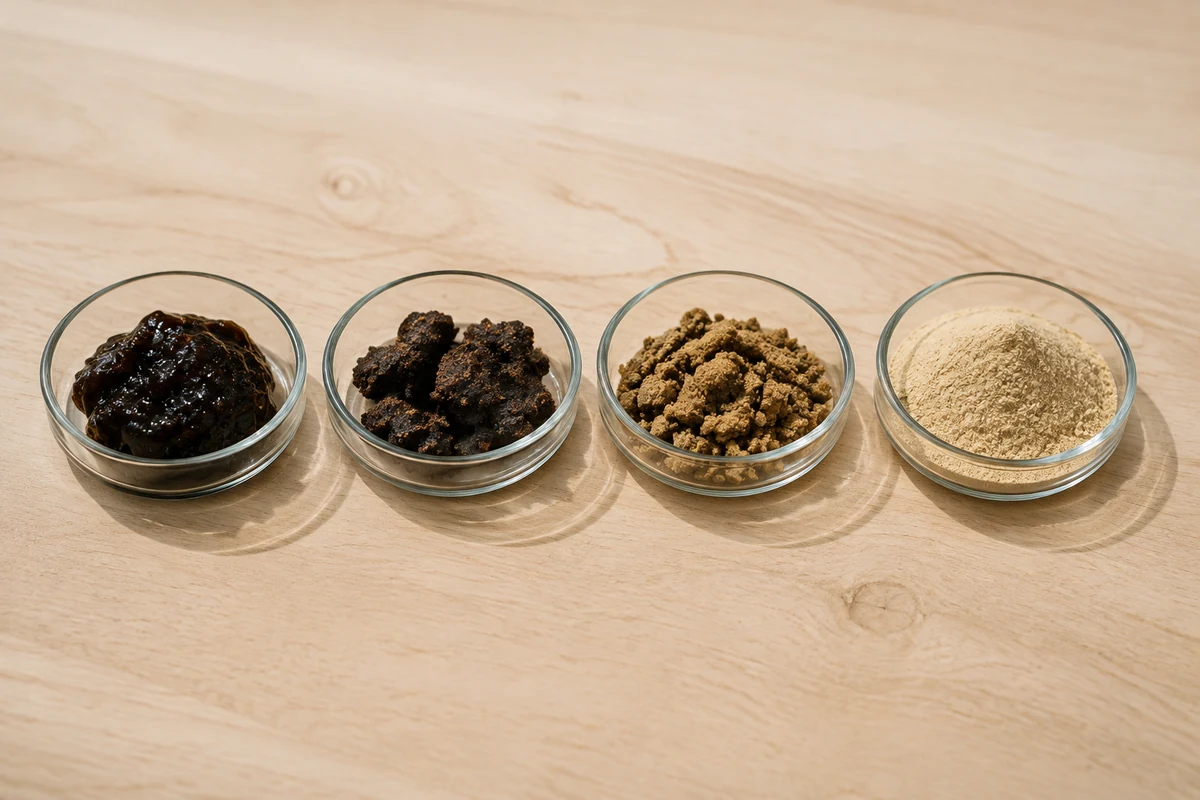
Membrane filtration separates by molecular size without heat. It suits heat-sensitive compounds and separating large molecules from small ones, such as separating polysaccharides from monosaccharides.
Crystallization is used for compounds that can crystallise. It gives the highest purity of all the techniques, but applies to a limited number of compounds and requires a starting material that is already fairly concentrated.
Liquid-liquid partition relies on differences in solubility in a two-phase system to separate compound groups from each other at an early stage. It is often used as a first step before finer techniques.
Vacuum evaporation reduces the amount of solvent or water at low temperature. It usually follows other techniques to concentrate the material before it moves on.
The choice of technique does not depend on which is best in general, but on the properties of the target compound, the impurities present, the target value required and the solvent restrictions the destination market accepts. In many cases we use more than one technique in sequence.
What is separated out may not be waste
In many projects, the fraction that is removed still has value.
A common example is a high-fibre fraction, which can be made into a dietary fibre powder or used as an ingredient in health products. Another is a fraction in which other compound groups have become concentrated as a by-product of removing the target compound, which sometimes becomes a second saleable raw material.
We assess and let you know if we find that a separated fraction has a further use, because in high-cost work, finding a use for every fraction is what makes the overall numbers worthwhile.
Our workflow
Analysis of the starting material We begin by analysing what the current extract contains and in what proportions. This step is essential because we need to know what we are separating from what. Clients who already have analysis results can save time at this stage.
Designing the separation sequence We decide which techniques to use and in what order, and estimate the loss rate at each step. We share these figures before work begins, because they directly affect the cost per kilogram.
Small-scale trial We test with a small quantity first to confirm that the designed sequence gives the expected results and to measure the actual loss rate. This step prevents the damage that would occur if a whole batch were processed and the results did not go to plan.
Full production We follow the sequence validated in the trial, taking in-process samples to track whether the values are moving as expected.
Confirmatory analysis and solvent control We analyse the final values and, if organic solvents were used in the process, confirm that residual levels are within international limits before delivery (International Council for Harmonisation of Technical Requirements for Pharmaceuticals for Human Use, 2021).
What you need to prepare
The starting extract, with its current analysis results if available; the target value you need and the reason, including who set the requirement, because if it comes from your end customer we may be able to help negotiate a more suitable specification.
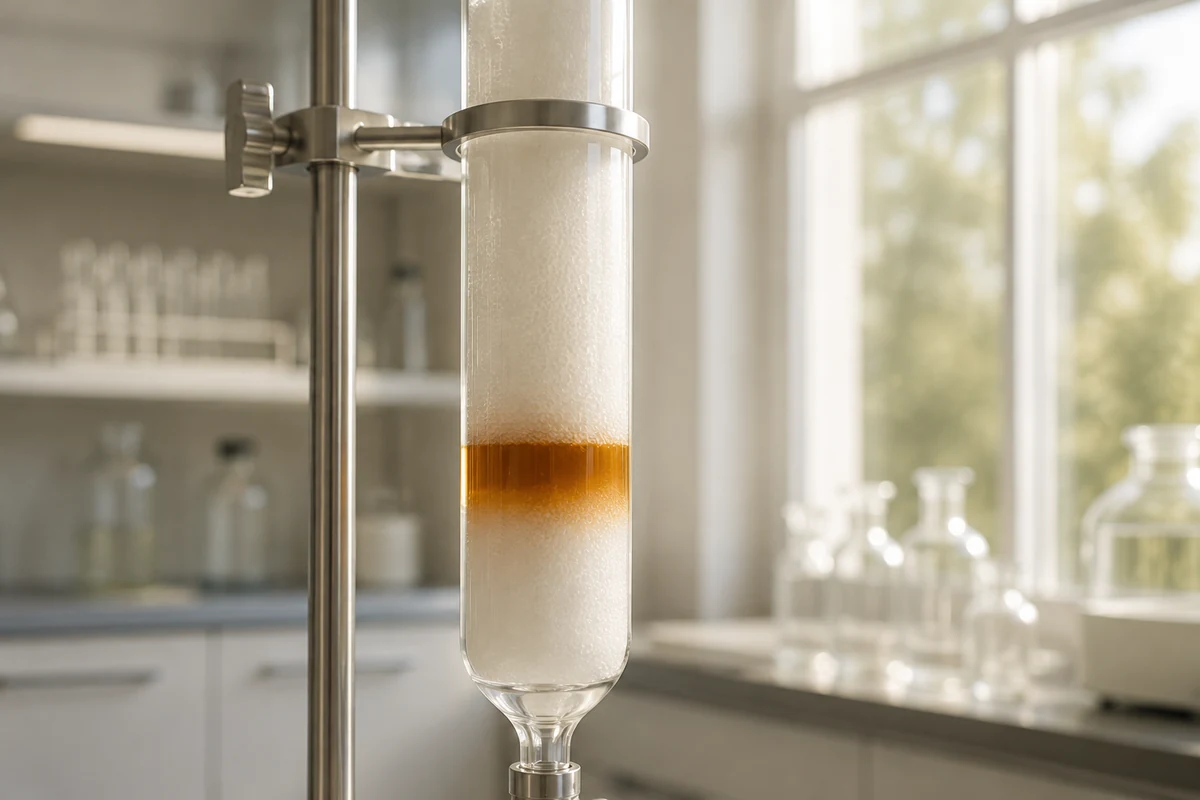
The minimum starting quantity per run, which we will confirm after assessing the job, and any restrictions on usable solvents set by the destination market, because some markets do not accept certain solvent groups even after they have been completely removed.
What you will receive
Extract purified to the target value; before-and-after analysis reports so the change is clearly visible; a report of process losses for calculating real costs; and a recommendation on what value best suits your product.
Signs that it is time to purify
Some clients ask how they can tell they have reached the point of needing this service. We use four signs to decide.
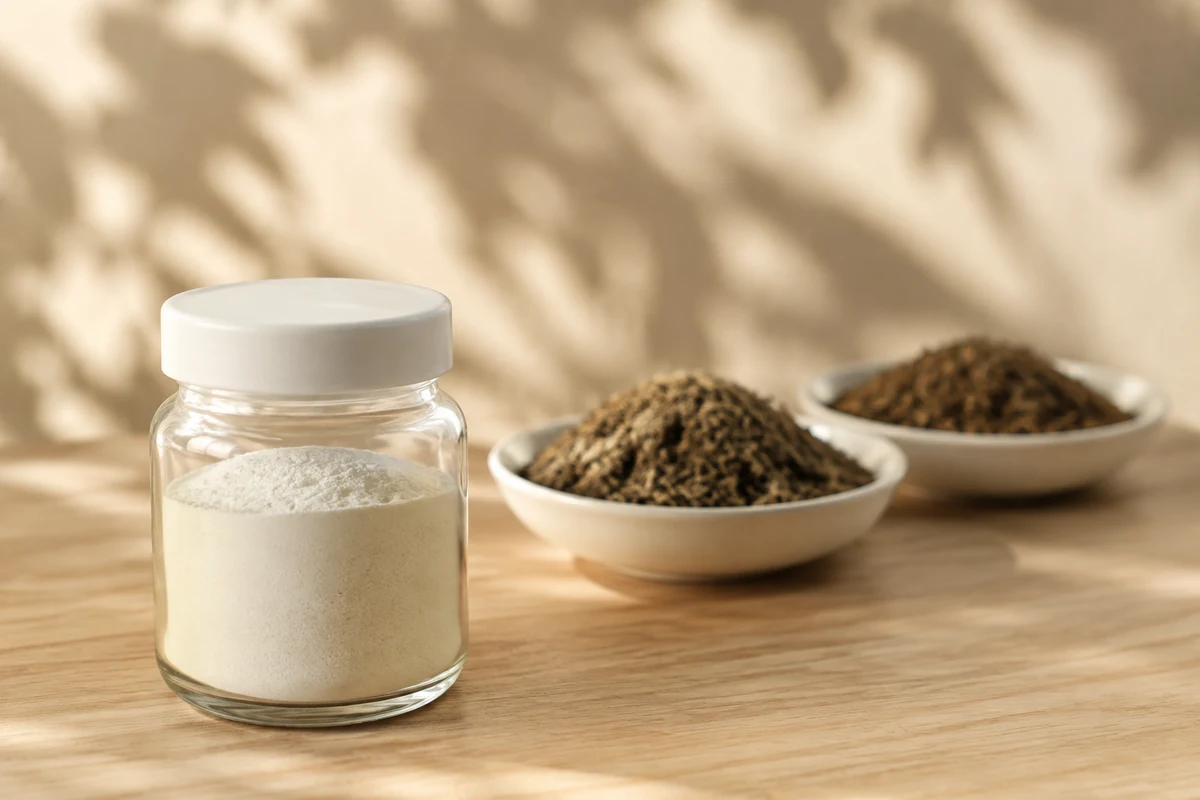
Sign one: a buyer has sent a specification and yours does not meet it This is the clearest sign and needs no interpretation. The only remaining question is whether the cost of raising the value is worth the value of the deal.
Sign two: the amount needed in the formula exceeds what the product format can hold For example, one gram of powder per capsule is needed to deliver the required amount of compound, which is more than a standard capsule can hold. There are two options here: make it more concentrated, or have consumers take several capsules per serving, and the latter affects both cost and convenience.
Sign three: the formula is cloudy or has sediment because so much extract has to be added This is common in beverages and serums. The non-target substances in a crude extract are what cause the cloudiness, and the more you add the cloudier it gets. Increasing concentration reduces the amount needed and the cloudiness at the same time.
Sign four: shipping and storage costs are disproportionately high because most of the weight you pay to ship is material you do not need. For export work, the shipping cost per kilogram is high enough that concentration can pay for itself through shipping savings alone.
If none of these signs apply, we recommend continuing with the crude extract, because it is the more economical option and the secondary compounds it retains sometimes help with stability.
The purity level the destination market actually needs
The question we always ask back when a client requests the purest extract possible is: pure for what purpose? The right level of purity is not set by what the equipment can do, but by what the destination needs and is willing to pay for.
For dietary supplements in capsule or tablet form, an extract standardised so that the active compound falls within a defined range is usually sufficient. Pushing purity higher adds cost without any difference consumers can perceive. For beverages or clear products, purity matters more, because the unwanted substances are often what cause cloudiness, sedimentation or colour change during storage. In cosmetics, the criteria are usually odour, colour and non-irritation rather than the purity figure on paper.
The cases that genuinely require high purity are when the compound will be used as a reference standard for analysis, when it must be submitted to a regulatory authority as a new ingredient, and when the end use is research that must eliminate all confounding variables. These three cases can accept much higher costs, because the quantities used are small and the value per unit is high.
What we always recommend is to set the criteria based on the end buyer’s requirements, not on a figure that sounds impressive. Many clients come to us with requirements far higher than necessary, and when we ask who set the figure, the answer is often no one; they simply assumed higher was better. Aligning the criteria with reality in these cases saves more money than any price negotiation.
Frequently asked questions (FAQ)
Q: Is a higher concentration always better?
A: Not necessarily. Some formulas have solubility, taste or stability constraints that make an overly high value harder to use, and some highly purified compounds are less stable than those still surrounded by secondary compounds. We always consider the end product format.
Q: If you raise it from 20% to 50%, how many times more does it cost?
A: There is no fixed formula, because it depends on how difficult the impurities are to separate. Some target compounds are easy to raise because their properties differ clearly from what is mixed with them; others are very difficult. We give figures only after analysing the starting material, never based on the plant name alone.
Q: What happens if the percentage does not reach the target?
A: We share the expected achievable range after the trial run. If we assess that it will not reach your target, we tell you before full production starts and propose options: lowering the specification, changing the starting raw material, or accepting a higher cost.
Q: Can I send an extract from another manufacturer for purification?
A: Yes, but we need information on how that extract was produced and which solvents were used, because this affects the choice of technique and the documents we can issue.
Q: How long does it take?
A: It depends on the number of steps required and the target value. If a trial run is needed first, it will take longer. The number of working days is stated in the quotation.
Next step
Send your current analysis results and the value you need to [email protected] or LINE @zubbbiotech. We will come back to you as soon as possible with an assessment of feasibility, the expected loss rate and the cost per kilogram of the final extract.
Contact us and request a quotation
Send us the details of your project via Contact us or LINE @zubbbiotech · Tel. +66 89 056 5651 · +66 97 297 1777 · Email [email protected]
References
- International Council for Harmonisation of Technical Requirements for Pharmaceuticals for Human Use. (2021). Impurities: Guideline for residual solvents Q3C(R8).