

Prototype Formulation Service
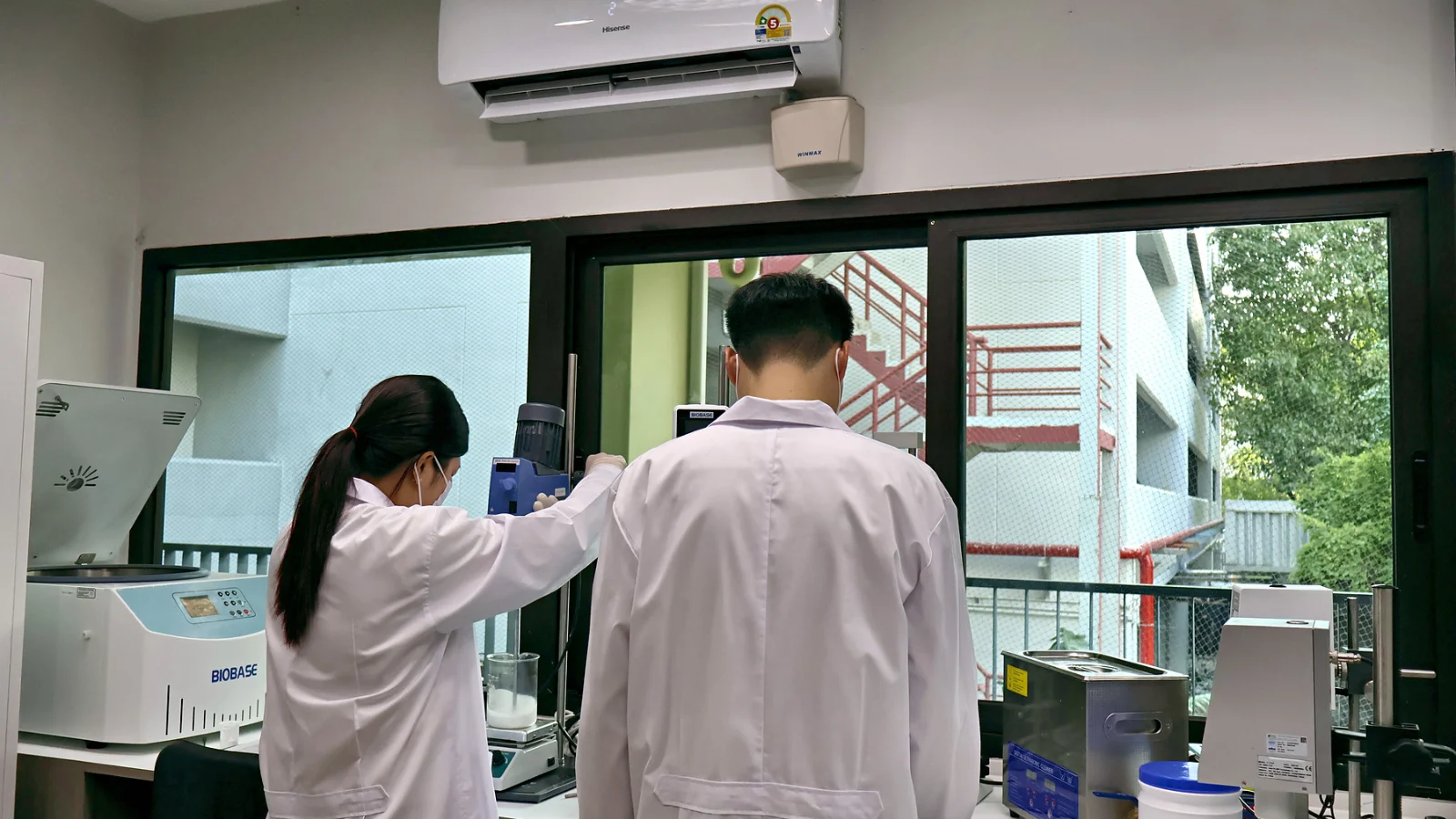
Turning your extract into a product people can hold
The gap between a good extract and a product that sells
There is one situation we see often with clients who have successfully developed their own extract.
The extract has been analysed, the active compound percentage is on target, the documents are complete and it is ready to sell. But when they talk to a supplement contract manufacturer or a buyer, the first question they hear is: “So what can it be made into, how much goes in, and do you have a sample to show?”
Documents cannot answer that question, because what buyers want to see is the real thing: something they can hold, taste or apply, and a clear picture of how it would sit on the shelf.
This service closes that gap by turning your extract into a prototype product that you can use for market testing, for presenting to buyers, and as a starting point for the factory that will carry out full production.
Who uses this service, and what for
Brand owners about to launch a new product use prototypes to test with their target group before committing to a large production run, which costs incomparably less than producing at scale and then finding the product does not sell.
Raw material producers who want to sell their extract use prototypes as a sales tool, because handing a buyer a bottle of brown extract is far less effective than handing over a finished product that uses it and saying, “This is what you can make.”
Owners of local raw materials who are not yet sure what to make such as community enterprises or businesses with crops in hand, use this service to find out which product format suits their raw material.
Marketing teams that need to present a concept use prototypes to support presentations to management or investors, which works better than slides alone.
Product formats we develop
Supplements covering capsules, compressed tablets, drink powders, direct-to-mouth powders, ready-to-drink beverages and jellies. Each format has different constraints: capsules have limited space and so need a concentrated extract, while drink powders need taste and solubility solved first.
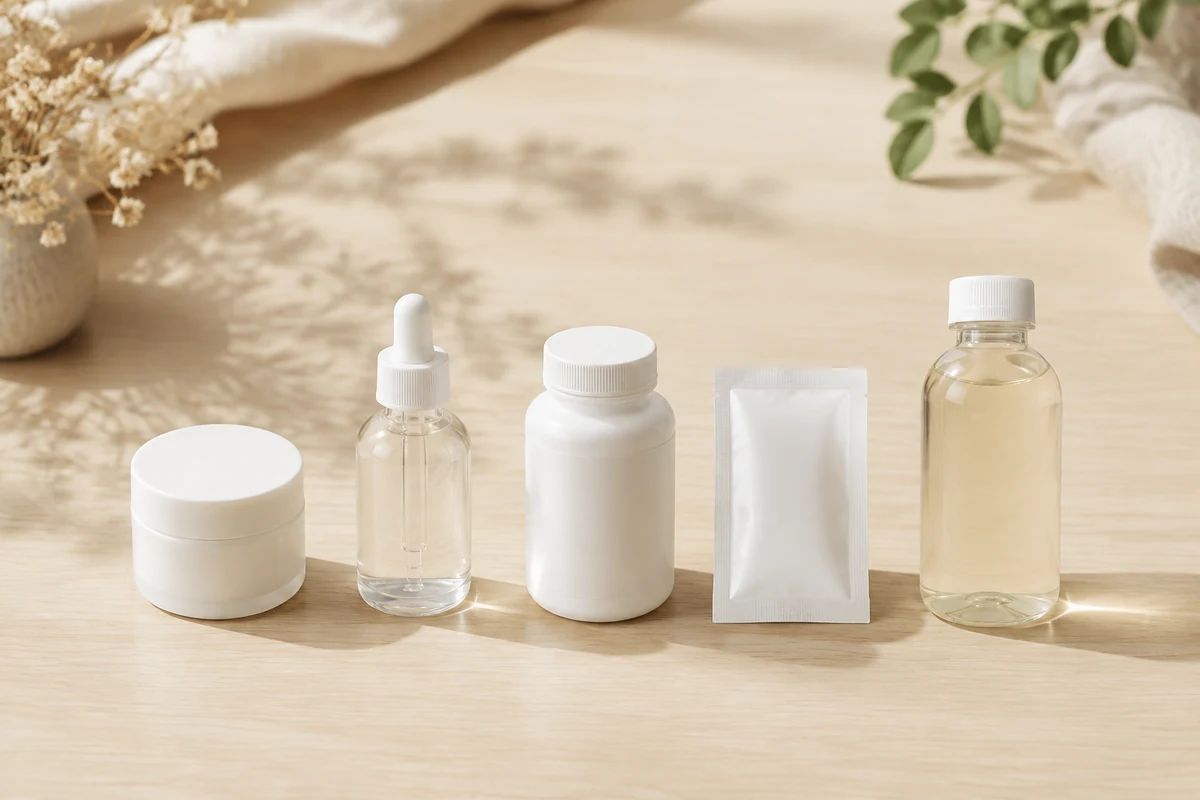
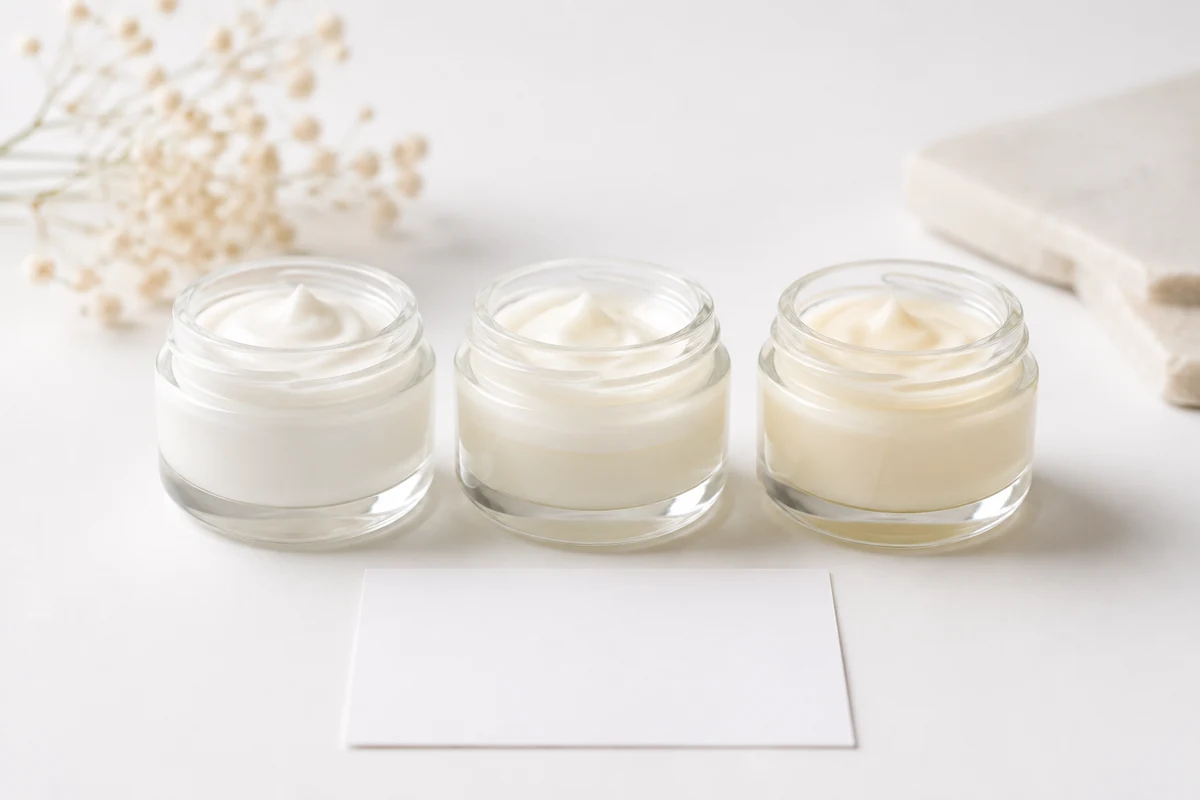
Cosmetics covering serums, creams, lotions, gels, masks and cleansing products. This group faces greater challenges with stability and colour than supplements, because consumers see the product texture directly.
Herbal products which have their own legal framework, so the formula must be designed to comply from the start (Herbal Products Act B.E. 2562, 2019).
How we work
Defining the brief We start by discussing who the product is for, at what price range, through which channel and against what competition, because these points set every constraint on the formula. A formula sold through pharmacies has different requirements from one sold online, and a formula priced at two hundred baht uses a different grade of ingredients from one priced at two thousand.
Setting the extract dose in the formula This decision has to balance three things: a dose supported by data, a dose that does not cause problems with taste, colour or odour, and a dose whose cost stays within the planned selling price. We present the options side by side with the cost per unit.
Choosing the other ingredients including processing aids, preservatives, flavourings and ingredients with a marketing role, selected from the lists the law permits for that product type (Notification of the Ministry of Public Health (No. 293) B.E. 2548, 2006).
Formula trials and adjustment carried out over several rounds, each testing physical characteristics, preliminary stability and acceptance by testers.
Prototype production in a quantity sufficient for market testing and presentations, packed in containers close to the real thing.
Formula documentation which is the most valuable thing you get from this service, because it is the document you can hand straight to a supplement contract manufacturer (Original Equipment Manufacturer, OEM) or a cosmetics factory to continue production.
Where formulas usually fail, and what we check first
Colour stability Natural extracts can change colour during storage, especially when exposed to light or high temperatures. A formula that looks attractive on the day it is made may look unappealing by the third month. We run preliminary tests to see the trend, then recommend full stability testing if the product is to have a long shelf life (International Council for Harmonisation of Technical Requirements for Pharmaceuticals for Human Use, 2003).
Taste and odour that change over time This is a common problem with drinkable products, because the extract reacts slowly with other ingredients in the formula.
Phase separation and sedimentation These are common in beverages and clear serums, and can often be solved by making the extract water-soluble first rather than fixing the formula.
Costs that escalate in real production A formula that uses rare ingredients or complex processing steps may work at prototype scale, but its cost per unit in real production can end up higher than planned. We estimate costs from the formula design stage onwards.
Formulas the destination factory cannot produce because its machinery cannot handle them or the steps do not match its existing production line. That is why we ask from the start whether you already have a destination factory in mind.
What you need to prepare
The extract to be used, with its analysis results and active compound content. If you do not yet have the extract, we can produce it for you within the same project.
A clear marketing brief: target group, selling price range and sales channels; the product format you want, or let us propose options; any ingredient restrictions, such as halal, gluten-free or free from animal-derived ingredients; and details of the factory that will produce it, if you already have one in mind.
What you will receive
Prototype products in the agreed quantity; formula documentation listing all ingredients and proportions in full; manufacturing steps detailed enough for a factory to follow; preliminary stability test results; estimated cost per unit for real production at several volume levels; and a list of documents needed to register that product.
What a prototype can tell you, and what it cannot
So that you use the prototype correctly, we explain its scope clearly from the outset.
A prototype can tell you whether the formula actually works, what its appearance and texture are like, whether its taste and odour are acceptable, how the target group reacts, and roughly what it will cost.
A prototype cannot tell you whether the product will remain stable throughout its intended shelf life, because that requires stability testing that runs in real time. Nor can it tell you whether industrial-scale production will give the same result, because large machinery behaves differently from small-scale mixing.
The second limitation is why we recommend a trial batch with the factory that will do the real production before ordering a large batch, rather than jumping straight from prototype to full-scale production.
The most cost-effective sequence
From the projects we have seen, this sequence costs the least and allows the fastest decisions.
Start with a small number of prototypes to confirm that the formula works and the taste passes. Then test them with your real target group before investing anything more. Once that passes, run stability testing alongside preparing the registration documents. Next, make a trial batch at the real factory to confirm the production line can handle it, and finally order the first batch for sale.
A common mistake is skipping the target-group test because of confidence in the formula, only to discover the market is not responding after several thousand units have already been produced.
From prototype to real production: what changes and what to prepare
A prototype that has passed tasting and preliminary testing is not yet a formula that can go straight into production. Between those two points lies another set of work that many projects do not allow time for, and it becomes the reason launch dates slip.
The first thing that changes is the scale of the forces involved. A laboratory mixer and a production-line mixer apply very different shear. A formula that blends easily in a beaker may separate in a large tank or, conversely, may be overworked and lose its structure in a machine that is too powerful. A trial at intermediate scale before going to full capacity is therefore a step that cannot be skipped.
The second thing that changes is how long the ingredients are in contact. In the laboratory everything is finished within a few hours, but on a real production line the bulk may sit in a tank for several hours before reaching the filling machine, which is long enough for some reactions to occur. A formula that has never been tested under holding conditions can always surprise the production team.
The third thing that changes is the raw material source. Prototypes are usually made from carefully selected samples, whereas real production uses commercial raw materials that vary from lot to lot. A good formula is one that still works when the raw material is at the lower and upper edges of its specification, not only when it is mid-range. We therefore recommend testing the formula with two to three different raw material lots before finalising it.
What needs to be prepared alongside this is documentation: a master formula specifying the order of addition and the conditions at every step, acceptance criteria for each in-process stage, and test methods for the finished product. This set of documents is what allows a factory to reproduce the product consistently, and it is the first thing a contract manufacturer will ask for when you hand over the work.
Frequently asked questions (FAQ)
Q: Who owns the resulting formula?
A: You do, as agreed in the contract, and we do not use a formula developed for one client with any other client. For clients who want extra assurance, we put a confidentiality agreement in place before work begins.
Q: How many prototype units can you produce?
A: As agreed. Generally it is enough for target-group testing and presentations. If you need larger quantities for a real market trial, we recommend producing that batch with the factory that will handle real production.
Q: Can I send the formula straight to an OEM factory to produce?
A: Yes, that is the purpose of the formula documentation we prepare. However, each factory has different machinery and constraints, so the formula usually needs minor adjustment to fit the actual production line, and we can help coordinate this.
Q: Can you formulate using an extract from another manufacturer?
A: Yes. We do not require you to use our extract. What we need is the analysis results and technical data for that extract, so that the formula can be designed correctly.
Q: Do you help with registration?
A: We prepare the list of required documents and handle the raw material side of the documentation. Submission in the product’s name is the responsibility of the applicant, and we can coordinate with your consultant.
Q: How long does it take?
A: Simple formulas take the least time, and longer for formulas that need stability or taste problems solved. We divide the work into phases with checkpoints so you can see progress along the way, and the number of working days is stated in the quotation.
Next step
Tell us what kind of product you want, who it is for and at what price, at [email protected] or LINE @zubbbiotech. We will come back to you as soon as possible with product format options, a recommended extract dose, a cost estimate and an indicative fee range for formula development.
Contact us and request a quotation
Send us the details of your project via Contact us or LINE @zubbbiotech · Tel. +66 89 056 5651 · +66 97 297 1777 · Email [email protected]
References
- Notification of the Ministry of Public Health (No. 293) B.E. 2548 Re: Dietary supplements, as amended. (2006, February 2). Royal Thai Government Gazette, 123(Special Part 18 Ngor).
- Herbal Products Act B.E. 2562. (2019, April 30). Royal Thai Government Gazette, 136(Part 56 Kor), 1–29.
- International Council for Harmonisation of Technical Requirements for Pharmaceuticals for Human Use. (2003). Stability testing of new drug substances and products Q1A(R2).