

Plant Legal Status and Access and Benefit-Sharing (ABS) Service
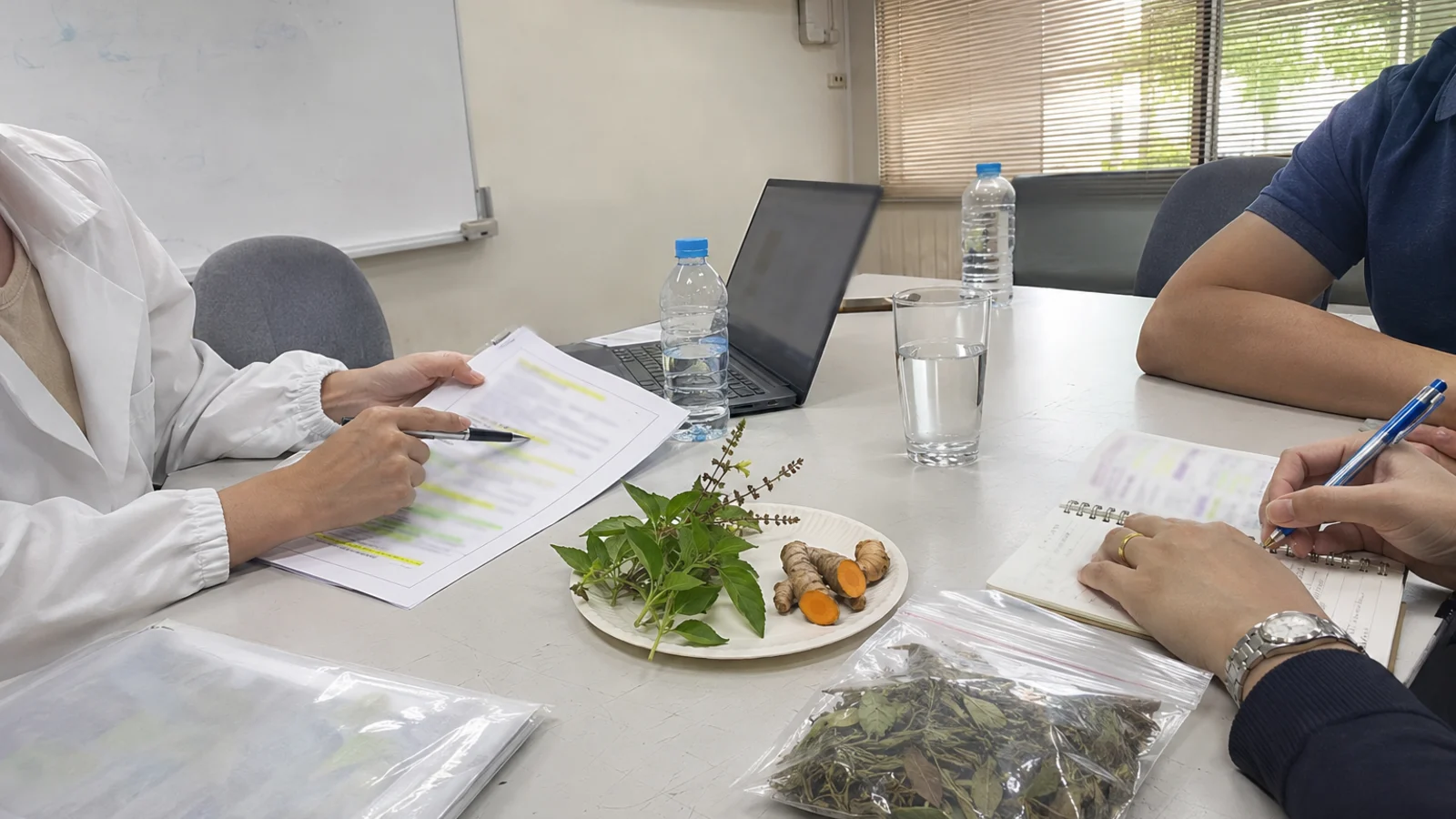
What you need to know before you invest, not after production is finished
A topic almost nobody in the Thai extract industry writes about
If you search for information on using Thai plants to make extracts commercially, you will find a fair amount on extraction methods, standards and product registration.
What you will hardly find at all is information on the right to use the plants.
Many people assume that once they have bought raw material legitimately, they can do whatever they like with it. That holds for most plants, but not all of them.
There is a group of plants that are controlled under Thai law, and there is an international framework on access to biological resources and benefit-sharing to which Thailand is a party. It requires that commercial use of biological resources and traditional knowledge be authorised and that benefits be shared fairly and equitably (Secretariat of the Convention on Biological Diversity, 2011).
For brands that sell only in Thailand, this may never have come up. But for brands that intend to export, especially to Europe and Japan, importers often ask for documents confirming this before agreeing to buy.
Why this has become a real risk
The first risk is that the deal ends before it starts When an importer asks for documents and you do not have them, the deal often ends there. Not because the product is poor, but because they cannot take on the legal risk in their own country.
The second risk is wasted investment If you invest in developing an ingredient from a restricted plant and only later find that it cannot be used commercially, or that benefit-sharing must first be negotiated with a community, negotiations that begin after you have already invested put you in a much weaker position than starting at the outset.
The third risk is reputation Cases of foreign companies patenting local plants and traditional knowledge without permission attract media attention, and Thai brands that do the same to communities in their own country are at no less risk.
The fourth risk is a failed product application because some plants cannot be used in certain product types, or can be used only with quantity conditions (Notification of the Ministry of Public Health (No. 293) B.E. 2548, 2006; Herbal Products Act B.E. 2562, 2019).
What this service checks
The plant’s status in each product category We check whether the plant you intend to use is permitted in dietary supplements, cosmetics or herbal products, because the same plant may be allowed in one category but not in another.

Quantity conditions and permitted plant parts Many plants can be used but with conditions, such as only certain parts of the plant or no more than a set amount, which directly affects formula design.
Controlled plant status We check whether the plant is on a control list under any law and, if so, what needs to be done.
Status under the access and benefit-sharing framework We assess whether using the plant and any related traditional knowledge requires authorisation and, if it does, which agencies and which communities must be involved.
Requirements of the destination market We check whether the market where you will sell has additional requirements for documents certifying origin, as some markets are much stricter than Thai law.
Relevant patent status We carry out a preliminary check for patents that could affect your planned use of the compound or process.
When to check
The shortest answer is: before you spend money.
In practice, the best point is immediately after you have chosen your target plant, but before you order raw material or start formulation. At that point, changing plants costs nothing.
The worst point is after production is finished and you are about to submit documents, because the remaining options are few and all of them are expensive.
For research and development of new ingredients, the check should be done at the plant selection stage, because discovering a restriction after months of research is a loss that a few days of checking would have prevented.
What this service can and cannot do
It can check status, assess risk, identify what needs to be done and with whom, prepare documents relating to the raw material and process, and coordinate with the relevant agencies and communities.
It cannot give binding legal opinions, which is the work of a licensed legal adviser. We work with your legal adviser or can recommend specialists, and we always say plainly when an issue is outside our area of expertise.
Why this is not just a burden but an opportunity
The perspective we want clients to see is that getting this right is not only about avoiding risk, but about building an advantage.

When you have documents confirming that you use biological resources lawfully and share benefits with the source community, you have something most competitors do not, and something buyers in sustainability-focused markets are looking for.
In addition, a relationship with the source community based on a fair agreement gives long-term security of raw material supply that occasional trading cannot, and it is a story you can communicate to consumers with real weight, without embellishment.
What you need to prepare
The name of the plant you will use, including the scientific name if known, because many Thai names can refer to different species, and their legal status may differ.
The plant part to be used; the source of the raw material, whether cultivated or wild-harvested, which is a very important distinction in this legal framework; the destination product type; the market where you will sell; and whether you are using traditional knowledge or information from any community as a starting point.
What you receive
A legal status report on the plant checked, stating which product categories it can be used in and under what conditions; an assessment of whether additional authorisation is required; an action plan if authorisation is needed, with an estimate of the time required; suggested alternatives if the chosen plant is restricted; and a list of the documents destination markets commonly ask for.

Documents overseas buyers are starting to ask for, and how to prepare them in advance
What has changed in the past few years is that questions about a plant’s origin have moved from the nice-to-have list to the must-have-before-discussing-price list, especially with buyers in Europe and Japan who have their own internal company requirements. Thai exporters who prepare this set of documents in advance therefore get into negotiations clearly faster than their competitors.
The first set of documents is evidence of where the plant came from, down to the plot or collection area, with the name of the grower or collector and the harvest date. This information must be recorded when the raw material is received, because it cannot be reconstructed later. Manufacturers who buy raw material through several layers of middlemen without recording anything are the ones who cannot answer this question when asked.
The second set is confirmation of the plant species by scientific name, stating which part is used and, where possible, with evidence of identity testing, not just the seller’s word. This is especially important for plants that share the same Thai name with several other species, of which there are quite a few among Thai herbs.
The third set is evidence that the plant is not on a protected list or an international trade control list, or, if it is, that there is a valid permit. Checking this takes little time if done before the project starts, but becomes a very big problem if discovered after production is finished and the goods are already at the port.
The final set relates to access and benefit-sharing, which is required when the plant comes from the wild or when traditional knowledge was the starting point for development. Many buyers ask for this even when the law in their country does not yet require it, because it is part of their own company’s sustainability policy. Having this set ready is therefore a commercial advantage, not just compliance.
Frequently asked questions (FAQ)
Q: Do plants grown on our own farm need checking too?
A: Yes, they should be checked, because the issue is not ownership of the plants but whether the species is controlled and whether its use relates to any community’s traditional knowledge. Owning the plot does not answer either question.
Q: Are plants that are widely sold on the market already safe to use?
A: Not always. The fact that a plant is easy to buy does not mean it can freely be developed into a commercial extract and protected, especially when that development is based on traditional knowledge of its use.
Q: What happens if the check finds the plant cannot be used?
A: We propose alternatives, which may include switching to another plant that provides the same compound group, changing the plant part used, changing the destination product type, or obtaining the proper authorisation, depending on the nature of the restriction.
Q: Does obtaining authorisation take long?
A: It depends on the case. Some cases need only documentation, while others require negotiation with communities and agencies, which takes several months. We assess and give you a time frame as soon as the check results are out.
Q: Who is this service most suitable for?
A: Those about to develop an ingredient from a Thai plant nobody has worked with before, those about to export to strict markets, and those using endemic local plants connected with community knowledge.
Next step
Send the name of the plant you will use, the part used and the market where you will sell to [email protected] or LINE @zubbbiotech. We will check the status and send back a report with recommendations as quickly as possible. If you are about to start a new project, checking before you spend money is the investment with the highest return.
Contact us and request a quotation
Send us the details of your project via Contact us or LINE @zubbbiotech · Tel. +66 89 056 5651 · +66 97 297 1777 · Email [email protected]
References
- Notification of the Ministry of Public Health (No. 293) B.E. 2548 Re: Dietary supplements, as amended. (2006, February 2). Royal Thai Government Gazette, 123(Special Part 18 Ngor).
- Herbal Products Act B.E. 2562. (2019, April 30). Royal Thai Government Gazette, 136(Part 56 Kor), 1–29.
- Secretariat of the Convention on Biological Diversity. (2011). Nagoya Protocol on access to genetic resources and the fair and equitable sharing of benefits arising from their utilization to the Convention on Biological Diversity. United Nations.
"*" indicates required fields