

Liposomal and Nano Encapsulation Service
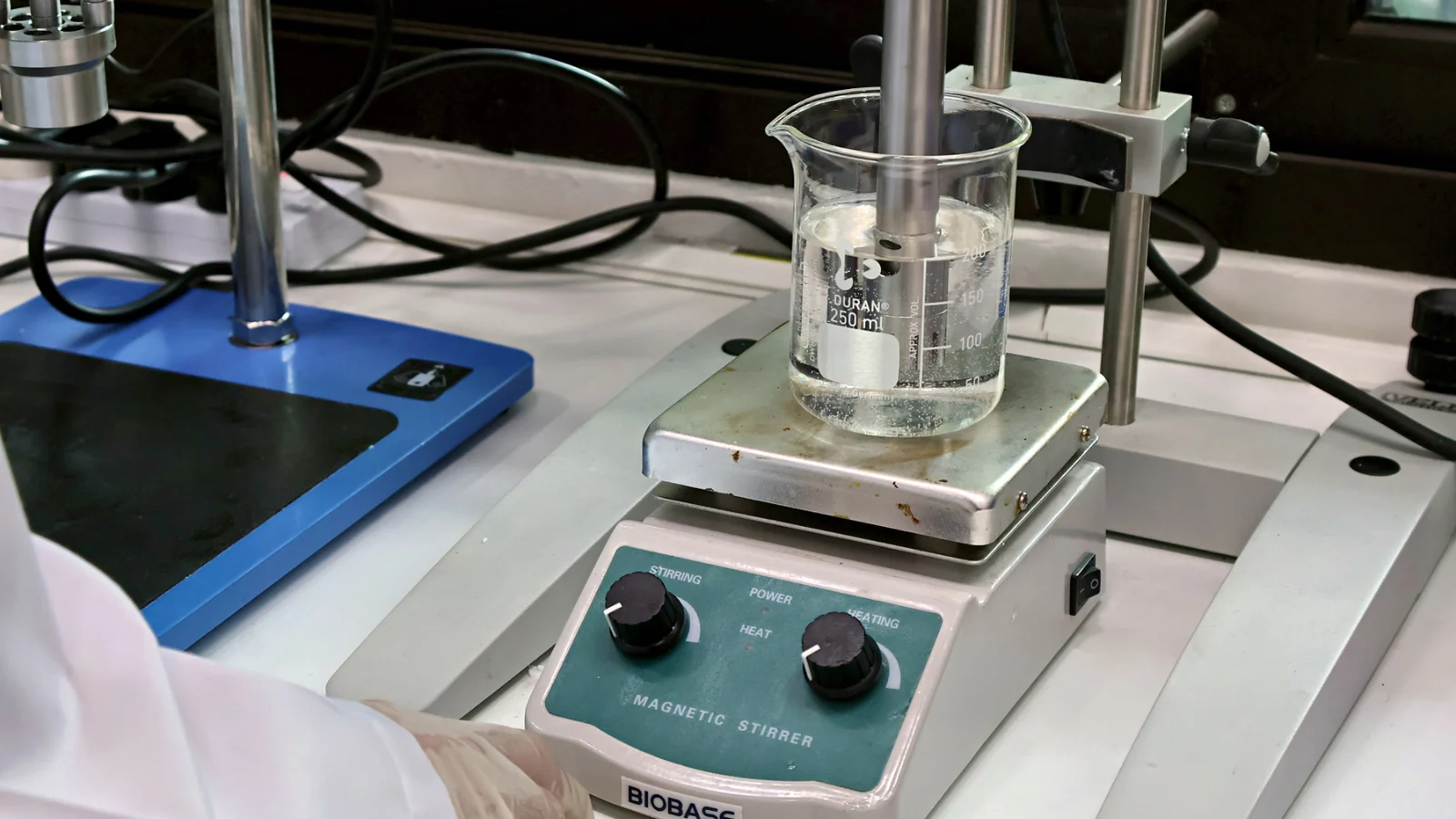
A technology to use when there is a reason
A word that sells, and the question to ask first
Encapsulation technology has been widely used as a selling point in the supplement and cosmetics market in recent years, to the point where it is often added to a formula because it is a word that sells rather than because the formula really needs it.
We provide this service, and at the same time we will tell you plainly whether your project actually needs it. The reason is simple. Added cost that solves no problem puts a brand at a disadvantage in the long run, especially when competitors who do not use the technology sell at a lower price and consumers cannot tell the difference.
This article is therefore split into two equal parts. The first explains how the technology works and what problems it genuinely solves. The second tells you when you should skip it.
What is a liposome?
A liposome (Liposome) is a small spherical particle formed by the arrangement of phospholipids (Phospholipids), fat molecules with two sides, one water-loving and the other water-repelling.
In water, these molecules arrange themselves with the water-loving side facing out and the water-repelling sides facing each other, forming a double layer of lipids (Lipid Bilayer) that curves into a sphere around a watery core.
This structure has a useful practical property: it can carry water-loving substances in the core and water-repelling substances in the lipid layer, so it works with a wider range of substances than other encapsulation systems.
The term nano encapsulation (Nano Encapsulation) is broader, covering the encapsulation of substances with many types of material at small particle scale, of which liposomes are one. Using the two terms interchangeably in the market is not always wrong, but technical documents should state clearly which system is used.
Problems this technology genuinely solves
Water-insoluble substances This is the most common problem and the best reason to use this technology. Many groups of extracts, especially curcuminoids and other water-repelling substances, separate or precipitate when added to drinks. Encapsulation allows them to disperse in water-based systems and gives a clear product texture, which serum and drink formulas need.
Substances that degrade quickly The encapsulating layer reduces exposure to oxygen and light, the two main factors that cause anthocyanins, carotenoids and some vitamins to degrade during storage. If you have found that key compound values at production differ greatly from those at expiry, encapsulation is a solution worth considering.
Unpleasant odour and taste Encapsulation reduces direct contact between the substance and the taste buds, so it reduces bitterness and herbal odour without adding sweetness or flavouring. It is a good option for formulas that need to avoid sugar.
Irritant substances in skin formulas Gradual release instead of immediate concentrated exposure helps reduce irritation from potent substances, an issue skin care manufacturers take seriously.
When we will recommend skipping it
If your substance already dissolves well in water, is already stable and has no odour or taste problems, encapsulation will add cost without changing any property the user can perceive.
In such cases we will recommend putting the budget into something with a clearer return, such as raising the key compound percentage, a figure that can be proven on paper, or carrying out testing to support sales, which is what corporate buyers use to make decisions.
Another case to skip it is when the end product is a capsule or tablet swallowed whole, because the problems of taste and dissolving in a glass never arise in the first place. Paying extra to solve a problem that does not exist is not worth it.
A caution on writing claims
This is the part we consider most important for clients building a brand.
Encapsulation technology is a process fact. You can state which encapsulation system the product uses, the particle size and the encapsulation efficiency, because these are measurable values backed by documentation.
But stating what the technology does for the body must still stay within the legal framework for that product category, whether dietary supplements (Notification of the Ministry of Public Health (No. 293) B.E. 2548, 2006), cosmetics (Cosmetic Act B.E. 2558, 2015) or herbal products (Herbal Products Act B.E. 2562, 2019). Having good technology does not widen what can be written on the label.
What we give you is therefore verifiable technical data, so your marketing team can communicate with substance and without risk.
How we work
Problem assessment We start by asking what problem you want to solve. This is the most important step, because an encapsulation system that solves solubility is not the same as one that solves stability, and we need to know what we are designing for.
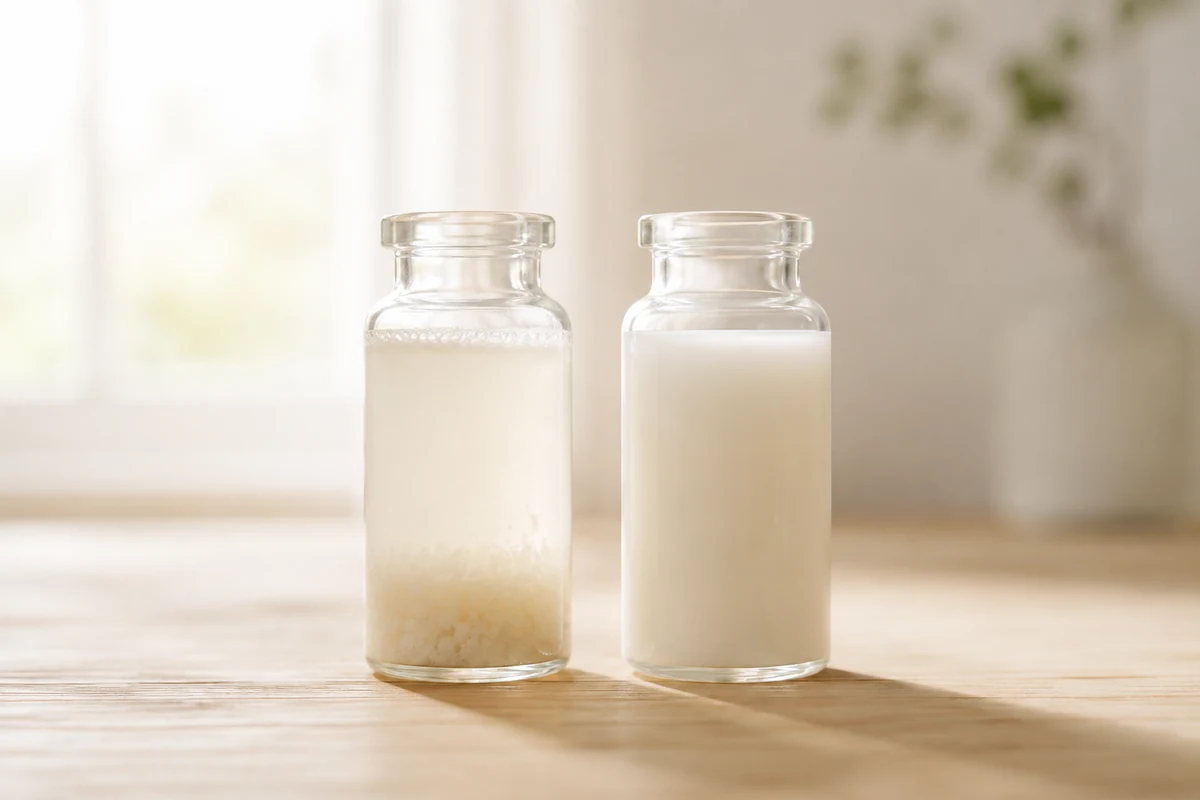
Selecting the system and materials We specify the type of phospholipid or encapsulating material, its ratio to the key compound and the production conditions, based on the properties of the substance and any ingredient restrictions you tell us about.
Trial production We produce a small quantity first to measure particle size, size distribution and encapsulation efficiency, and send samples for you to test in your actual formula.
Compatibility testing We check that the resulting system actually works in your formula, especially formulas with extreme pH or high salt content, two factors that can destroy liposome structure.
Full production and delivery We produce under the conditions validated in the trial and deliver with a complete set of technical data.
What you need to prepare
The key compound to be encapsulated, with information on its solubility. State clearly the problem you want to solve, whether solubility, stability or odour and taste, because this determines the system to be used.
The end product format and an outline of the formula, so we can assess compatibility in advance; the minimum starting quantity per batch, which we will tell you after assessing the project; and ingredient restrictions, such as halal, no animal-derived ingredients or avoiding certain allergen groups, because these restrictions rule out many encapsulating materials.
What you will receive
The encapsulated substance in the agreed form, liquid or powder, with data on average particle size and size distribution, encapsulation efficiency (Encapsulation Efficiency) data, composition data for the encapsulation system for use on labels, and guidance on incorporating it into the end formula.
How to verify that encapsulation actually works
The biggest problem with encapsulation technology is not that it cannot be done, but that once done, it cannot be proven to have succeeded. The market is full of products with the word liposome on the label and no data to back it up, and when corporate buyers start asking for evidence, many suppliers cannot answer. We therefore treat the verification data set as part of the job, not an add-on service.
The most basic indicators are particle size and size distribution. Average size tells you whether the particles produced are in the intended range, while distribution tells you how uniform the system is. A system with a good average size but a very wide distribution contains both very small particles and large clumps mixed together, and is usually not stable over long storage.
The second indicator is encapsulation efficiency, which answers the question of what percentage of the key compound added is actually inside the particles and what percentage is floating outside. This figure is the heart of any claim, because a system that encapsulates little but calls itself liposomal is a system that adds ingredients without adding benefit.
The third indicator is the surface charge of the particles, which indicates the tendency of particles to clump together during storage. This value does not tell you about efficacy in the body, but it is a good indication of whether the formula will survive its shelf life, and it should always be viewed alongside stability test results.
The final indicator, which is often skipped, is how the system behaves in the actual formula rather than in water. Particles that are stable in a test tube may break apart immediately when they meet the pH of a drink, salt in the formula or the shear force of a mixer on the production line. We therefore test in a system close to your end formula from the start, instead of delivering attractive figures under conditions that will never occur in reality.
Frequently asked questions (FAQ)
Q: How much does it add to the cost?
A: It depends on the system used and the ratio of encapsulating material to key compound. We always offer at least two options to compare before you decide, and explain what each one trades off against what.
Q: Can it go straight into my existing formula?
A: Compatibility must be tested first, especially for formulas with extreme pH, high salt content or solvents that can destroy the lipid structure. We test this for you before full production.
Q: How do you test that encapsulation has succeeded?
A: By three values: particle size, size distribution and encapsulation efficiency, which we report for every lot. These values are what corporate buyers will ask to see, and they are what gives the word liposome on the label its weight.
Q: Does encapsulated material really keep longer?
A: In many cases yes, but it must be proven by stability testing comparing encapsulated and non-encapsulated material, not claimed on principle alone. We can arrange this testing if you need the data for communication.
Q: Can it be passed on to a supplement contract manufacturer (Original Equipment Manufacturer, OEM) for further production?
A: Yes, if you tell us the destination factory’s requirements from the start, because some factories have restrictions on the raw material formats they accept, and some require additional safety documentation for the encapsulating material.
Next step
Tell us what problem you want to solve at [email protected] or LINE @zubbbiotech. We will assess whether encapsulation is the most cost-effective solution or whether there is a simpler way, and come back with a suitable system and price range as soon as possible.
Contact us and request a quotation
Send us the details of your project via Contact us or LINE @zubbbiotech · Tel. +66 89 056 5651 · +66 97 297 1777 · Email [email protected]
References
- Notification of the Ministry of Public Health (No. 293) B.E. 2548 Re: Dietary supplements, as amended. (2006, February 2). Royal Thai Government Gazette, 123(Special Part 18 Ngor).
- Herbal Products Act B.E. 2562. (2019, April 30). Royal Thai Government Gazette, 136(Part 56 Kor), 1–29.
- Cosmetic Act B.E. 2558. (2015, September 8). Royal Thai Government Gazette, 132(Part 86 Kor), 5–28.