

Competitive Benchmarking Service
Know where your product really stands
The figures on each supplier’s documents cannot be compared
This situation happens every day in the Thai raw materials market.
You are about to buy an extract and three suppliers make offers. The first says 20% at one price, the second says 40% at twice the price, and the third says 95% at several times more again.
The question is which is the best value, and the answer is that, from this information alone, it cannot be answered at all.
The reason is that the three figures may come from different analytical methods, be calculated on different moisture bases, and measure different marker compounds. In some cases, the product stated as 40% and the one stated as 20% are of equal quality; one supplier simply uses a method that also counts closely related compounds.
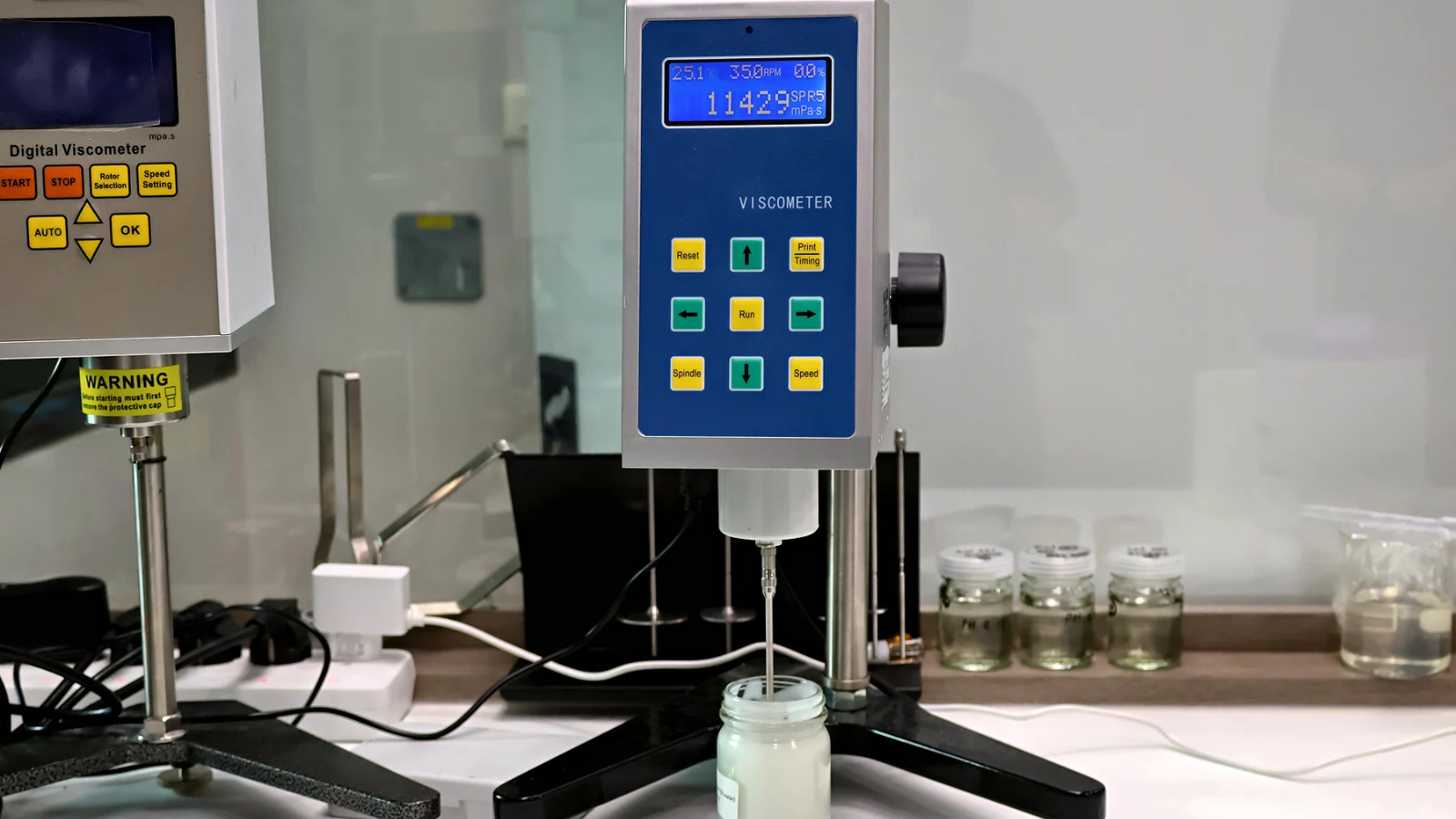
The only thing that makes a genuine comparison possible is analysing all the samples by the same method, in the same laboratory, at around the same time.
That is what this service does.
Who uses this service, and what questions it answers
Buyers choosing a supplier It answers which offer is really the best value when calculated as price per unit of key compound, not price per kilogram of extract, which often gives a different answer from the one first expected.
Suppliers who want to know their position It answers whether our product is better or worse than what is sold on the market, and by how much. This is basic information for pricing and negotiation.
Brands under price pressure It answers whether the cheaper product a competitor sells is really comparable with ours. In many cases the cheaper product turns out to have far less of the key compound, which is information that can be communicated to customers.
Those changing supplier It answers whether a new supplier provides goods equivalent to the previous one, before switching and finding the formula no longer works.
Those about to enter a new market It answers what specification level products in that market have, so you can set your own specification to compete.
What we compare
Key compound content by the same method This is the heart of the service. Every sample is analysed by the same method and the method is stated in the report, so the resulting figures can genuinely be compared.
Price per unit of key compound Calculated from each supplier’s quoted price divided by the amount of key compound actually measured. This figure answers the question of which is the best value, and often gives a different result from comparing price per kilogram.
Overall composition Looks at what else each extract contains besides the target compound, which shows how much it has been purified and what proportion of carrier it contains.
Moisture and calculation basis Checks whether the figures each supplier gives are calculated on the same basis, which is the most common source of misunderstanding.
Safety Tests for heavy metals, microorganisms and residual solvents, because a cheaper product may be cheaper because quality control steps were skipped (World Health Organization, 2007; Notification of the Ministry of Public Health No. 416 B.E. 2563, 2020).
Physical properties Colour, odour, solubility and flow properties, which affect real use in a formula no less than the chemical figures.
Adulteration Checks whether synthetic compounds or bulking agents have been added, something found in the raw materials market that cannot be detected by eye.
A word on ethics
We provide this service within a clear framework.
What we do is analyse samples bought openly through normal channels and report the results as actually measured.
What we do not do is analysis to reverse-engineer and copy formulas, accessing competitors’ information by improper means, or producing reports that steer the results towards what the customer wants.
Limits on using the results The comparison results are internal information for business decisions. Using them in comparative advertising that names competitors is legally restricted and risky, so we prepare reports without naming manufacturers in any section intended for publication, and we advise clearly on the scope of use.
When the results are not what you hoped
A number of customers send samples confident that their own product is better, and the results show it is not.
We consider that the most valuable outcome of this service, because it is a discovery made before the customer sets a price above the market with nothing to back it up, or before advertising something that cannot be proven.
When the results come out that way, we go on to analyse what caused the difference, which usually lies in the starting raw material, the extraction method or the purification step, and then propose improvements with cost estimates.
How we work
Defining the scope We agree how many samples to compare, which items to analyse and what the results will be used for, because the purpose determines which items should be analysed.

Sourcing samples You send them yourself, or we source them through normal sales channels. In the latter case we record the source and date of purchase so the results are traceable.
Choosing the analytical method We use neutral, accepted methods, referring to standard pharmacopoeias where the compound is listed (Department of Medical Sciences, 2021), and always state the method used in the report.
Analysing together All samples are analysed in the same run on the same instrument, to remove run-to-run variation, something that sending samples for analysis at different times cannot achieve.
Preparing the comparison report Presented as an easy-to-read table, with price per unit of key compound calculated and technical observations.
What you need to prepare
The samples you want to compare, together with the prices and documents each supplier has given you, so we can check whether the figures they state match what we measure.
The minimum sample quantity per test item, which we will tell you based on the items chosen, and the purpose for which the results will be used, because this determines both which items should be analysed and the report format.
What you will receive
An easy-to-read comparison report in table form with the analytical method stated against every value, the price per unit of key compound for each sample, technical observations on what the differences are likely to come from, and recommendations on which supplier to choose or what to improve if your own sample is part of the comparison.
An example calculation that often changes the decision
The most direct way to explain why comparing price per kilogram leads to wrong decisions is to look at how the calculation is structured.
Suppose two suppliers offer the same extract. The first has a clearly lower price per kilogram than the second. Looking only at this figure, the first seems better value.
But when analysis by the same method shows that the second contains more key compound, by a margin larger than the price difference, the result is reversed, because what you are really buying is not a kilogram of powder but the key compound in that powder.
The impact carries through to the formula too, because a less concentrated extract has to be used in larger amounts to deliver the same amount of compound. That takes up space in the capsule, increases the weight per unit and may make the formula cloudier or give it more off-taste.
This calculation is the first thing we do in every report, and it is the figure many customers say changed their decision.
What we find most often in past work
Without naming any manufacturer, there are four patterns we see repeatedly.

First, the figure on the document is higher than actually measured, which may be caused either by an analytical method that counts too broadly or by using the value from the best lot instead of the lot actually delivered.
Second, different calculation bases. One supplier calculates on a dry basis and another includes moisture, so figures that look different are actually close.
Third, a higher proportion of carrier than stated, which can be seen from the overall composition analysis.
Fourth, the cheaper product fails a safety item, which is the most valuable discovery, because it prevents damage far greater than any price issue.
Limits of comparison, which we explain before starting
Raw material comparison is a very useful tool, but it can only answer the questions it was designed to answer. Understanding these limits from the start lets you use the results correctly and avoid making decisions beyond what the data support.
The first limit is that the results describe the samples sent, not the supplier as a whole. Some suppliers send specially selected samples, which does not necessarily mean intent to deceive; it is the nature of selling. The way to reduce this effect is to ask for samples from an actual production lot with the lot number stated, or to take samples from goods actually purchased in the next round and compare again.
The second limit is that we measure what can be measured, not everything that affects the end product. Key compound content, purity and safety items tell a lot but not everything, especially what consumers actually perceive, such as the feel in a finished formula or how the raw material behaves during production. Trials in the actual formula are therefore still necessary even when the comparison results are clear.
The third limit is time. Agricultural raw materials change with the season and from year to year. A comparison made in one quarter may not reflect what you will get in the third quarter. We therefore always state the sampling date and season in the report, and recommend repeating the comparison at least once a year for key raw materials.
The final limit is what the numbers will never tell you: reliability of delivery, flexibility when you need goods urgently, the quality of communication when problems arise, and the supplier’s financial stability. These factors weigh no less than the analysis results in a decision, and in some cases more. So we present the results as information to support your decision, not a verdict on who is best.
Frequently asked questions (FAQ)
Q: Do I need to say which sample belongs to whom?
A: No. Many customers send samples using codes instead of names, which has the advantage of producing unbiased results. We analyse and report according to the codes you assign.
Q: Can I use the results in advertising against competitors?
A: Comparative advertising that names competitors is legally restricted and risky. We recommend using the results as internal information for decisions, and if you want to communicate externally, to do so positively about your own product without referring to others.
Q: How many samples can be compared?
A: There is no limit, but in practice three to five samples are usually enough for a decision and keep costs under better control than analysing a large number without a focus.
Q: How do you compare if a competitor uses a different marker compound?
A: We analyse both markers in every sample to give a complete picture from both angles, which sometimes reveals that the reason they chose that marker is that it makes the figures look better.
Q: How many days does it take?
A: It depends on the number of samples and items analysed. We state the number of working days in the quotation.
Next step
Send the samples you want to compare, together with the prices and documents you received from the suppliers, to [email protected] or LINE @zubbbiotech. We will propose a set of analyses suited to your purpose and come back with a quotation as quickly as possible.
Contact us and request a quotation
Send us the details of your project via Contact us or LINE @zubbbiotech · Tel. +66 89 056 5651 · +66 97 297 1777 · Email [email protected]
References
- Department of Medical Sciences. (2021). Thai herbal pharmacopoeia 2021 [in Thai]. Bureau of Drug and Narcotic, Department of Medical Sciences.
- Notification of the Ministry of Public Health (No. 416) B.E. 2563 Re: Prescribing quality or standards, criteria, conditions and methods for analysis of pathogenic microorganisms in food. (2020, October 9). Royal Thai Government Gazette, 137(Special Part 237 Ngor), 9.
- World Health Organization. (2007). WHO guidelines for assessing quality of herbal medicines with reference to contaminants and residues.