

Ultrasonic-Assisted Extraction Service
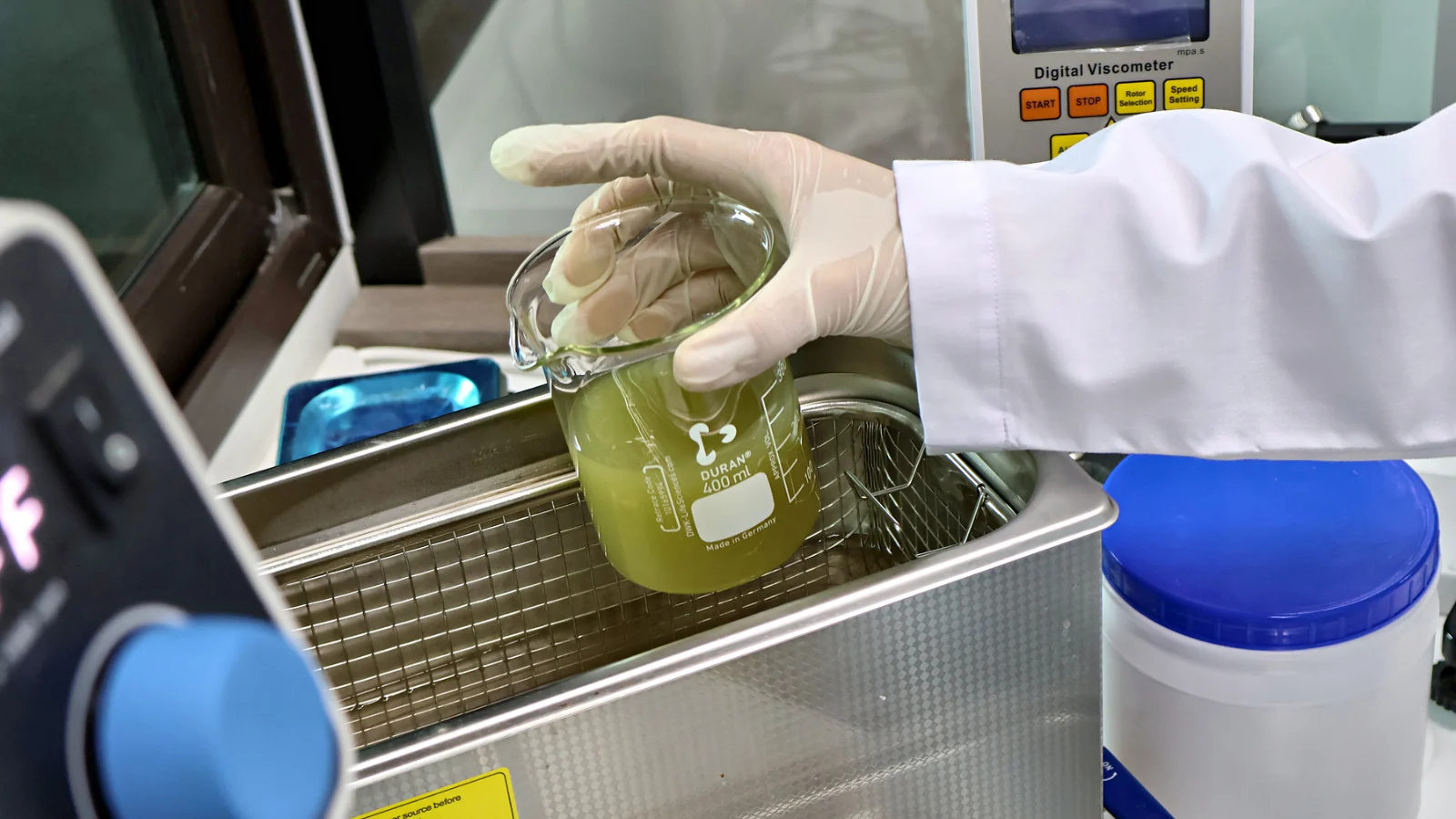
Reducing the time and heat your compounds are exposed to
A problem with conventional extraction that rarely gets discussed
Standard solvent extraction relies mainly on time and heat. The solvent has to slowly penetrate the plant tissue, dissolve the target compounds and then diffuse back out. This process takes several hours and often needs heat to speed it up.
Three problems follow. First, the long duration means fewer production runs per day, which directly affects unit cost. Second, prolonged heat damages heat-sensitive compounds, even when the temperature is not very high, because damage depends on both temperature and duration. Third, large amounts of solvent are needed for thorough diffusion, which means both solvent costs and the energy cost of recovering it.
Ultrasonic-assisted extraction solves all three at once by changing how compounds are released from the plant cells.
How it works
Ultrasound is sound at frequencies higher than the human ear can hear. As it travels through a liquid, it creates rapidly alternating compression and expansion.
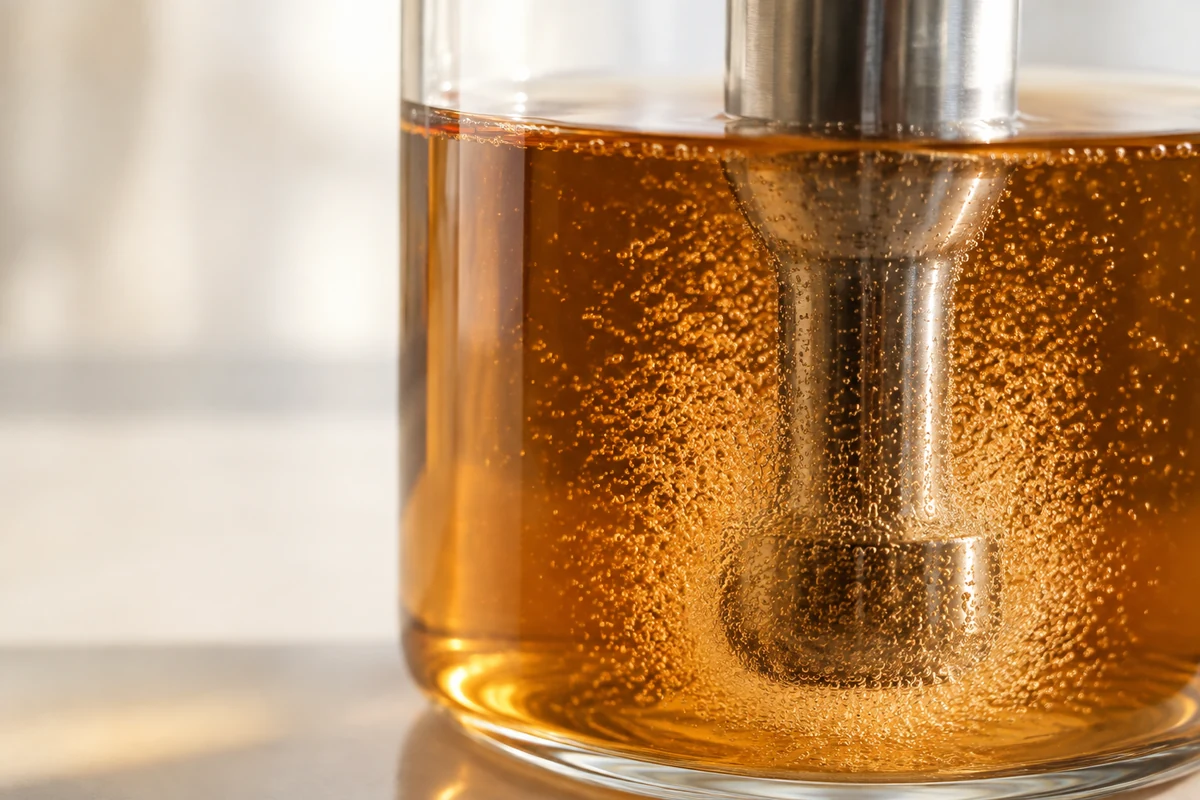
During expansion, the pressure at certain points drops so low that tiny bubbles form. Then, during compression, these bubbles collapse violently. This phenomenon is called cavitation.
The collapse of each bubble releases energy in a very small area, creating an impact on nearby plant cell walls. The cell walls rupture, and the compounds inside flow directly into the solvent, without waiting for the solvent to penetrate on its own.
In practice, the result is a clearly shorter extraction time, a lower required temperature and less solvent, because diffusion is no longer the main mechanism.
When this method is worthwhile
High-value raw materials This is the clearest case. When the starting raw material is expensive, every extra percentage point of yield is worth a lot, so investing in a method that draws out more compound pays back quickly.
Heat-sensitive compounds When the target compound clearly degrades at high temperatures, this method offers an option that does not force a trade-off between time and quality.
Raw materials with tough cell walls Such as seeds, bark and high-fibre materials. This group gives low yields with conventional methods because the solvent has difficulty reaching the compounds.
Jobs that need to reduce solvent use For brands that want to reduce their environmental impact or lower evaporation costs.
When it is not yet necessary
If your raw material is not expensive, your target compound tolerates heat well and your current extraction method already gives an acceptable yield, switching to this method will increase the cost per run without a clear return.
We will show you the numbers before you decide whether the extra yield is worth the difference in service cost, a calculation that can only be done properly after a comparative trial run.
What providers often do not tell you
Cavitation energy is a double-edged sword. If too much energy is applied, or for too long, it does not just rupture cell walls; it can also destroy the structure of the target compound.
Compounds particularly at risk are large molecules, such as polysaccharides and proteins, which may be cut into smaller fragments until their properties change.
This is why we carry out trial runs to find the right energy level for each compound, rather than using the maximum setting on the assumption that stronger is better, and why we analyse the target compound both before and after every trial run, to confirm that the extra yield is intact compound and not broken fragments.
How we work
Suitability assessment We look at the type of target compound, the structure of the raw material and the cost of the raw material to assess whether the difference will be worthwhile.
Raw material preparation The material is ground to a suitable size, which for this method differs from conventional extraction, because it does not need to be ground as finely; the ultrasound does the work of breaking down the cells instead.
Comparative trial We run both the conventional method and the ultrasonic method side by side in the trial to measure yield, time and the quality of the compounds obtained, so you see real numbers before deciding.
Production run We run under the conditions established in the trial, controlling temperature throughout, because cavitation generates its own heat that has to be removed.
Analysis and delivery We analyse the active compound content and check that the compound structure has not changed, and issue a per-batch certificate of analysis.
What you need to prepare
The plant name, the part used and the target compound; the minimum quantity of raw material per run, which we will tell you after assessing the job; information on the method you currently use and the yield it gives, if available, because this provides a baseline that makes the cost-benefit assessment more accurate; and any solvent restrictions accepted by your destination market.
What you will receive
The extract with a per-batch certificate of analysis, yield comparison data between your current method and this method, the actual production conditions used so the process can be repeated, and a report of the actual time per run for production capacity planning.
The variables we control in every run
To keep results repeatable and safe for the target compound, we control and record four variables every time.
Frequency Determines the size of the bubbles formed and the intensity of their collapse. Low frequencies produce large bubbles and strong impacts, suited to breaking tough cell walls, while high frequencies produce smaller, gentler bubbles, suited to delicate compounds.
Input power This is the variable that most affects the target compound, and the one for which we find the right level in the trial run.
Duration Applying ultrasound for too long has the opposite of the desired effect, because once all the cell walls are broken, the remaining energy acts on the released compounds instead.
System temperature Cavitation continuously generates its own heat. If it is not removed, the temperature climbs until the compounds we intended to protect are damaged, losing the main benefit of this method without anyone noticing.
An example of a cost-benefit assessment
Suppose the starting raw material is expensive and the current extraction method gives a certain yield. If ultrasound can increase the yield, the question is whether the value of the additional extract is greater than the additional service cost.
This equation can only be answered when three figures are known: the yield from the existing method, the yield from the new method, and the selling price per kilogram of the extract. The first two come from the comparative trial run, and you already know the third.
We show you the numbers after the trial run, and if the results say it is not worthwhile, we will tell you plainly that you should keep using your existing method.
Quality effects to watch for
Ultrasound is known for increasing yield and reducing time, but the mechanism that makes this work is intense mechanical force at the microscopic level, and that same force can also destroy some compounds. Using this technique professionally is therefore not about running the equipment at maximum power for as long as possible, but about finding the point where yield increases while quality is still preserved.
The first thing to watch for is accumulated heat. Even though it is described as a low-temperature method, the energy put in always turns into heat in the system. Without good cooling, the vessel temperature keeps climbing during the run, and heat-sensitive compounds are lost without anyone noticing, because nobody measures the temperature at the end of the run.
The second is the formation of degradation products. The force of collapsing bubbles creates very intense localised conditions, and in some systems produces free radicals that react with the target compound. The result is that the active compound content measures the same or even higher, but new compounds that were not there before appear in the chromatogram. So we always compare the chromatographic profile of extracts from this method with those from the conventional method, not just the active compound figure.
The third is drawing out unwanted material as well. As more cell walls rupture, what comes out is not only the target compound but also proteins, starch, pectin and pigments, which makes later filtration and purification steps heavier. The cost saved at the extraction stage may therefore reappear in the next stage.
For this reason, we do not recommend switching to this method just because of the higher yield, but looking at the whole production line: from yield and the quality of the compound profile, to the load on subsequent steps and the energy cost per kilogram of active compound actually obtained.
Frequently asked questions (FAQ)
Q: By what percentage will the yield increase?
A: It varies greatly by raw material and target compound. We do not give figures in advance because that would be guesswork, but we run a comparative trial to show the real numbers for your raw material, which is the only way to answer this question honestly.
Q: Does ultrasound change the structure of the compounds?
A: It can if too much energy is used, especially with large molecules. That is why we analyse before and after every trial run and choose conditions that give a high yield while the compounds remain intact.
Q: Can it be combined with other methods?
A: Yes, and this often gives the best results. For example, ultrasound can be used as a first step to break down cell walls, followed by conventional ethanol extraction. This hybrid approach reduces total time without changing the whole process.
Q: Can the documents be used for a Thai FDA submission?
A: Yes, for the raw material part. The extraction method used must be stated in the manufacturing process information, which we prepare for you, and the quality criteria still refer to the same standard texts as for other methods (Department of Medical Sciences, 2021).
Q: How many days does it take?
A: The extraction run is clearly shorter than with conventional methods, but the total project time is longer once raw material preparation, concentration and analysis are included. We state the overall timeframe in the quotation.
Next step
Send the plant name, target compound and the yield from your current method to [email protected] or LINE @zubbbiotech. We will assess whether this method is worthwhile for your project and propose a comparative trial run with a price range as quickly as possible.
Contact us and request a quotation
Send us the details of your project via Contact us or LINE @zubbbiotech · Tel. +66 89 056 5651 · +66 97 297 1777 · Email [email protected]
References
- Department of Medical Sciences. (2021). Thai herbal pharmacopoeia 2021 [in Thai]. Bureau of Drug and Narcotic, Department of Medical Sciences.