

Supercritical CO₂ Extraction Service
Clean extracts for strictly tested markets
When the production method becomes information you must be able to disclose
Ten years ago, the extraction method was a back-office matter nobody asked about. That is no longer the case.
Raw material buyers in overseas markets pay more attention to residual solvents every year and often send a list of tests before agreeing to buy, while end consumers read labels far more closely than before. For products positioned in the premium or natural segment, the extraction method has become information that must be disclosed and must be provable.
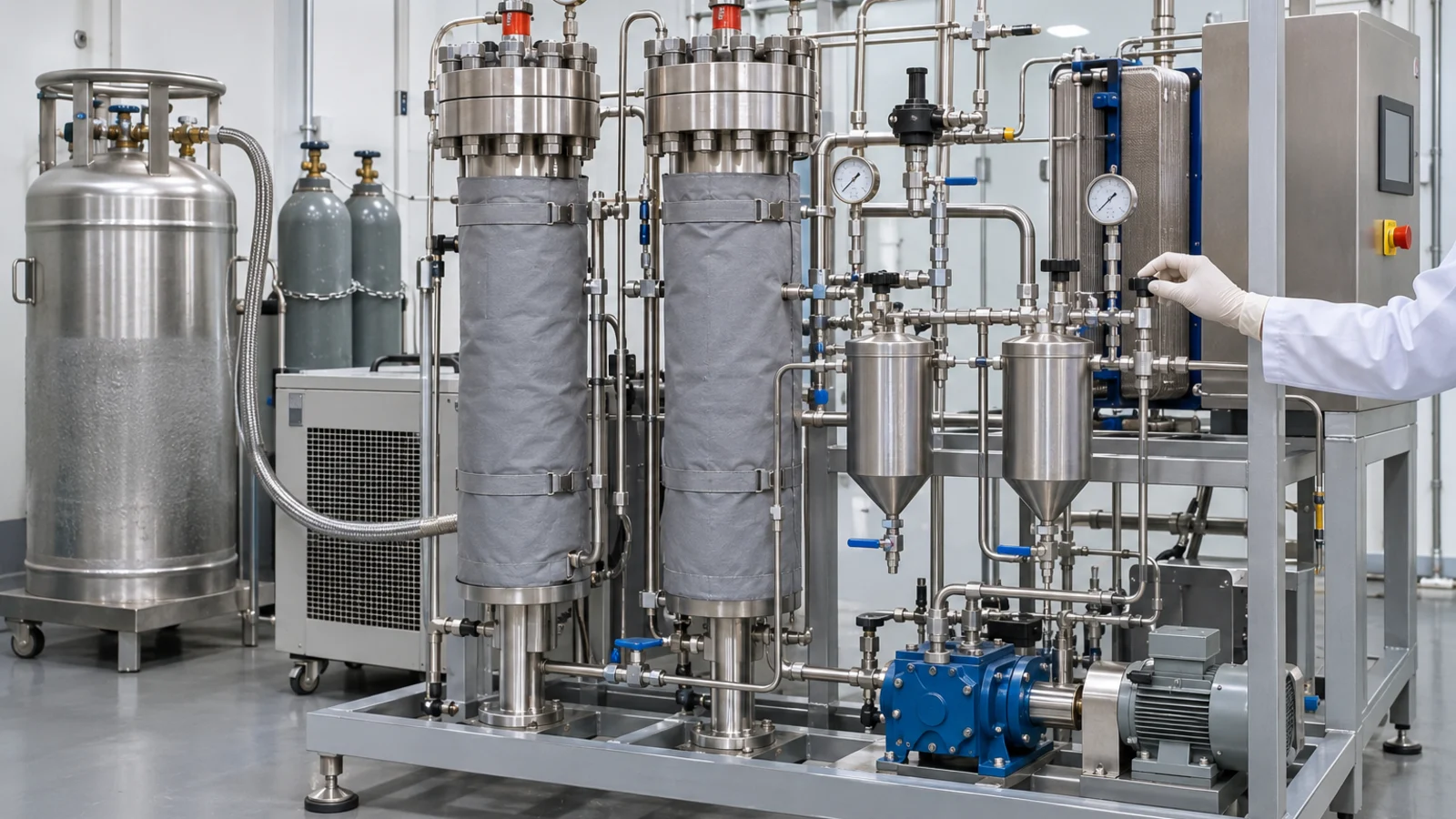
Supercritical carbon dioxide extraction addresses this directly, because when the process ends the gas evaporates completely, leaving nothing behind in the extract. This is not because we are good at removing it, but because by the very nature of the process there is nothing to remain.
This article explains how the process works, which compound groups this method handles well, which groups we would advise you to handle with a cheaper method, and how to assess whether the price difference is worthwhile for your project.
What is a supercritical fluid?
The carbon dioxide we know is a gas at normal pressure and temperature. But when both its pressure and temperature are raised above the critical point, it enters a state called a supercritical fluid.
In this state it has an unusual combination of properties: its density is close to that of a liquid, so it dissolves compounds like a solvent, yet it still penetrates the raw material as well as a gas. Together these two properties allow it to reach every crevice of the raw material and draw out compounds at the same time.
What makes this method more finely controllable than people expect is that its dissolving power changes with pressure and temperature. Adjusting these two values is therefore a way of choosing which compound groups to draw out and which to leave in the raw material. In practice, this means we can separate different compound groups from the same batch of raw material in stages, something other extraction methods cannot do.
At the end of the process, simply lowering the pressure turns the carbon dioxide back into a gas that separates itself from the extract, and it is then recovered into the system for reuse in the next run.
Tangible business advantages
No residual organic solvents This does not just look good on the label; it reduces the tests that need to be done and reduces disputes with downstream buyers. Residual solvents are an item for which international guidelines set clear limits (International Council for Harmonisation of Technical Requirements for Pharmaceuticals for Human Use, 2021), and one that has caused many batches to be rejected by importers.
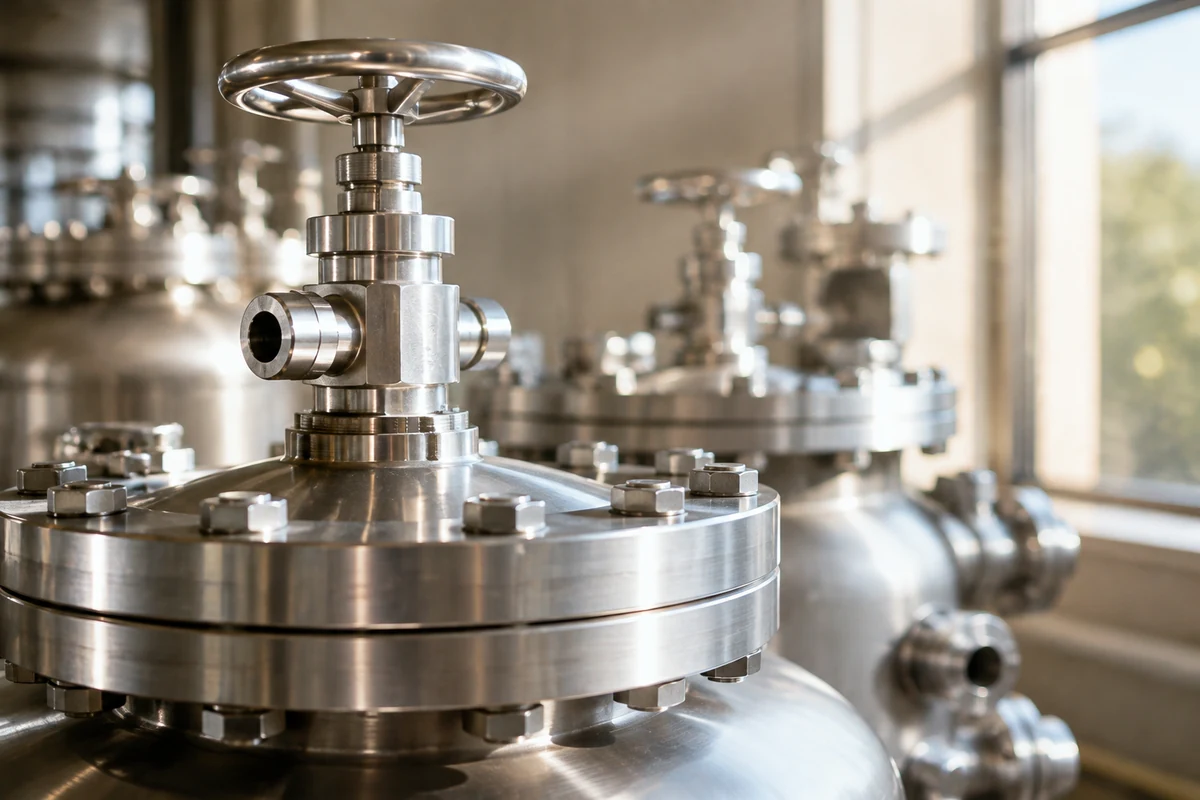
Low operating temperature Suitable for compounds that break down when heated, a group that steam distillation cannot handle, because distillation requires heat up to the boiling point of water.
Selective extraction Conditions can be adjusted to separate different compound groups from the same batch of raw material, yielding more than one product from a single batch, which can change the cost equation significantly.
Aroma and colour close to the starting material This is an advantage for products that consumers judge by their experience of using them, such as ginger oil that keeps its natural warm, pungent aroma, or chilli extract that keeps its bright red colour.
Limitations we tell you plainly
The cost per run is significantly higher than ethanol extraction, because the system must operate at high pressure throughout the run, which consumes energy and requires pressure-rated equipment.
This method is also unsuitable for highly water-loving compounds, such as polysaccharides, sugars and highly polar compounds, because carbon dioxide dissolves them poorly. If your target compound is in this group, we will recommend water or ethanol extraction instead, because choosing a method that does not match the compound wastes both raw material and budget at the same time.
In some cases we add a small proportion of a polar co-solvent to the system to widen the range of compounds that can be extracted, but this option means residual solvent testing is needed again, which reduces the first advantage of this method. We therefore propose it only when necessary and always explain the implications first.
Which compound groups this method handles best
Essential oils and oleoresins From black pepper, ginger, turmeric and chilli, this group gives clearly different results from steam distillation, because both the volatile compounds and the non-volatile compounds that provide flavour and colour come over together, making the extract closer to the fresh raw material.
Carotenoids Pigments from fruits and plants that are sensitive to both heat and light. This group is used in both dietary supplements and cosmetics, and its price per kilogram is high enough to support the cost of this method.
Water-repelling compounds Such as fat-soluble vitamins and plant sterols, ingredients that skincare manufacturers are interested in.
Seed oils Where all the unsaturated fatty acids need to be preserved and the use of solvents is to be avoided.
How we work
Suitability assessment We begin by checking whether your target compound belongs to a group that carbon dioxide dissolves well. At this stage we give a straightforward answer, including when the answer is that another method should be used.
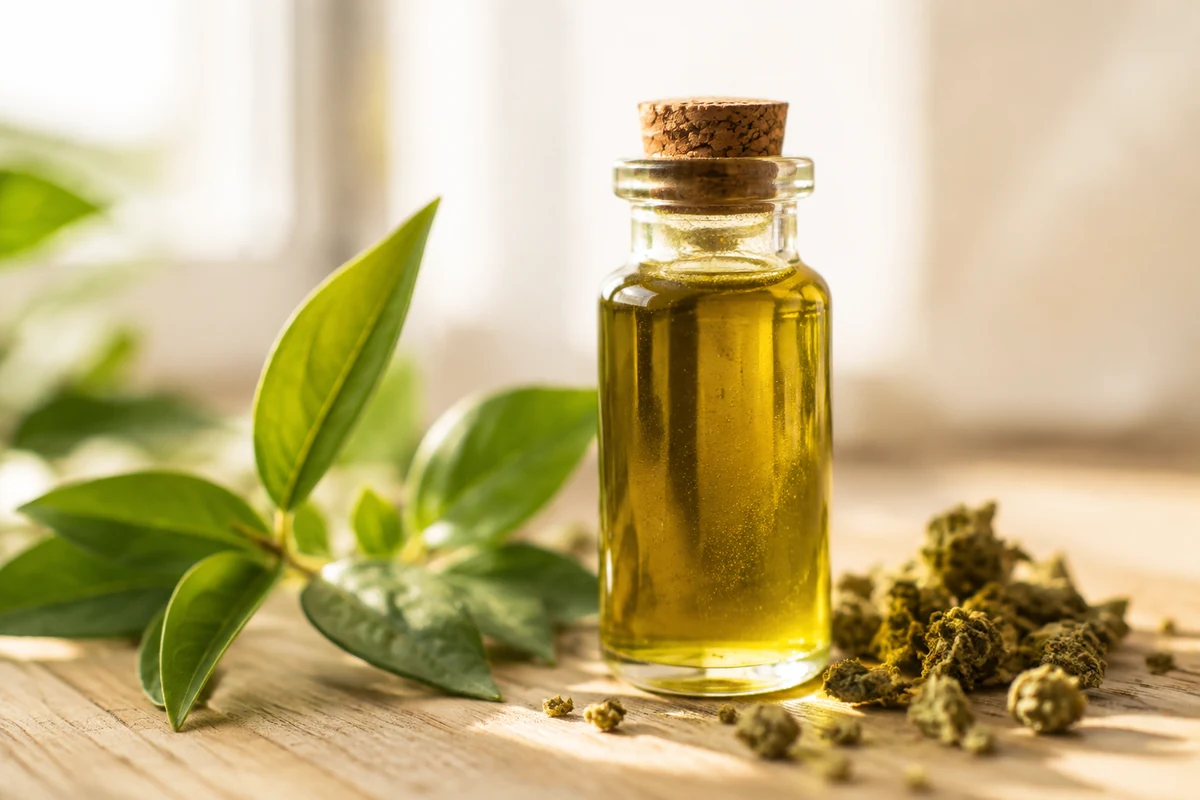
Raw material preparation The material is dried until its moisture falls to a suitable level and ground to a size the fluid can reach throughout. Excessive moisture is the most common cause of low yield with this method, because water blocks the carbon dioxide’s access.
Trial runs to find conditions For new raw materials, we carry out trial runs to find the pressure and temperature that give the best results before putting the whole batch of raw material through the process.
Production extraction The run is carried out under the defined conditions, with values recorded throughout to serve as technical data for documentation and to allow the run to be repeated next time.
Collection and analysis The extract is packed in containers suited to each compound, and its composition is analysed with a per-batch certificate of analysis issued.
What you need to prepare
The plant name, the part used and the target compound, plus the quantity of raw material you have. There is a minimum per run, which we will tell you after assessing the job. The raw material should already be dried and ground, or you can ask us to do this for you.
You should send your downstream buyer’s specifications from the start, because some requirements affect how the extraction conditions are set, not just the list of tests. And if the plant used falls under rules requiring permission before biological resources are used commercially, we check its status before accepting the job (Secretariat of the Convention on Biological Diversity, 2011).
What you will receive
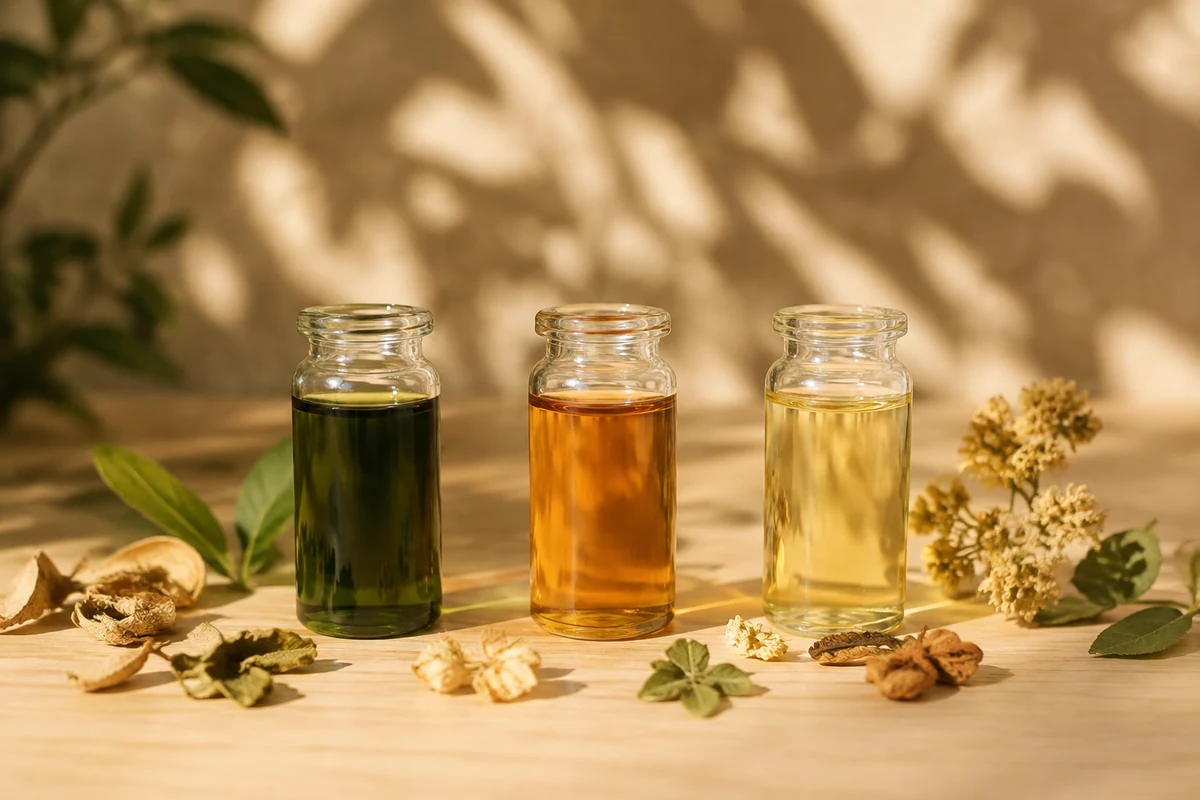
An extract free of organic solvents, a per-batch certificate of analysis, the actual production conditions used for reference in technical documents and regulatory applications, and a report of the actual yield for calculating the cost of the next run.
How to read a CO₂ extraction provider’s specifications
When you request quotations from several supercritical carbon dioxide extraction providers, you will find that the documents you receive differ greatly, both in detail and in what they choose not to say. Knowing what to look for helps you compare offers meaningfully, rather than just comparing price per kilogram.
The first thing to look for is the pressure and temperature range the equipment can achieve. Not the values used for your job, but the maximum capability of the system, because different compound groups need different conditions, and equipment with limited pressure will struggle to extract more polar compounds. Providers who can answer this immediately are usually those who actually run the equipment themselves, not those who take the job and pass it on.
The second is co-solvents. Carbon dioxide on its own extracts non-polar compounds well, but for many compound groups a small amount of ethanol has to be added to help. This is not wrong and does not stop the process being called supercritical fluid extraction, but it is information that must appear in the documents, because it affects label claims and the list of residual solvents that must be tested. A provider who does not mention this at all is one you should ask directly.
The third is how yield is calculated. Reported yield figures are usually calculated on dry raw material weight, but some providers calculate on the weight as received, which still contains moisture, making the figure look better without being wrong. You should ask clearly which basis is used, and also ask at what scale the reported yield was obtained, because values from small laboratory equipment are usually higher than those achieved at production scale.
The last is system cleaning between jobs. If the same equipment has just extracted a strongly scented plant or one containing compounds you do not want carried over, the cleaning procedure and confirmation that it is clean should be documented, not just promised over the phone. We treat this as part of our offer, not an add-on.
Frequently asked questions (FAQ)
Q: Is it much more expensive than other methods, and when is it worthwhile?
A: It is clearly more expensive than ethanol extraction, but you should compare total cost rather than price per run, because in some cases it saves residual solvent testing, reduces purification steps and opens markets other methods cannot reach. The simple rule we use when advising is that this method is worthwhile if the selling price per kilogram of the extract is high enough, or if the destination market requires that no solvents be used.
Q: What can be written on the label?
A: You can state the extraction method as fact, and state that there are no residual organic solvents when analysis results support it. However, product efficacy claims must still stay within the legal framework for the product category, which does not change because of the extraction method.
Q: How does it compare with cold pressing?
A: Cold pressing only obtains the oil that can be pressed out mechanically, while supercritical carbon dioxide draws out all the soluble compounds, giving a higher yield and some compound groups that pressing cannot obtain, but at a much higher cost. For seeds with a high oil content where the market accepts the term cold-extracted, cold pressing is usually better value.
Q: Can a trial batch be done first?
A: Yes, and we recommend it for raw materials that have not been through this process before, because the optimum conditions vary by plant species and target compound.
Q: How many days does it take?
A: It is counted in working days per run. If a trial run is needed first, it takes longer, and analysis is counted separately. We state the number of working days for every stage in the quotation.
Next step
Send the plant name and target compound to [email protected] or LINE @zubbbiotech. We will assess whether this method suits your project, propose alternatives if another method gives similar results at a lower price, and send you a price range and timeframe as quickly as possible.
Contact us and request a quotation
Send us the details of your project via Contact us or LINE @zubbbiotech · Tel. +66 89 056 5651 · +66 97 297 1777 · Email [email protected]
References
- International Council for Harmonisation of Technical Requirements for Pharmaceuticals for Human Use. (2021). Impurities: Guideline for residual solvents Q3C(R8).
- Secretariat of the Convention on Biological Diversity. (2011). Nagoya Protocol on access to genetic resources and the fair and equitable sharing of benefits arising from their utilization to the Convention on Biological Diversity. United Nations.