

Spray Drying Service
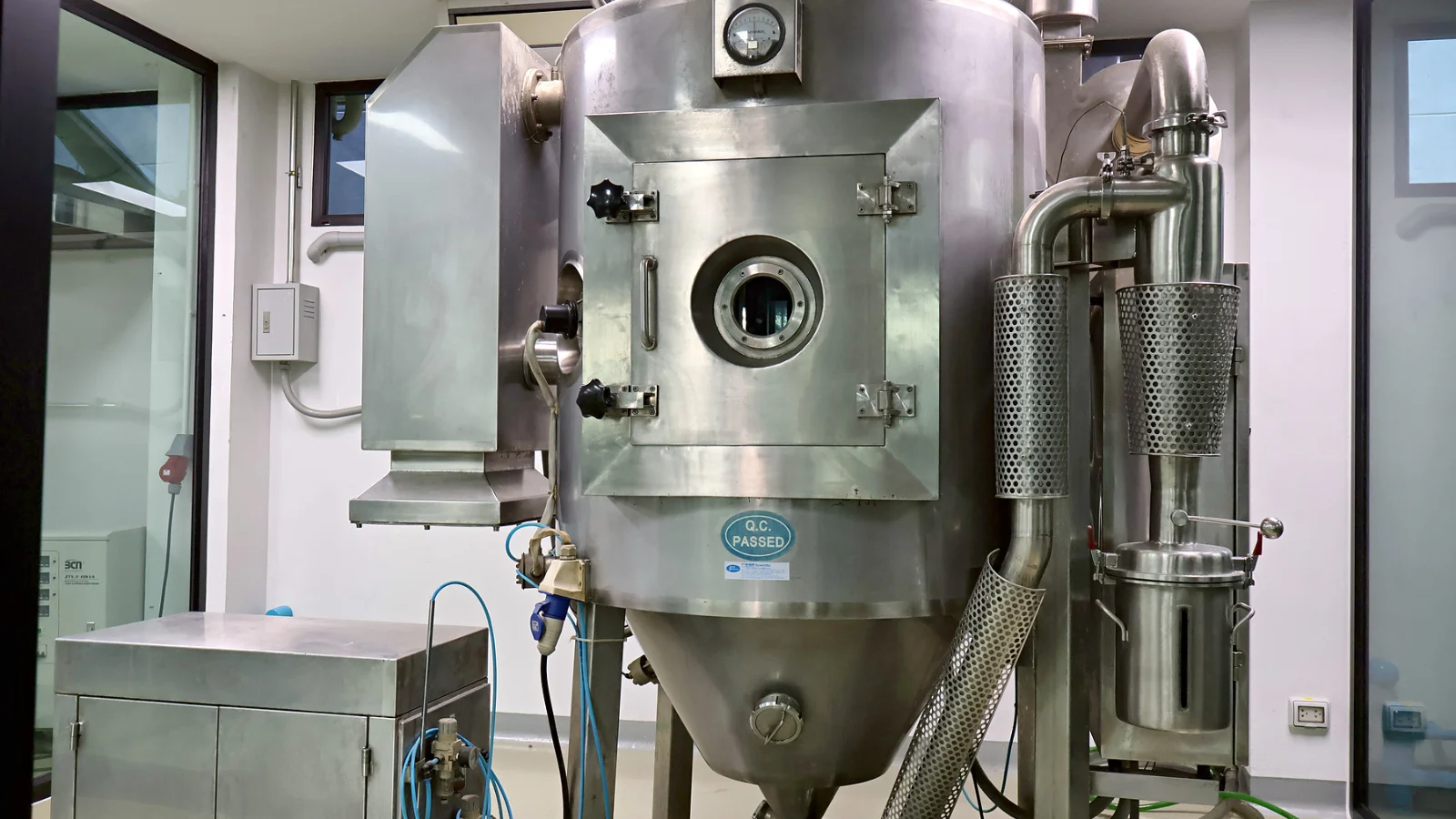
Turning liquid extracts into powder that actually works in your formula
What often happens once extraction is finished
There is a situation we see again and again among the clients who contact us. A brand owner invests in sourcing good raw material and pays for extraction until they have a herbal extract with the active compounds they wanted. The analysis results look good and everything seems ready to move forward. Then they get stuck at one point: the extract is a thick liquid, and the supplement manufacturer that will produce the capsules says it cannot be used.
The problem is not the quality of the extract. It comes from planning that skipped a step, because the physical form of a raw material determines which production lines it can go on to. A liquid cannot be filled into hard capsules or pressed into tablets, it is hard to blend evenly with other powders, most of its shipping weight is water you still pay to transport, and its shelf life is significantly shorter than a dry powder because water is a medium in which microorganisms can grow.
Turning a liquid into a powder is therefore not an optional extra. It is the step that decides whether your extract becomes a saleable product or stays sitting in a drum, and spray drying is the method the food and supplement industries worldwide use as the standard for this job.
Why most brand owners should not buy their own machine
A spray dryer capable of genuine commercial production is expensive. It needs a dedicated installation space, a ventilation system and a dust collection system that meet standards, and most importantly someone who knows how to set the machine up for each compound. A wrong setting does not just give you less powder; it destroys the active compounds you have already paid for through heat.
For a brand that produces only a few batches a year, using an outside service is clearly better value than owning the machine. You pay only for the runs you use, you do not carry maintenance and staffing costs all year round, and you benefit from setting experience accumulated across many different materials, without having to learn by trial and error on your own raw material.
This is why this service is one of the most in-demand among medium-sized businesses, and it is a service we have designed to support everything from trial batches to full production batches.
How spray drying works
The principle of the process is simpler than its name suggests. The liquid to be dried is pumped at a constant rate through a nozzle or a high-speed rotary disc, which breaks it up into millions of very fine droplets at once. These droplets fall into a drying chamber through which hot air flows.
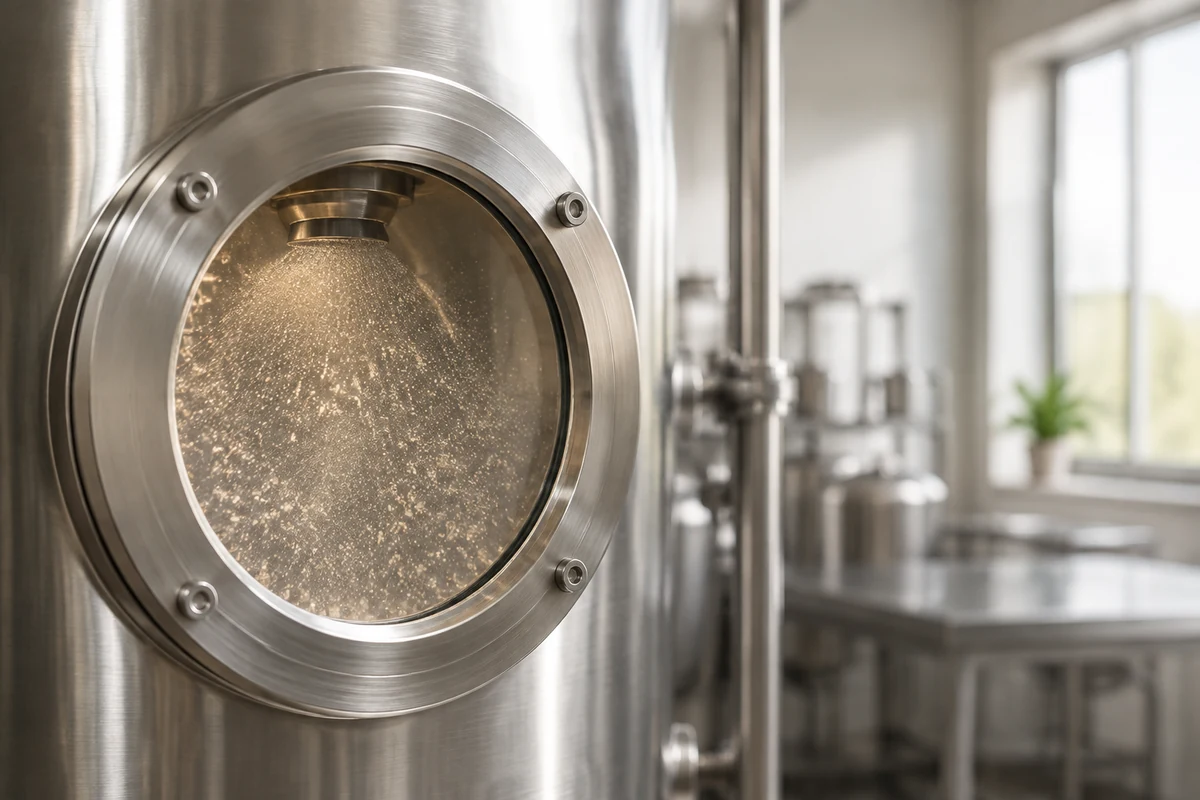
The key is surface area. When the same volume of liquid is broken into tiny droplets, the total surface area increases enormously, so water evaporates from each droplet within a fraction of a second. What remains is solid matter in the form of dry powder, which is carried by the air stream to the separation system and falls into a collection vessel.
A common misunderstanding is that hot air means the compounds are exposed to high heat. In reality, the temperature the droplets actually experience is far lower than the air temperature, because most of the heat energy is used to evaporate the water. This keeps the droplet surface temperature close to the boiling point of water for as long as any water remains, and by the time the water is gone the droplets have already left the drying chamber. Heat-sensitive compounds are therefore damaged less than expected, even though the inlet air temperature figure looks high.
If the starting extract was previously extracted with an organic solvent, we verify that residual solvent levels are within international guideline limits before it enters the drying process (International Council for Harmonisation of Technical Requirements for Pharmaceuticals for Human Use, 2021).
There are four main variables we control in every run: inlet air temperature, outlet air temperature, liquid feed rate, and nozzle or disc speed. Adjusting these changes the particle size, the final moisture content and the amount of active compound remaining in the powder, so the settings must be tailored to each material rather than using one recipe for every job.
The carrier is the variable that decides whether this job succeeds or fails
If there is one thing we want you to remember from this article, it is the carrier.
Almost all natural extracts contain sugars and sticky substances. These have a low glass transition temperature; put simply, they soften and become sticky at fairly modest temperatures. When the droplets meet the hot air in the drying chamber, the powder that forms is still sticky and clings to the chamber walls instead of falling into the collection vessel. The result is a lower powder recovery than it should be, and the powder that is recovered cakes into lumps not long after storage.
A carrier is a solid added to the liquid before drying to raise the transition temperature of the overall mixture, so the powder dries and flows normally. The carrier also encapsulates the active compounds, reduces their exposure to oxygen and helps the powder disperse better in water when it is reconstituted.
Only a few groups of carriers are commonly used in herbal and supplement work, and each gives clearly different results. Maltodextrin is the most widely used option because it is inexpensive, its taste does not interfere with the final formula and it gives a free-flowing powder, making it suitable for general work with no special requirements. Gum arabic offers better encapsulation, so it suits compounds that degrade on exposure to air, such as oils and oxidation-sensitive compounds, but it costs more and may add some colour. Modified starch is used when a water-insoluble compound needs to be encapsulated into an aqueous system, while inulin is an option for formulas that also want to declare dietary fibre on the label.
Every carrier we use is on the list of food additives permitted in dietary supplements (Notification of the Ministry of Public Health No. 293 B.E. 2548, 2006), and we always state the type and proportion in the batch documentation, because this is information you need to write the ingredient label and must show to the reviewing authority when you apply for approval.
The numbers you need to work out before ordering extraction
The most common reason projects have to be redone is forgetting that the carrier lowers the percentage of active compound in the final powder.
Suppose you have a liquid extract that, if dried on its own, would give a powder with 40% active compound. But this extract is so sticky that it needs a carrier making up half of the total solids. The powder that actually comes out will contain only about 20% active compound, not 40%. If you have already agreed with your downstream customer to deliver a powder with no less than 30% active compound, you will discover this problem when the analysis results come out, which is the point at which it is hardest to fix.
The solution is to work backwards from the start. Set the active compound level in the final powder first, then calculate back how concentrated the starting extract must be to accommodate the necessary carrier proportion. That may mean adding a purification step before drying, or accepting a lower value and adjusting the usage level in the final formula instead.
We calculate these figures for you at the quotation stage, and we will tell you plainly if the target you have set cannot be achieved under current conditions, rather than taking on the job and only telling you when the results come out.
How we work
Assessing the starting material We begin by measuring the solids content, viscosity and pH of the liquid you send. These three values tell us whether the liquid will pass smoothly through the nozzle and whether it should be diluted or concentrated first. A liquid that is too viscous atomises unevenly, giving a powder with an overly wide particle size distribution.
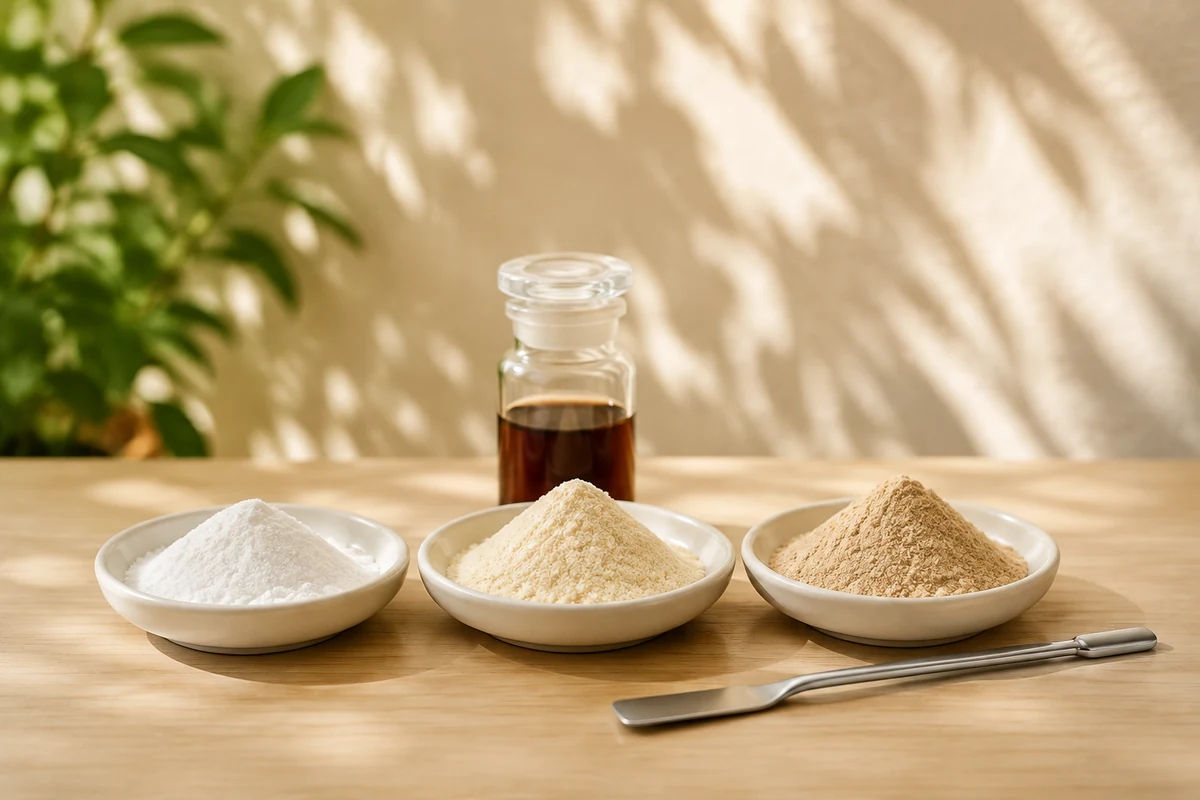
Selecting the carrier and setting the proportion This step considers three things together: the chemical characteristics of the extract, the final product format and the required active compound level. A powder going to a supplement manufacturer for tableting needs better flow properties than a powder for sachets. A powder for drinks must disperse in cold water without lumping, and a powder going to a cosmetics manufacturer has stricter requirements on colour and odour.
A small trial run first For any job we have not done before, we always carry out a small trial run first to find the right settings without risking the whole batch of raw material. The trial results show the liquid-to-powder conversion rate, the properties of the resulting powder and the amount of active compound remaining.
The production run We use the settings proven in the trial and take samples at intervals during the run to make sure the values stay consistent throughout production, not just at the start.
Powder testing and packing We measure moisture, flow properties and particle size, analyse the active compound content and test for microorganisms according to the criteria set by the Ministry of Public Health (Notification of the Ministry of Public Health No. 416 B.E. 2563, 2020), then pack the powder in moisture-resistant containers suited to the storage period you need.
What you need to prepare before using the service
The first thing is the liquid extract or solution, together with its solids content. If you do not know this value we can measure it, but knowing it in advance helps us estimate the price more accurately. This job has a minimum starting quantity per run, which we will tell you once we have assessed your job, because the system needs to run continuously for a while before it reaches a steady state.
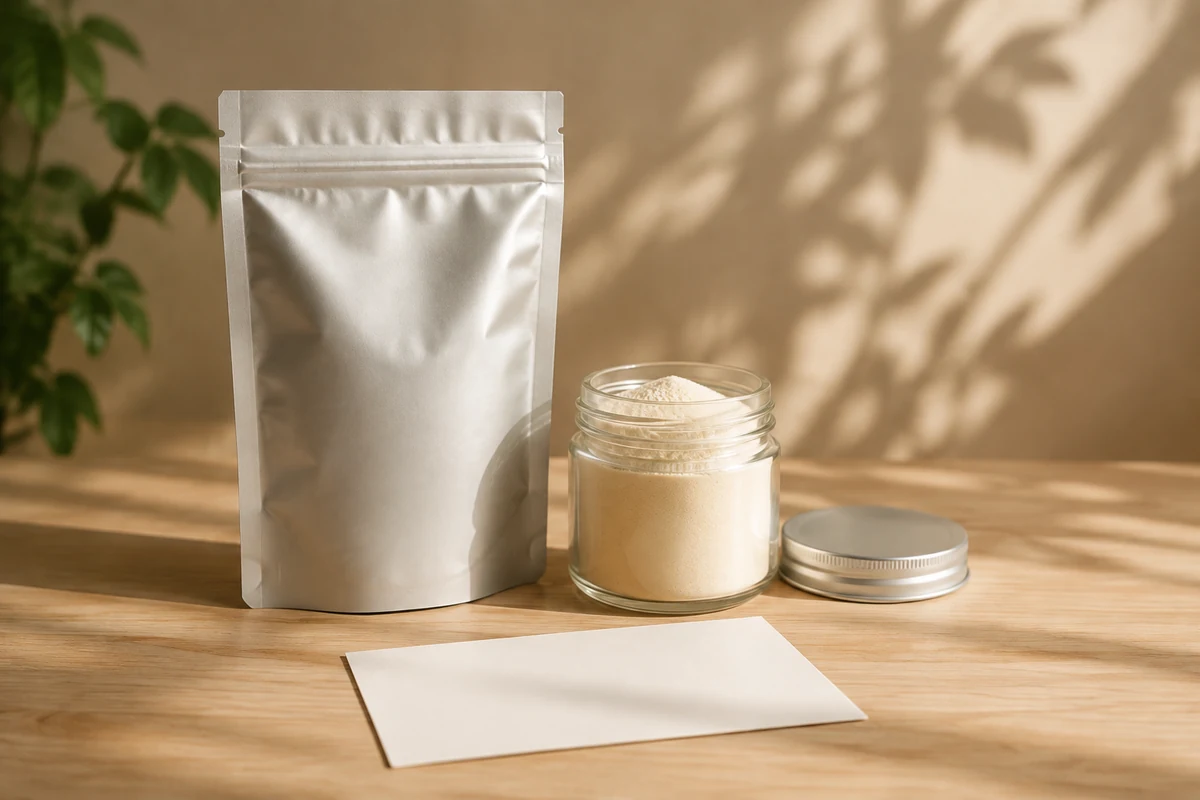
The second thing, which is just as important, is the final product format. Tell us whether the powder will become capsules, tablets, a drink powder or an ingredient in cosmetics, because this directly determines the carrier and the target particle size. Some clients have skipped this information and ended up with a powder that could not be used in the actual formula, even though every figure in the analysis passed.
In addition, you should tell us the active compound level required in the final powder if your downstream customer has a specification, and tell us any ingredient restrictions from the start, such as gluten-free, halal, or no corn-derived carriers. These restrictions rule out several carrier options, and finding out late makes them hard to resolve.
What you will receive
You will receive the extract as a dry powder, together with the actual liquid-to-powder conversion rate, a figure you can use straight away to calculate the cost of the next run, plus a certificate of analysis stating moisture, active compound content and microbiological results.
We always provide the carrier details and proportions used, because you need this information to write the ingredient label and the reviewing authority will ask to see it when you apply for approval. Finally, we give recommendations on storage and suitable packaging materials, because spray-dried powder absorbs moisture from the air faster than ordinary powders.
Frequently asked questions (FAQ)
Q: Why does the powder cake into lumps after two or three months in storage?
A: There are two main causes: the moisture content of the powder was too high at packing, or the packaging material did not provide enough moisture protection for the Thai climate. We check the moisture content of every batch before delivery and state it in the report, and we recommend packaging materials suited to the shelf life you need.
Q: How much active compound is lost during drying?
A: It varies by compound. Heat-stable compounds barely change, while heat-sensitive ones decrease somewhat. We take samples both before and after to report the actual figures to you rather than giving a rough estimate, because this number directly affects your formula calculations.
Q: How do I choose between spray drying and freeze drying?
A: It depends mainly on how heat-sensitive the compound is. If the compound tolerates heat, spray drying is more suitable because it is faster and the cost per kilogram is several times lower. But if the compound clearly breaks down when heated, such as probiotic microorganisms or enzymes that must retain their activity, freeze drying is the better choice. We always assess this for you first and will not recommend the more expensive method unless it is necessary.
Q: Can I send the powder straight on to a contract supplement manufacturer?
A: Yes. If you tell us the final format from the start, we will set the powder properties to match what that production line needs and send the batch documents the downstream manufacturer will ask for, including the certificate of analysis and the ingredient information.
Q: Can the dried powder be reformulated afterwards?
A: In some cases, for example by blending in more carrier to reduce the concentration. However, increasing the concentration after drying is not possible, so the target value should be clearly defined before starting.
Q: How many days does it take?
A: Jobs for which settings have already been established take the shortest time. A new material that needs a trial run first takes longer, and analysis time is counted separately. We state the number of working days for every stage in the quotation.
Next step
Send details of your extract and tell us what product the powder will become to [email protected] or LINE @zubbbiotech. We will propose a suitable carrier system, the expected active compound level in the final powder and a price range as quickly as possible. If you do not yet have an extract, we can provide extraction alongside in the same facility.
Contact us and request a quotation
Send us the details of your project via Contact us or LINE @zubbbiotech · Tel. +66 89 056 5651 · +66 97 297 1777 · Email [email protected]
References
- Notification of the Ministry of Public Health (No. 293) B.E. 2548 Re: Dietary supplements, as amended. (2006, February 2). Royal Thai Government Gazette, 123(Special Part 18 Ngor).
- Notification of the Ministry of Public Health (No. 416) B.E. 2563 Re: Prescribing quality or standards, criteria, conditions and methods for analysis of pathogenic microorganisms in food. (2020, October 9). Royal Thai Government Gazette, 137(Special Part 237 Ngor), 9.
- International Council for Harmonisation of Technical Requirements for Pharmaceuticals for Human Use. (2021). Impurities: Guideline for residual solvents Q3C(R8).