

Safety & Stability Testing Service
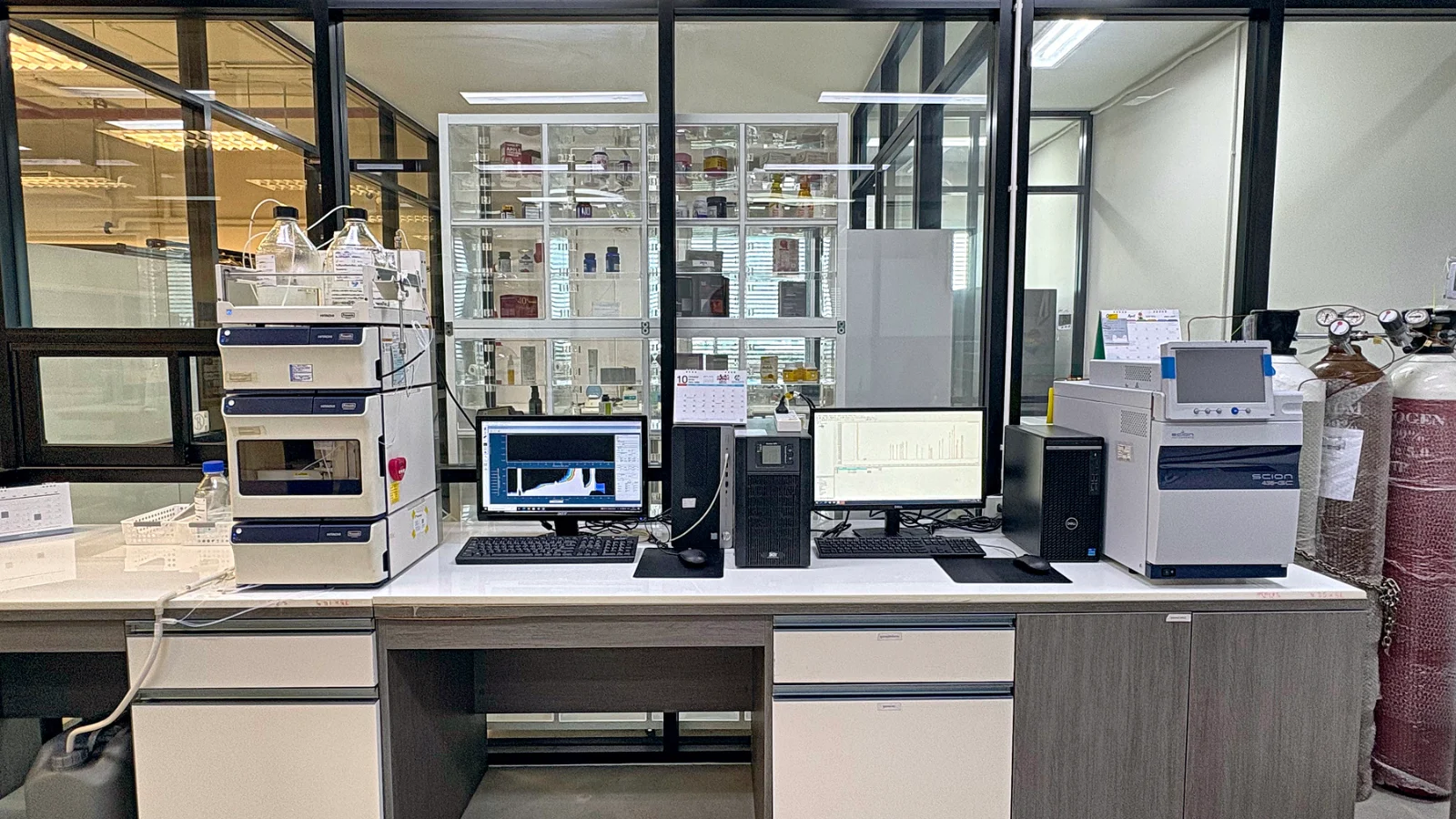
Test packages built around what you are about to do
Why browsing a lab’s test list does not help
If you have ever looked at a laboratory’s service page, you will have seen long lists of tests grouped by category: heavy metals, microbiology, pesticide residues, mycotoxins, food additives, each with dozens of sub-items.
This arrangement is correct from a technical point of view, but it does not help someone who has a decision to make, because the real question for a business is not “What can be tested?” but “What do I need to test?”
The result is two mistakes we see again and again. The first is testing too little, then discovering at submission that items are missing, having to retest and losing a whole round of time. The second is testing too much out of fear of missing something, and paying for tests nobody asks to see.
So we have organised this service around the situation you are facing, not around technical categories.
Package 1: Basic package for every raw material lot
Use it once your extract has been produced and needs accompanying documents before delivery to a customer or before going into storage.
This package covers microbiological testing, including total microbial count, yeasts and moulds, and the pathogens that the law requires to be not detected (Notification of the Ministry of Public Health (No. 416) B.E. 2563, 2020); the four main heavy metals, lead, arsenic, cadmium and mercury, for which international criteria are set for herbal raw materials (World Health Organization, 2007); moisture content, an indicator of shelf life and powder flow properties; and finally residual solvents where organic solvents were used in production.
This package should accompany every lot without exception, because it answers the question of whether the material is safe enough to pass on.
Estimated time: stated in the quotation according to the test package selected.
Package 2: Package for domestic regulatory submission
Use it when the end product is about to be submitted for approval. It builds on Package 1.
What it adds is the active compound content with the analytical method stated, a figure that must appear in the raw material quality specification. Next is comparison with the specifications in a citable standard text. For many Thai herbs, quality specifications are already set out in the Thai Herbal Pharmacopoeia (Department of Medical Sciences, 2021), and citing it gives the documents more weight than quoting analysis results on their own.
It also requires safety data on the substance with scientific references, and test results against the specific criteria for the product type, which differ between dietary supplements (Notification of the Ministry of Public Health (No. 293) B.E. 2548, 2006), cosmetics (Cosmetic Act B.E. 2558, 2015) and herbal products (Herbal Products Act B.E. 2562, 2019).
Estimated time: stated in the quotation according to the test package selected.
Package 3: Package for overseas buyers
Use it when an overseas buyer has contacted you, or when you are about to start exhibiting at international trade fairs.
This package builds on Package 2 with multi-residue pesticide testing, which European and Japanese importers check almost every time; mycotoxins, for which international criteria are set for agricultural raw materials (Codex Alimentarius Commission, 1995); and allergens according to the list set by the destination market.
What is often forgotten in this package is traceability documentation back to the growing source. It is not a test result, but it is a document corporate buyers always ask for before discussing price, so we include preparing it in the package.
Estimated time: stated in the quotation according to the test package selected.
Stability testing service
In the Thai market, the term stability is used almost exclusively for finished products, but for extract raw materials it is a different question.
For finished products the question is whether the cream will separate or the colour will change. For raw materials the question is whether the active compounds will still be present as stated on the Certificate of Analysis (COA) after the material has gone through transport, sat in the customer’s warehouse and waited months to enter the production line.
Accelerated testing stores samples at higher than normal temperature and humidity to assess degradation trends in a shorter time. It is used to decide quickly whether the chosen formula or packaging is heading in the right direction.
Real-time testing stores samples under actual use conditions and tests them at predetermined intervals. This is the most robust data for confirming the shelf life to be stated on documents. International guidelines set the conditions and sampling intervals for both types (International Council for Harmonisation of Technical Requirements for Pharmaceuticals for Human Use, 2003).
Packaging compatibility testing checks that the chosen container does not accelerate degradation and that no substances migrate from the container into the product. It is rarely done in Thailand, yet it is a common reason for shelf life turning out shorter than calculated.
Compounds that should be tested first are those that naturally degrade quickly: anthocyanins, carotenoids, vitamin C and oils high in unsaturated fatty acids. If your extract falls into this group, skipping stability testing means guessing the shelf life, a risk that can come back as a product recall.
Why having a laboratory within the group differs from sending samples out
Most extract facilities in Thailand send samples to external laboratories for testing, which is workable and not wrong in any way, but it has three limitations.
The first is time. Every time a sample leaves the facility, time is added, and when a result fails, looping back to fix it takes another round.
The second is flexibility. When a result looks questionable, asking an external lab to retest or change the analytical method means joining the queue again, whereas a lab within the same group can discuss it immediately.
The third is understanding of the work. A lab that knows how the compound was produced can interpret results more accurately and suggest which step an abnormal value is likely to have come from.
What you need to prepare
Samples in sufficient quantity for the number of planned sampling points. For stability work, samples for every time point must be set aside from the start, because more cannot be added along the way.
Information on actual storage and transport conditions, the shelf life you want to state, and the actual packaging to be used if you want compatibility testing. If the product will go on to a supplement contract manufacturer or a cosmetics factory, send us that factory’s requirements so we can match the package to them.
What you will receive
A results report for the selected package; trend graphs of active compound changes over time for stability work; a shelf-life recommendation together with the storage conditions the figure is based on; and recommendations for adjusting packaging if the results point to it as the cause.
When results fail: what to do and what not to do
Testing exists to find problems, not to pass. What separates manufacturers who know their work from those who are not yet ready is what happens on the day the results come back looking bad. The most common first reaction is to send the sample straight to another laboratory, hoping for an acceptable number. This is what you should not do, because picking the result you like from several does not change what is in the bag, and if this is examined later, it becomes a far more serious problem than the original result.
What you should do is first determine whether the problem lies in the sample, the analytical method or the production process. Retesting has its place, but it must be a retest of a retained sample from the same lot, by the same method, with a record of why it was retested, not moving from laboratory to laboratory until a satisfactory number appears. In many cases we have seen, the problem lay in how the sample was collected and shipped, not in the product.
If it is confirmed that the lot genuinely fails, the next question is which item it fails on, because each has a different solution. Active compound content below the criteria can often be resolved by blending with a higher-value lot in a calculated proportion, an accepted approach that must be recorded so it can be traced later. Microbial counts above the criteria can sometimes be resolved with further microbial reduction, but it must be assessed whether the active compounds can withstand it. Heavy metals above the criteria generally cannot be fixed at the extract level, and the solution lies back at the raw material source.
The most valuable thing a failed result provides is information on how to prevent it in the next lot. That is why we treat root-cause analysis as part of the service, not an add-on charged extra, because clients who know which step a problem came from have fewer problems the following year, and that is what makes a business relationship last.
Frequently asked questions (FAQ)
Q: Do I need to do all three packages?
A: No. Do whatever matches what is actually about to happen. Doing more in advance than necessary is a sunk cost, but not doing enough when you are about to submit is a more expensive delay. We help assess which package your situation requires.
Q: Does stability testing take a long time?
A: Accelerated testing takes much less time, but the results that best support documentation come from real-time testing, which takes as long as the shelf life you want to state. So start before it becomes urgent, not when a customer is already asking for the documents.
Q: What should I do if a test fails?
A: We analyse the cause with you, which usually lies in the raw material, the process or the packaging, and then plan the fix step by step rather than simply sending the results and leaving it there. In many cases the problem can be fixed upstream without changing the formula.
Q: Can I send samples from another manufacturer for testing?
A: Yes. We accept external samples, and many clients use this service to check raw materials before deciding to buy from a new supplier.
Q: Can the test results be used for a Thai FDA submission straight away?
A: They can support the submission for the raw material part. Documents for the finished product are the responsibility of the product manufacturer. We state clearly in a checklist which documents we issue and which you need to obtain yourself.
Next step
Tell us what you are about to do next, whether submitting documents, shipping to a customer or starting talks with overseas buyers, at [email protected] or LINE @zubbbiotech. We will put together a test package that fits that situation and come back to you as soon as possible with a quotation and timeline.
Contact us and request a quotation
Send us the details of your project via Contact us or LINE @zubbbiotech · Tel. +66 89 056 5651 · +66 97 297 1777 · Email [email protected]
References
- Department of Medical Sciences. (2021). Thai herbal pharmacopoeia 2021 . Bureau of Drug and Narcotic, Department of Medical Sciences.
- Notification of the Ministry of Public Health (No. 293) B.E. 2548 Re: Dietary supplements, as amended. (2006, February 2). Royal Thai Government Gazette, 123(Special Part 18 Ngor).
- Notification of the Ministry of Public Health (No. 416) B.E. 2563 Re: Prescribing quality or standards, criteria, conditions and methods for analysis of pathogenic microorganisms in food. (2020, October 9). Royal Thai Government Gazette, 137(Special Part 237 Ngor), 9.
- Herbal Products Act B.E. 2562. (2019, April 30). Royal Thai Government Gazette, 136(Part 56 Kor), 1–29.
- Cosmetic Act B.E. 2558. (2015, September 8). Royal Thai Government Gazette, 132(Part 86 Kor), 5–28.
- Codex Alimentarius Commission. (1995). General standard for contaminants and toxins in food and feed (CXS 193-1995). Food and Agriculture Organization of the United Nations & World Health Organization.
- International Council for Harmonisation of Technical Requirements for Pharmaceuticals for Human Use. (2003). Stability testing of new drug substances and products Q1A(R2).
- World Health Organization. (2007). WHO guidelines for assessing quality of herbal medicines with reference to contaminants and residues.