

Milling & Sieving Service
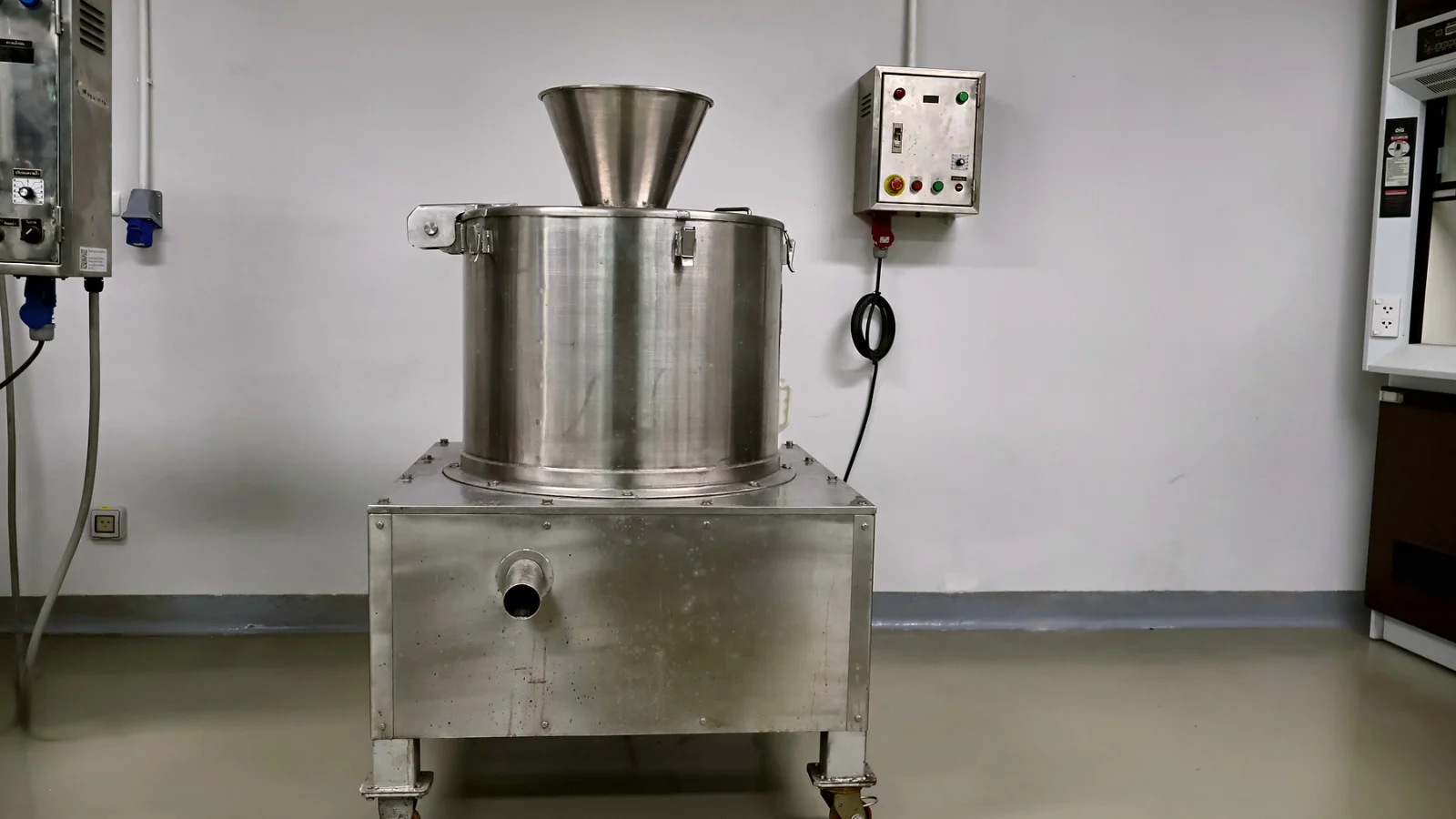
The right particle size is what keeps the production line running
The service that looks smallest, yet stops projects most often
Of all the services we offer, milling is the one clients usually think is the simplest, and it has the lowest price per kilogram.
In practice, however, particle size is one of the leading reasons raw materials are rejected by downstream manufacturers, even when every chemical test has passed.
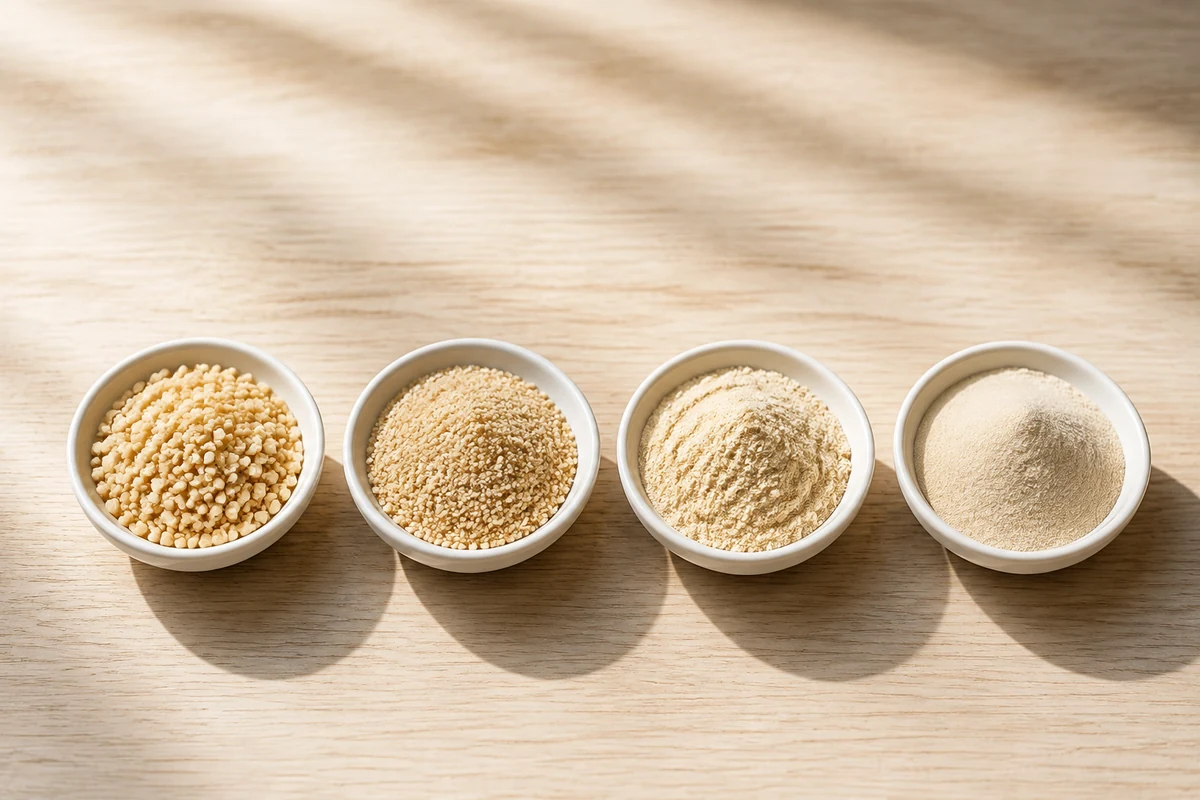
The reason is simple. Production-line machines are designed for powders with a certain flowability. Powder that is too coarse gives uneven capsule fill weights. Powder that is too fine becomes airborne, sticks to the machine walls and will not flow during filling. Powder with too wide a size distribution segregates during transport, so the top and bottom of the drum end up with different compositions.
So this service is not simply about making things smaller. It is about giving the powder properties that match the machine that will use it next.
What particle size affects
Flowability This is the first thing manufacturers look at. A free-flowing powder fills dies or capsules evenly, which means a consistent weight per unit and therefore an amount of active compound per unit that matches the label.
Dissolution rate Finer powder has a larger surface area, so it dissolves faster. For drink powders this is an advantage, but for powders that must stay stable in certain formulations it is a drawback.
Extraction efficiency For raw materials going into extraction, the right size lets the solvent reach everything without packing so tightly that filtration becomes difficult.
Stability Very fine powder has a large surface exposed to air, so it oxidises and absorbs moisture faster. For oxygen-sensitive compounds, milling finer than necessary shortens shelf life and gives nothing in return.
Mouthfeel For products that are drunk, powder that is too coarse feels gritty, which affects repeat purchases more than many people think.
Heat during milling is often forgotten
Milling generates heat through friction, and the finer the grind, the more heat it produces.
For ordinary raw materials this is not a problem. But for extracts containing essential oils, heat drives off volatile compounds during milling, so the assay after milling is lower than before. And for heat-sensitive compounds, the structure may change without anyone noticing, because nobody analyses before and after milling.
We control heat during milling by running the machine in cycles, cooling, or cryogenic milling where needed, and we run before-and-after comparative analysis on jobs where the compounds are at risk.
Size distribution matters more than the average
This is what separates good milling from ordinary milling.
Two batches of powder with the same average size can behave completely differently. One may have particles of almost uniform size, while the other has a mix of large granules and fine dust, even though the averages are the same.
The second batch causes three problems: it segregates during transport, it flows unevenly in the machine, and it gives different assay results depending on which part of the drum the sample is taken from.
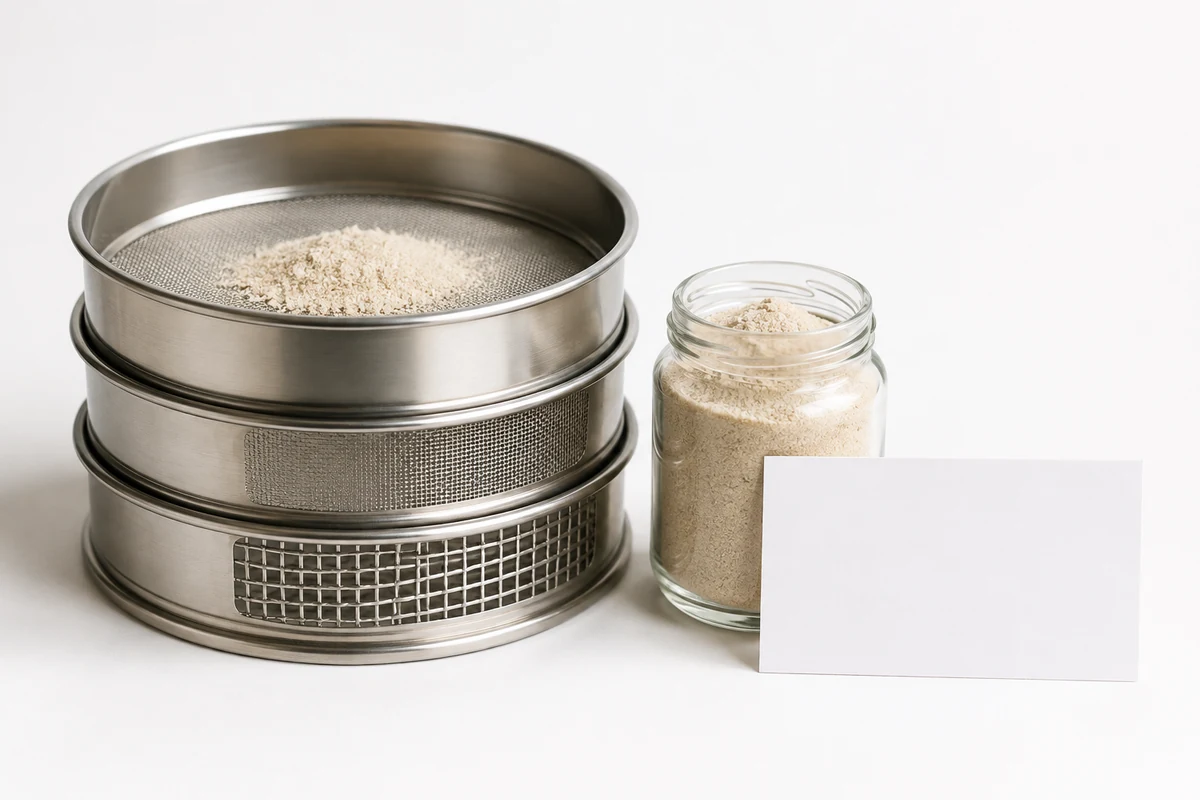
We therefore report both the average size and the distribution, and use sieving to remove the over-coarse and over-fine fractions, giving a powder within the narrow size range agreed.
Services we offer
Milling raw materials before extraction For dried herbs, seeds, bark and roots, choosing a size suited to the extraction method that follows.
Milling extract powders after drying Adjusting powder from the drying stage to the size required by the downstream production line.
Sieving and size classification Selecting only the size range required. Over-coarse material is returned for re-milling, and over-fine material is set aside for suitable uses.
Low-temperature milling For raw materials high in oil or containing heat-sensitive compounds.
Blending for homogeneity After milling and sieving, the whole lot is blended to a uniform composition, which is the step that makes the analysis reliable wherever the sample is taken.
What you need to prepare
The raw material or extract powder, with moisture data, because raw material that is too moist forms lumps instead of powder when milled. If the moisture is above the limit, it needs drying first, which we can provide as a continuous service.
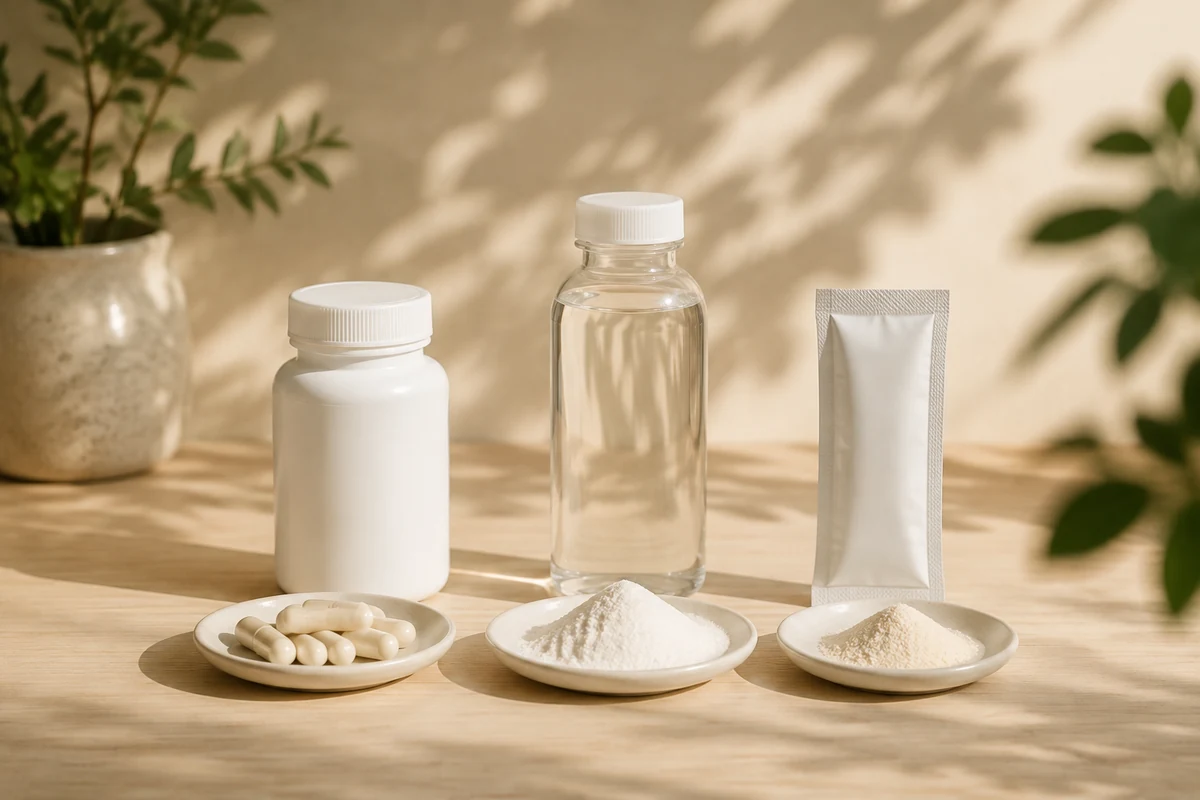
The minimum quantity per run, which we confirm after assessing the job, and, most importantly, the target size and the downstream production line. Tell us which machine the powder will go into: tableting, capsule filling, sachet filling or blending into a liquid formulation, because each machine needs different properties.
If the downstream supplement manufacturer has already specified the size as a number, it is best to send that to us directly.
What you receive
Powder at the specified size, with a report on mean particle size and distribution, moisture after milling, assay results for the active compound before and after milling on jobs where the compound is at risk from heat, and packaging recommendations suited to the particle size achieved.
The right size for each destination
To show why we always ask where the powder is going next, here are the different requirements of each production line.
Tableting Needs the best flowability of all formats, because the powder has to fill the die completely and evenly in a fraction of a second. Powder that is too fine will not flow in, and powder with a wide size distribution gives uneven tablet weights.
Capsule filling Needs both good flow and the right density, because a capsule has a limited volume. Powder that is too fluffy will fill to a lower weight than required.
Drink powders Need a powder that disperses quickly in water without clumping, which conflicts in some respects with tableting requirements, because finer powder dissolves faster but flows less well.
Blending into liquid formulations Needs a powder fine enough not to settle and not to feel gritty in the product.
Raw material before extraction Needs a size that lets the solvent reach everything without packing so tightly that filtration becomes difficult, which is often much coarser than people expect.
When one lot of powder has to go to several destinations, we recommend splitting it into two specifications from the start, rather than looking for a middle size that suits none of them.
Cross-contamination needs to be agreed in advance
Milling is the step with the highest risk of cross-contamination in the production line, because powder spreads easily and lodges in the crevices of the machine.
We have a cleaning procedure between jobs with records kept every time. For jobs with strict requirements, such as allergen-free, halal or no animal-derived ingredients, we schedule the run as the first one after cleaning and issue a confirming document. Let us know when you request a quotation so we can plan the run.
Documents and data that should come back with your goods
Milling and sieving is seen as ordinary contract work, so many clients receive only the goods with no data attached. This becomes a problem when they need to explain things to a downstream buyer, or reproduce the same result again.
The first set of data you should receive is the particle size distribution, not just a statement that it passed a certain mesh size, because two lots that pass the same sieve can have very different distributions, and the distribution is what determines flow behaviour in the filling machine, fill-weight uniformity per capsule and dissolution speed.
The second set is the input weight and output weight, with the proportion lost. Every milling process has losses, from powder left in the machine, from over-coarse material screened out and from moisture evaporating during milling. This figure should be in the documents so you can calculate the cost per kilogram of usable material, not of the material sent in.
The third set is the conditions used: machine type, speed, number of passes, screen size and the maximum temperature measured during the run. This data is what lets you reorder and receive the same material, and it is what auditors will ask to see once you start running a quality system in earnest.
The last set is the cleaning record before your job started, stating what the previous job was, how the equipment was cleaned and how cleanliness was verified. For clients making allergen-free products or products with religious requirements, this record is not an extra but a condition that must be in place before the job is accepted.
Frequently asked questions (FAQ)
Q: Is the finest grind always the best?
A: No. Powder that is too fine becomes airborne, flows poorly, absorbs moisture quickly and deteriorates quickly. The best size is the one that suits the downstream use, which is why we always ask what the powder is for.
Q: Why is the assay lower after milling than before?
A: The most common cause is volatile compounds lost to heat during milling. The next is sampling from a point where the composition is not uniform. We address both by controlling heat and blending to homogeneity before sampling.
Q: I already have my own raw material. Can I just pay for milling?
A: Yes, and it is an arrangement clients use regularly. The raw material must first pass incoming inspection for moisture and foreign matter, because both affect powder quality and the safety of the machine.
Q: Will different raw materials milled in the same machine contaminate each other?
A: We have a cleaning procedure between jobs with records kept. Clients with strict cross-contamination requirements, such as allergen-free work, should tell us at the outset so we can schedule the production run appropriately.
Q: How many days does it take?
A: It is the shortest of all our services, and it is often done in the same run as drying or extraction. We state the number of working days per run in the quotation.
Next step
Tell us which machine the powder will go into downstream, at [email protected] or LINE @zubbbiotech. We will propose a suitable size and distribution range, along with an indicative price, as quickly as possible. If your downstream manufacturer has already sent a specification, simply forward it to us.
Contact us and request a quotation
Send us the details of your project via Contact us or LINE @zubbbiotech · Tel. +66 89 056 5651 · +66 97 297 1777 · Email [email protected]