

Method Development & Validation Service
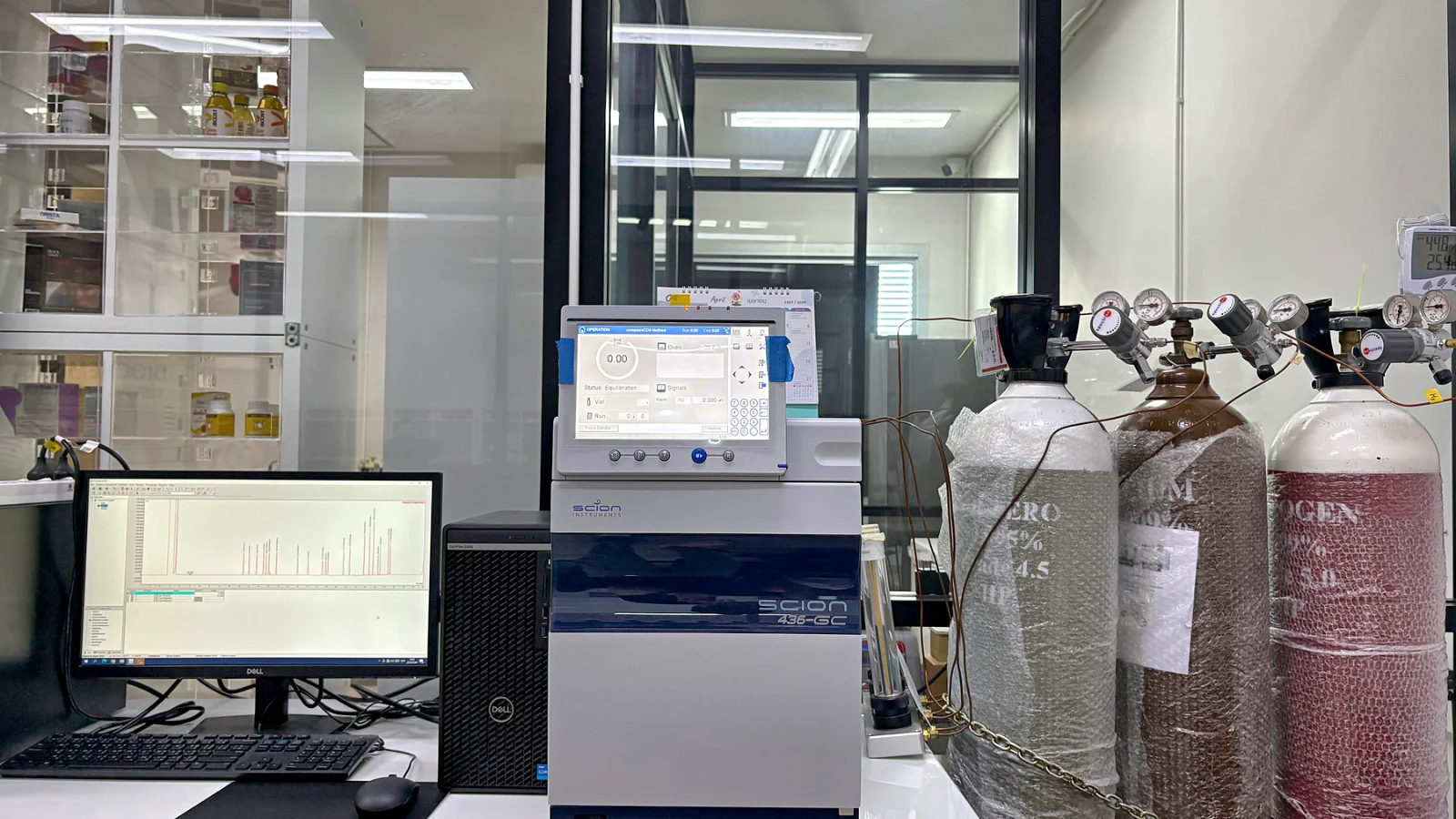
When your compound has no accepted method of measurement
The problem that appears once everything else is ready
Suppose you have developed an extract from a Thai plant that nobody has produced commercially before. The research behind it is solid, the market is interested and the production process is stable.
Then you hit a question you cannot answer: how do you tell customers how much active compound the extract contains, when there is no standard analytical method for that compound?
This is not a minor technical issue. It blocks regulatory submissions, sales to manufacturers and export, because every party wants a figure backed by a recognised method, not a figure produced by a method someone made up.
This service solves that problem by developing an analytical method and proving that it gives reliable results.
Why the analytical method matters as much as the number
There is one sentence we always say to clients: a number without a defined method has no meaning.
The reason lies in the nature of plant analysis. A single extract contains hundreds of compounds mixed together, and different analytical methods “see” different compounds. A broad method counts closely related compounds as well, giving a higher number, while a specific method measures only the target compound, giving a lower number that is closer to the truth.
The commercial consequence is that two suppliers may offer the same extract, one stating 40% and the other 20%, even though the quality is the same. They are simply using different methods.
Having a validated analytical method is therefore not just a technical matter. It is a commercial tool that lets you explain why your figures are more reliable.
When you need this service
Compounds with no method in the standard pharmacopoeias This is the main case. Many Thai herbs already have quality specifications and analytical methods set out in the Thai Herbal Pharmacopoeia (Department of Medical Sciences, 2021), which can be used directly. Plants not yet covered by the pharmacopoeia need a method developed for them.
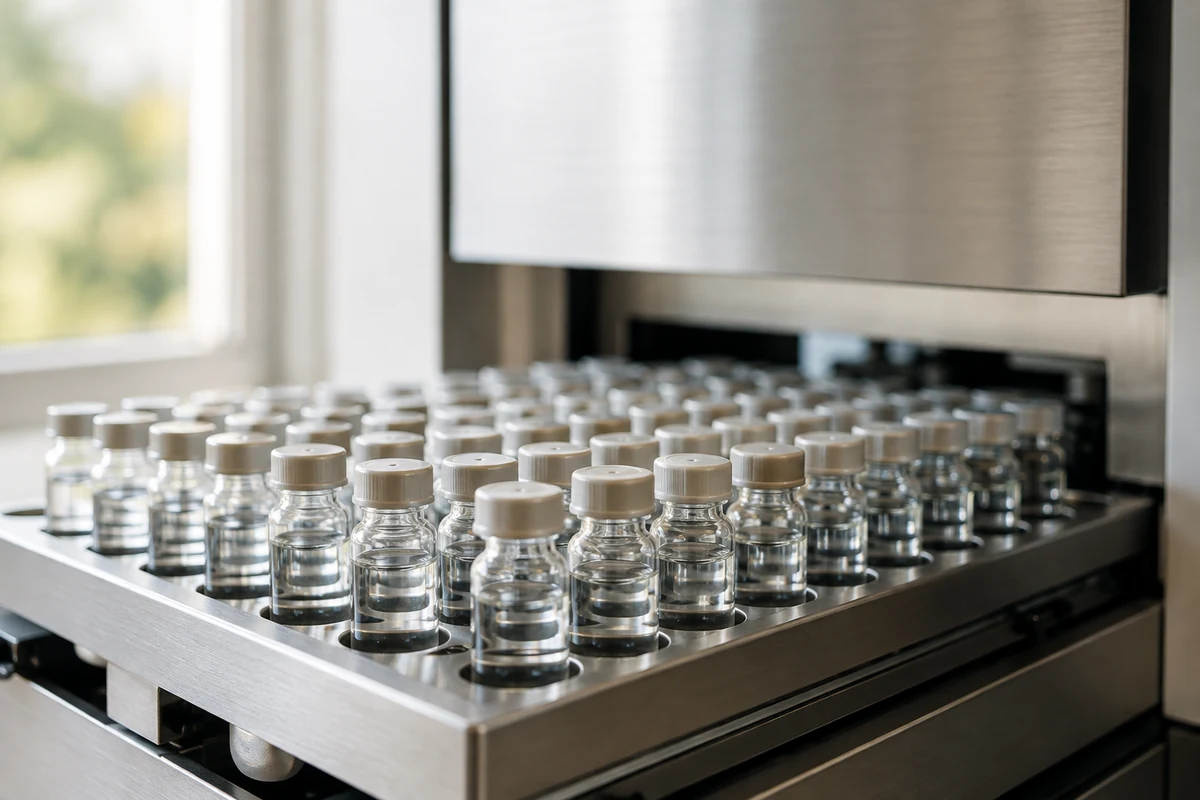
Compounds that already have a method, but one that does not work for your sample This happens more often than people expect. Pharmacopoeial methods are designed for crude raw materials, but your sample may be an extract containing a carrier, or a finished product with other ingredients that interfere with the measurement.
When an overseas buyer asks for method validation documents Importers in many markets ask to see method validation documents before they accept the figures on a Certificate of Analysis (COA).
When you need to apply for approval of a new product that uses a compound with no supporting analytical method.
What method validation involves
Proving that an analytical method actually works is done by examining several performance characteristics in line with international guidelines (International Council for Harmonisation of Technical Requirements for Pharmaceuticals for Human Use, 2023). Each characteristic answers a different question.
Specificity Does the method really measure the target compound, or does it pick up other compounds too? This is tested by checking whether other substances in the sample interfere with the measurement. It is the most important characteristic for plant extracts, because they contain so many other compounds.
Linearity As the concentration rises, does the measured signal rise in proportion, and over what concentration range?
Accuracy How close is the measured value to the true value? This is tested by adding a known amount of reference standard and measuring how much is recovered.
Precision Do repeated measurements give similar values, both when repeated on the same day and when carried out on different days or by different analysts?
Limits of detection and quantitation What is the lowest amount of the compound the method can detect, and the lowest amount it can quantify accurately? This is very important for compounds present at low levels.
Robustness If the analytical conditions change slightly, for example a different room temperature or a different instrument, are the results still the same? This matters when you need to hand the method over to another laboratory.
How we work
Review of existing information We start by searching for an existing method that could be used, both in standard pharmacopoeias and in published research, because adapting an existing method costs far less than developing a new one from scratch. If we find a method you can use straight away without commissioning development, we will tell you.
Selection of marker compounds We choose the compounds that will represent the quality of the extract. They should be backed by research data, measurable and accepted by the market.
Sourcing reference standards This step is often overlooked and takes a long time. Reference standards for some compounds are rare and expensive, and in some cases the compound has to be isolated and purified in-house to serve as the reference material.
Developing the analytical conditions We adjust the conditions experimentally until the target compound is clearly separated from other compounds and can be measured consistently.
Validation We test every characteristic described above and record all raw data.
Documentation We prepare a validation report and a method document that can be referenced, with the raw data attached.
What you receive
An analytical method document detailing the procedure thoroughly enough for another laboratory to follow, which is essential when your downstream customer wants to run the tests themselves.
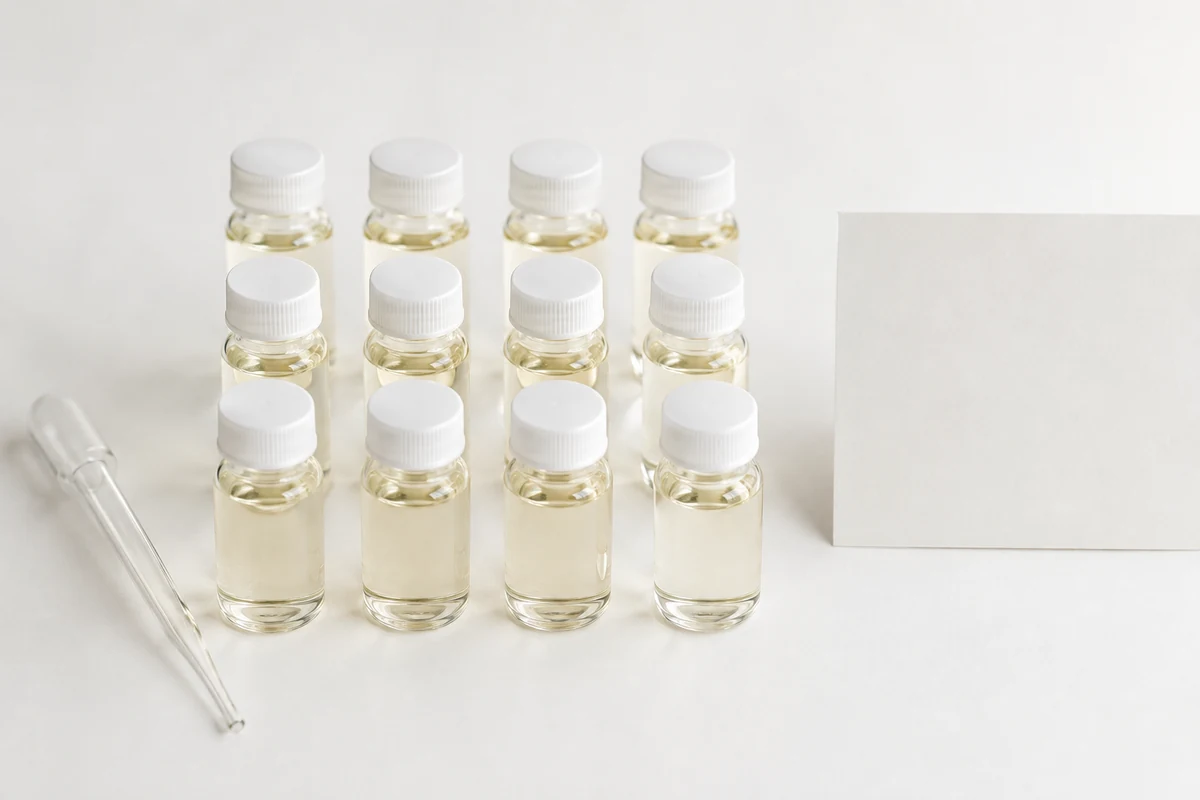
A validation report with raw data and the results for every characteristic, which you can attach to regulatory submissions and use to answer buyers’ questions.
A clearly defined scope of use stating which sample types and which concentration range the method applies to, which prevents the method from being used outside the range it was proven for.
Method transfer If you want another laboratory to use the method, we help transfer it and check that the laboratory obtains matching results.
What you need to prepare
Enough extract for several rounds of testing, which is considerably more than a routine analysis needs; information on the target compound you want to measure and why you chose it; any research data or methods others have used, if available; and the intended use, whether for domestic submissions, export or internal quality control, because the depth of validation differs.
Three situations in which clients come to us about this
Situation one: the buyer will not accept the figures in the documents A client sent an extract with its analysis results to an overseas buyer and was told the buyer first wanted to see the method validation documents. The client did not have them, because the laboratory they were using had never prepared them.
Situation two: results from different laboratories do not match A client sent the same sample to two laboratories and got very different values, leaving them unsure which to trust and what to put on the COA. In such cases the cause is usually a difference in method, and the solution is to define clearly which method is the company’s standard.
Situation three: developing a new compound with no way to measure it yet This is the case where the service should start at the very beginning. Without a reliable method of measurement, no experiment in the research project can tell whether differences in results are real or simply instrument error.
What makes this kind of project take longer
So that you can plan realistically, we tell you in advance what usually makes this type of work slower than expected.
Sourcing reference standards This is the number one cause. Reference standards for some rarely used compounds have to be ordered from abroad, with long waiting times. In some cases they are not sold at all and have to be isolated and purified in-house as reference material, which is a sub-project in its own right.
Finding conditions that separate the target compound from interfering compounds Plant extracts contain hundreds of compounds, and some have properties so close to the target compound that they are hard to separate. This step is experimental work with no shortcuts.
Robustness testing The method must be tested under many varied conditions, and each variation requires a new analytical run.
We divide the project into phases with regular progress reports, so you can see where the work stands and make decisions if you need to adjust the scope.
The difference between a method for production control and a method for regulatory submission
One assumption that costs many projects unnecessary time is the belief that a fully validated analytical method is needed from day one. In reality, analytical work has two levels with different purposes, and choosing the right level saves both time and money.
The first level is the method used for internal process control. Its purpose is to show whether this lot differs from the previous one and which way the trend is heading. Absolute accuracy is not the most important thing; consistency and speed matter more, because it is used on every lot and the result must arrive in time to correct anything. A method at this level should be cheap and simple enough to run often.
The second level is the method used to issue documents to outside parties, including regulatory submissions, documents for buyers and use in disputes. A method at this level must be proven to give correct and reproducible results according to internationally accepted guidelines (International Council for Harmonisation of Technical Requirements for Pharmaceuticals for Human Use, 2023), which takes many times more time and resources.
We see two opposite mistakes. The first is investing in a second-level method before knowing whether the product will sell, which spends money too early. The second is carrying on with a first-level method and then using its results in a submission, which risks rejection and having to start the whole package again.
Our recommended approach is to develop a working first-level method first, but design it so that it can be taken up to the second level, choosing techniques and conditions that will not need to be discarded later. Full validation is then funded once it is clear the project will go ahead. Planning this way means the large spend happens when there is enough information to decide.
Frequently asked questions (FAQ)
Q: How long does it take?
A: It is the longest of all our services, depending on how difficult the compound is and whether reference standards are available. It should therefore start early in the project, not when the submission deadline is approaching.
Q: Is it expensive?
A: It costs much more than a routine analysis, because it is development work requiring many rounds of testing. However, it is a one-off cost that serves you for good, and it is what allows your extract to be sold in markets that require documentation.
Q: If a pharmacopoeial method already exists, do I still need this?
A: If the pharmacopoeial method works directly with your sample, no new development is needed. You should still carry out verification testing to confirm that the method actually works with your sample, which is a much smaller and cheaper job. We will assess which case applies to you first.
Q: Who owns the method once it is developed?
A: You do, as agreed in the contract. We prepare the documents in a form you can use with other laboratories, and we do not use a method developed for one client for any other client.
Q: Is this necessary for every product?
A: No. If the compound you use already has a standard method, which covers almost all commonly traded extracts, this service is not needed. It is only necessary when you are working with a genuinely new compound, which is also what gives your product a point of difference that is hard to copy.
Next step
Send information on the target compound and an extract sample to [email protected] or LINE @zubbbiotech. We will first check whether a usable method already exists and tell you plainly if you do not need to commission new development, then propose a scope of work and an indicative price as quickly as possible.
Contact us and request a quotation
Send us the details of your project via Contact us or LINE @zubbbiotech · Tel. +66 89 056 5651 · +66 97 297 1777 · Email [email protected]
References
- Department of Medical Sciences. (2021). Thai herbal pharmacopoeia 2021 . Bureau of Drug and Narcotic, Department of Medical Sciences.
- International Council for Harmonisation of Technical Requirements for Pharmaceuticals for Human Use. (2023). Validation of analytical procedures Q2(R2).