

Freeze Drying Service
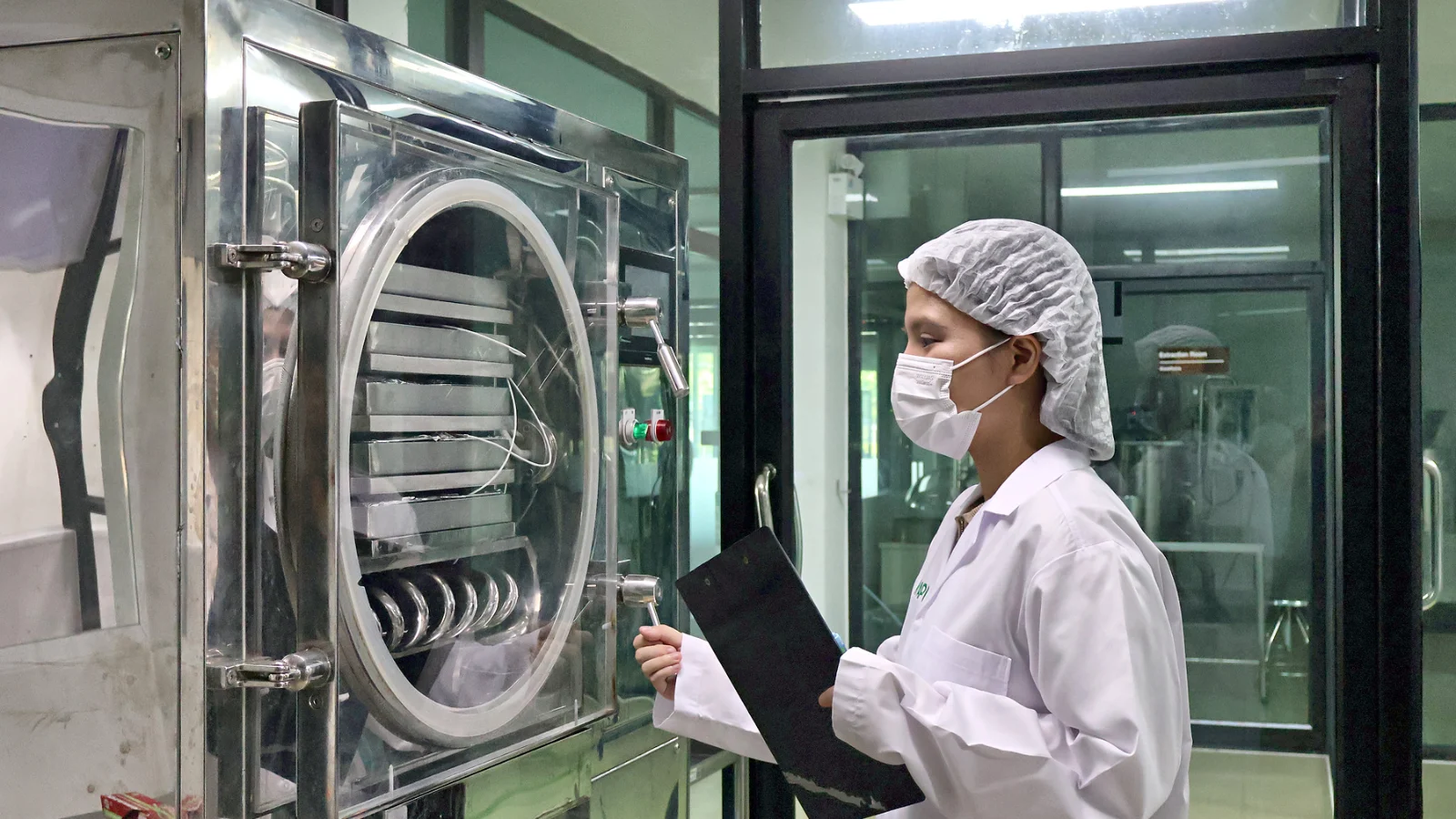
When heat destroys what you paid for
A word Thai consumers trust, and the question manufacturers should ask first
Among the technical terms Thai consumers know and trust, freeze-dried ranks near the top. Data from Google’s keyword planning tool shows that the term is searched for in Thailand thousands to tens of thousands of times a month, and that it is highly competitive, which means many brands are willing to pay to appear in front of this audience.
For manufacturers, however, the question to ask is not whether freeze drying is better than other methods, because in terms of quality the answer is already clear. The right question is whether your raw material or compound really needs this method, because the cost per kilogram is several times higher than other drying methods, and in many cases the difference gained is not worth the extra paid.
This article explains how the process works, which raw materials are genuinely worth this method, which ones we will advise you to handle with a more economical method, and what you need to prepare if you decide to use the service.
How freeze drying works
Drying generally means applying heat until the water in the raw material evaporates. The problem is that heat does not only remove water. It also changes the structure of some compound groups, alters colour and odour, and shrinks the material so that it does not recover its shape.
Freeze drying avoids this problem by changing the path the water takes. Instead of letting water change from liquid to vapour, the process first freezes the raw material until the water turns into ice crystals, then lowers the pressure in the chamber to a very low level and applies controlled, low heat. At such low pressure, the ice sublimes directly into vapour without passing through the liquid state.
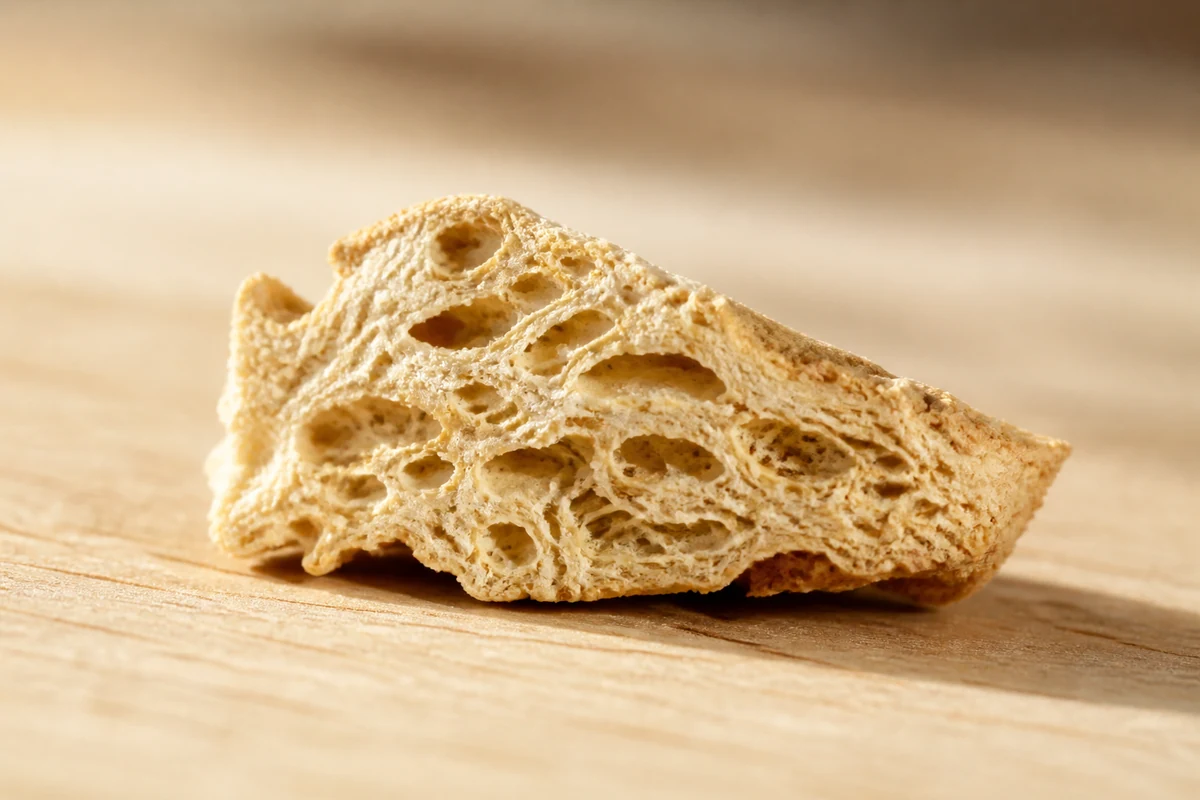
As a result, the water disappears from where it used to be and leaves tiny voids in its place. The structure of the material keeps its original shape without shrinking, colour and odour stay close to the fresh material, and when water is added back it flows into the original voids, so the material rehydrates well.
The process has two phases. The first is Primary Drying, which removes most of the ice and takes the longest part of the cycle. The second is Secondary Drying, which removes water still bound to the molecular structure. This phase determines how low the final moisture content goes and has a direct effect on shelf life.
Why it costs so much more than other methods
Price is the question we are asked most often, and the answer lies in a cost structure that is completely different from other drying methods.
Spray drying is a continuous process: liquid flows in and powder flows out for as long as the machine runs. Its cost is therefore tied mainly to the quantity of raw material, and the more you produce, the lower the cost per kilogram.
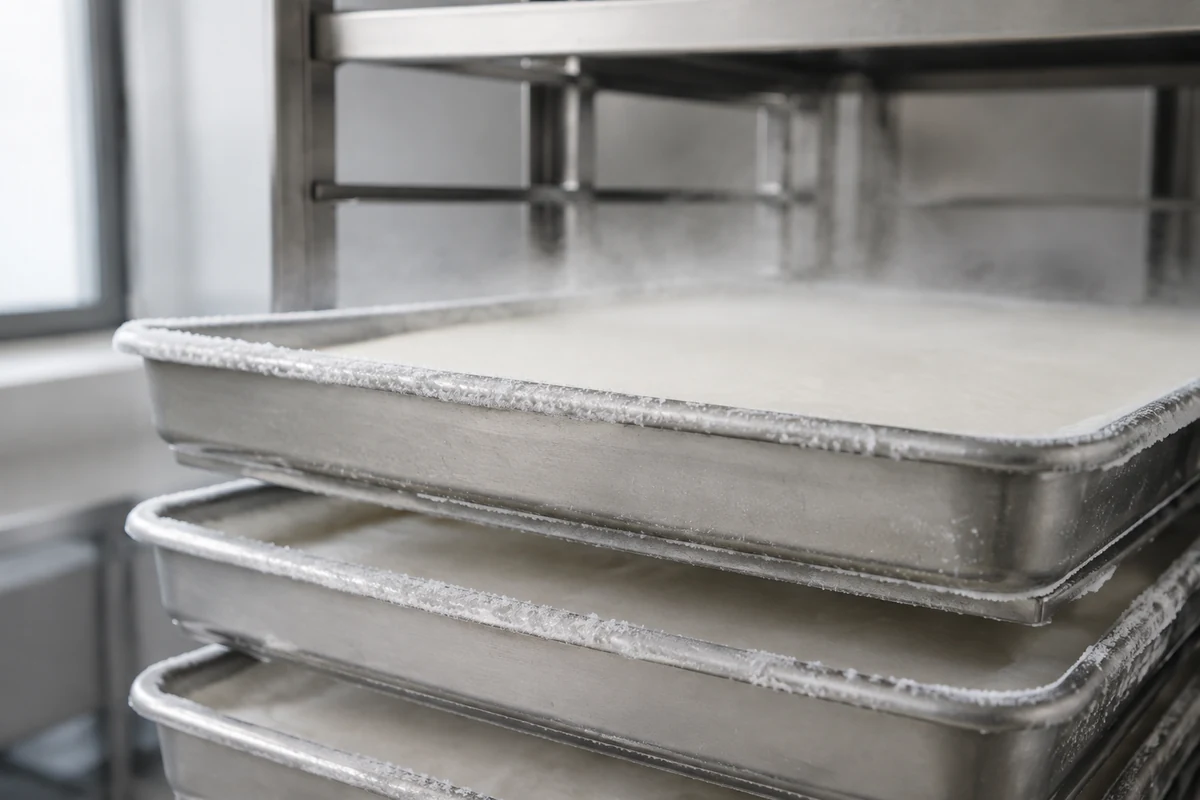
Freeze drying is a batch process. The raw material is loaded into the chamber, the chamber is sealed and the cycle runs to the end, which takes from several hours to a day. Throughout that time the refrigeration system and vacuum pump must run continuously, so the cost is tied to machine time, not the quantity of raw material.
The practical consequence is that a cycle loaded below full capacity has a very high cost per kilogram, which is why this service has a minimum quantity per cycle. This is not to exclude small customers, but to keep the quoted price reasonable for both sides.
Another factor is the thickness of the raw material. The thicker it is, the longer the deep ice takes to sublime, and the cycle grows longer accordingly. Slicing or spreading the material thinly and evenly is therefore a cost saving you can contribute before you even send it to us.
Which raw materials and compound groups are worth this method
Natural anthocyanin pigments This is the first group we recommend for freeze drying. These are the purple-red pigments in fruits such as mulberry and blueberry and in Riceberry rice. When heated, their colour turns visibly brown, which is a problem both for consumers who judge quality by colour and for analysis results, which will show a loss of active compounds.
Heat-sensitive vitamins especially vitamin C and some B vitamins. Heat drying lowers the measured value enough to affect the amount declared on the label, which must comply with the Ministry of Public Health notification on dietary supplements (Notification of the Ministry of Public Health No. 293 B.E. 2548, 2006). For products that state vitamin content, the difference here is worth the added cost.
Probiotic microorganisms This is the clearest case, because what is being sold is the number of live cells. Heat kills microorganisms directly, so there is no alternative to a method that avoids high heat.
Enzymes and proteins that must retain their activity The three-dimensional structure of proteins is easily damaged by heat, and when the structure changes, its biological function is lost too, even if the measured amount of protein stays the same.
Whole fruits and herbs For products sold on appearance, such as crispy fruit or herbs in tea bags where the pieces must be clearly visible, freeze drying gives results other methods cannot, because the structure does not collapse.
Cases where we will tell you it is not needed
There are many groups of raw materials for which customers ask for freeze drying because they want the term on the label, even though technically it does not deliver extra benefit in proportion to the price paid.
The first group is herbal extracts that have already been heated during extraction. If your extract has already been boiled or extracted at high temperature, the heat-sensitive compounds were already damaged at that stage, so freeze drying at the drying stage does not protect anything that is still left.
The second group is the many polyphenols that are naturally heat-stable. Spray drying gives similar results at a much lower price.
The third group is powders that will be heated again later in the downstream process, for example powders that will become an ingredient in a product that must be heat-sterilised at the downstream supplement factory.
We always assess this before starting, and if we find it is not worthwhile, we will tell you plainly and suggest a more suitable method, because taking on a job where the customer pays a high price without getting the expected benefit damages a long-term relationship far more than turning down a job once.
Our working process
The entire process follows good hygiene practice for food production and good manufacturing practice guidelines for herbal products (Codex Alimentarius Commission, 2022; World Health Organization, 2007).
Preparation and loading We start by slicing or spreading the raw material to an even thickness. This step matters more than you might think, because thicker pieces dry more slowly. If the cycle ends on schedule, the thick pieces will still hold moisture and become the points that deteriorate first, shortening the shelf life of the whole lot.
Freezing The freezing rate determines the size of the ice crystals, and crystal size determines the porous structure of the final product. Fast freezing gives small crystals and a fine texture; slow freezing gives large crystals, which dry faster but leave a coarser structure. We choose the rate to suit what you need from the product.
Primary drying We lower the pressure and apply controlled heat, watching that the material’s temperature does not rise above the point at which the structure collapses, a mistake that makes the product come out sticky and shrunken instead of porous.
Secondary drying We remove the water bound to the structure until the target moisture content is reached. This step is shorter than the first but cannot be skipped, because it determines shelf life.
Milling and packing For jobs that need a powder, we mill under humidity-controlled conditions and pack immediately, because freeze-dried products absorb moisture from the air very quickly. Leaving them open in an ordinary room for just a few minutes can change the moisture content.
What you need to prepare
Fresh raw materials must arrive chilled or frozen, with the harvest date, because the time between harvest and freezing affects quality more than any step we can take afterwards. For liquid extracts, please tell us the solids content so we can estimate the conversion rate to dry product.
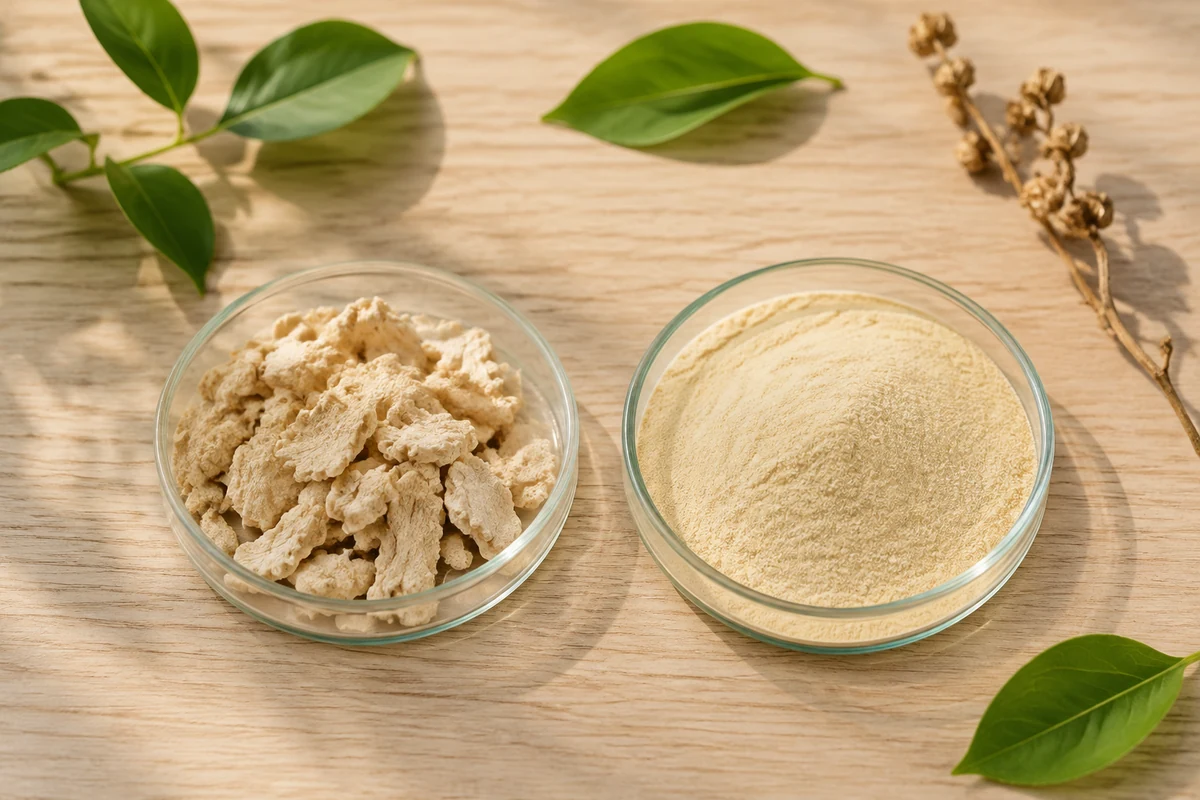
We will tell you the minimum starting quantity per cycle after assessing the job. Please specify the form you want to receive, whether sheets, pieces or milled powder, and the target moisture content if your downstream customer has set one. If this product will be passed on to a supplement contract manufacturer or a cosmetics factory, send us that factory’s requirements from the start.
What you will receive
The freeze-dried product in the agreed form, with a certificate of analysis stating moisture, active compound content and microbiological results against the criteria set by the Ministry of Public Health notification (Notification of the Ministry of Public Health No. 416 B.E. 2563, 2020).
We always include the conversion rate from fresh raw material to dry product, because it is the figure you need to calculate the unit cost of the finished product, and it varies greatly between raw materials.
Finally, packing advice, which is especially important for freeze-dried products, because the porous structure that is the advantage of this method is also what makes them absorb moisture quickly. Choosing the wrong packaging material will make the quality you paid for disappear within a few weeks.
Frequently asked questions (FAQ)
Q: How long does each cycle take?
A: It is counted in hours per cycle, depending on the thickness of the raw material and the amount of water to be removed. We state the estimated number of hours in the quotation. The process cannot be rushed without affecting quality, because adding heat to speed it up makes the structure collapse, which is exactly what you are paying to avoid in the first place.
Q: How long does the product keep?
A: Much longer than fresh raw material, if the moisture content is low enough and it is packed with appropriate protection from moisture and light. We provide an estimated shelf life together with the storage conditions that figure is based on. If you need a verifiable figure for the label, we recommend running stability testing to international guidelines alongside (International Council for Harmonisation of Technical Requirements for Pharmaceuticals for Human Use, 2003).
Q: What percentage of active compounds remains compared with the fresh material?
A: It varies by compound, but generally significantly more remains than with heat-based methods. We analyse both before and after to report actual figures, rather than using general reference values in place of results from your lot.
Q: Can the product be sent straight on to a supplement contract manufacturer (Original Equipment Manufacturer, OEM)?
A: Yes. If you tell us the format and requirements of the downstream factory from the start, we will set the moisture content and particle size to match what that production line can accept, together with the lot documentation the factory will ask for.
Q: Can a trial lot be run first?
A: Yes, and it is strongly recommended for raw materials that have not been through this process before, so that you know the conversion rate, product properties and actual time required before putting the whole lot of raw material through the process.
Q: Can it be used with high-oil raw materials?
A: It does not work as well as for other groups, because oil does not freeze solid and does not sublime, so high-oil raw materials remain sticky after processing. In this case, encapsulation combined with spray drying should be considered instead.
Next step
Send the type of raw material, the quantity you have and the intended use to [email protected] or LINE @zubbbiotech. We will tell you plainly whether freeze drying is worthwhile for your job or whether another method gives similar results at a lower price, and come back to you with a price range and timeline as soon as possible.
Contact us and request a quotation
Send us the details of your project at Contact us or LINE @zubbbiotech · Tel. +66 89 056 5651 · +66 97 297 1777 · Email [email protected]
References
- Notification of the Ministry of Public Health (No. 293) B.E. 2548 Re: Dietary supplements, as amended. (2006, February 2). Royal Thai Government Gazette, 123(Special Part 18 Ngor).
- Notification of the Ministry of Public Health (No. 416) B.E. 2563 Re: Prescribing quality or standards, criteria, conditions and methods for analysis of pathogenic microorganisms in food. (2020, October 9). Royal Thai Government Gazette, 137(Special Part 237 Ngor), 9.
- Codex Alimentarius Commission. (2022). General principles of food hygiene (CXC 1-1969, Rev. 2020, Amended 2022). Food and Agriculture Organization of the United Nations & World Health Organization.
- International Council for Harmonisation of Technical Requirements for Pharmaceuticals for Human Use. (2003). Stability testing of new drug substances and products Q1A(R2).
- World Health Organization. (2007). WHO guidelines on good manufacturing practices (GMP) for herbal medicines.