

Extract Standardization Service
Make the next lot the same as this one
The problem that arrives after you have started selling
The problem brand owners run into most often does not happen at the start. It happens when they order the second production run.
The first lot goes smoothly, the product goes on sale and customers respond well. Then, when a new batch of raw material is ordered, the colour is not the same, the odour has changed, or the analysis results do not match the figure on labels that have already been printed. In some cases it is serious enough that the downstream supplement factory rejects the raw material, because the formula it set up cannot work with the new value.
This is not a coincidence and it is not any one person’s fault. It is the nature of plant raw materials. Extracts from the same species grown on different plots, harvested in different seasons, or even from the same plant in different years, contain different amounts of active compounds.
Standardization is the process that keeps that variation within an acceptable range, and it is what separates industrial-grade extracts from the extracts commonly sold on the market.
How does a standardized extract differ from an ordinary extract?
The difference lies in what the specification guarantees.
An ordinary extract can only tell you which plant and which part it is made from and the extraction ratio used, for example turmeric extract 10:1. This tells you it has been concentrated tenfold by weight, but not whether what has been concentrated is the compound you want or other substances that came along with it.
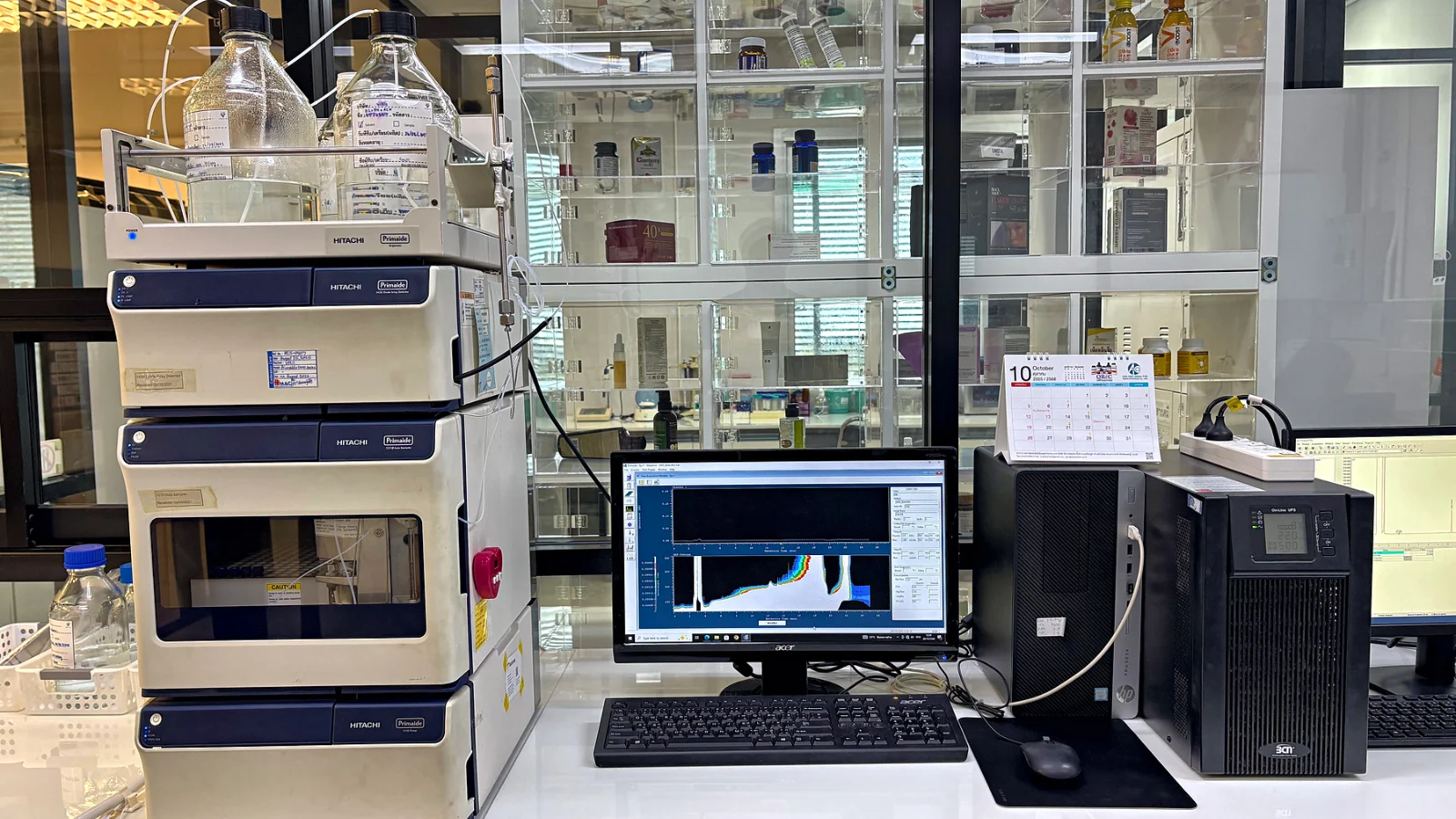
A standardized extract also states which active compound is present and in what amount, which method was used to analyse it, and that the amount is controlled within the same range in every lot. For example, turmeric extract containing not less than 95% curcuminoids, analysed by High Performance Liquid Chromatography (HPLC).
The latter is what supplement contract manufacturers and overseas buyers want, because they need this figure to calculate formulas, set the amount per serving and write labels. If the figure swings, the whole formula has to be recalculated every time, which no factory wants to do.
Why extracts with the same name can differ in price several times over
This is the question we hear most often, and the answer has three layers.
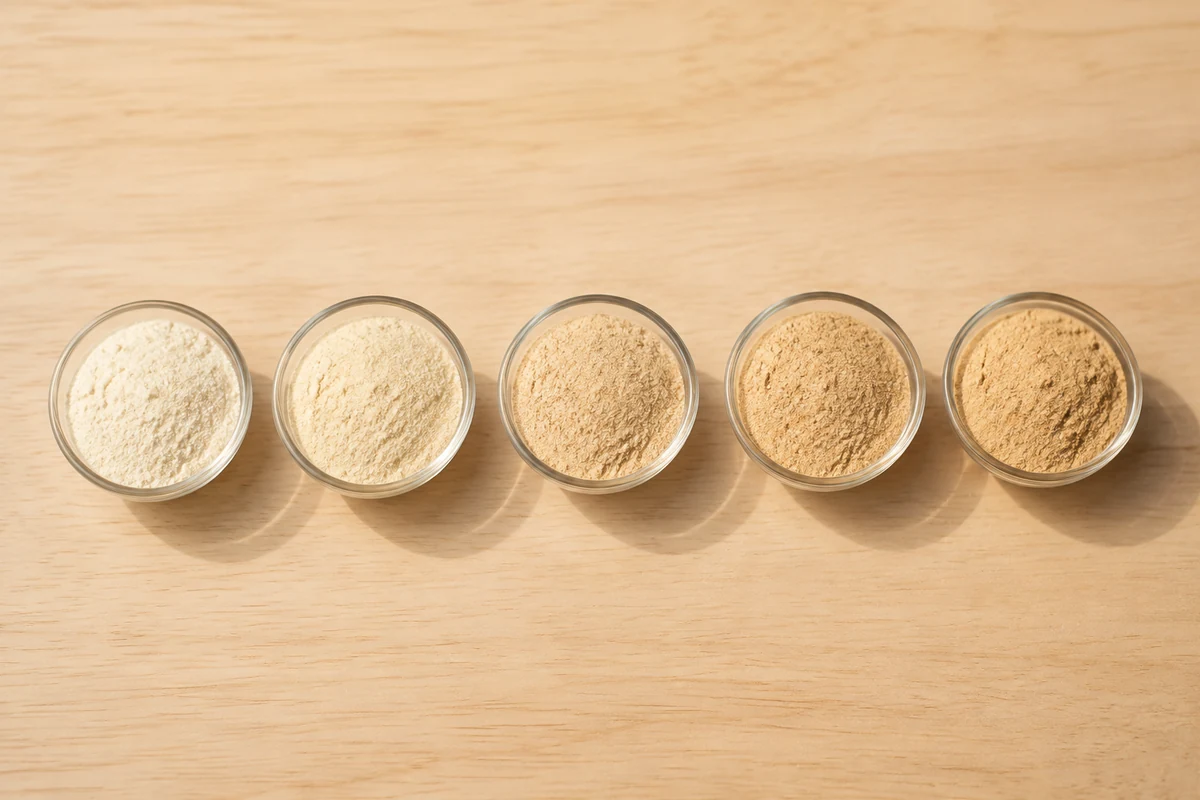
The first layer is the active compound percentage. The higher it is, the more purification steps are needed, and at every separation step part of the target compound is lost with the discarded fraction, so costs rise non-linearly.
The second layer is the analytical method used to confirm the value. More accurate and more specific methods cost more but give more reliable figures. Some sellers choose methods that also measure closely related compounds, making the figure look higher than it really is.
The third layer is guaranteed consistency. A producer that controls everything from the growing plot, has a lot-blending system and holds data from many past runs naturally has higher costs than one that sells whatever it gets each time.
Comparing prices by looking only at the plant name and extraction ratio is therefore meaningless. We recommend comparing on the same specification and the same analytical method, and checking whether the seller guarantees a value range.
Our working process
Defining the marker compound This is the first step, and the one that determines everything that follows. We select the compound to be used as the control marker based on standard compendia, research supporting the use, and the requirements of the destination market. For many Thai herbs, quality specifications and analytical methods are already set out in the Thai Herbal Pharmacopoeia, which we use as a reference standard so that results can be compared with other producers (Department of Medical Sciences, 2021).
Defining the analytical method This must be stated clearly and written into every document, because different methods give different values. If your downstream customer uses a different method, we will tell you in advance that the figure they measure may differ from ours, and agree from the start which method will be the reference.
Adjusting the value to specification This can be done in two ways. The first is further purification to raise the value. The second is blending with an agreed carrier to bring the value down into the specified range. The second sounds strange to people outside the industry, but it is a necessary standard method, because a good specification is a range, not a minimum. A product whose value is above the range can also cause problems for the downstream formula.
Lot blending This is the main tool for controlling consistency. We combine lots with different values in calculated proportions to reach the same target value. Every lot used in a blend must always pass safety criteria and have complete documentation first.
Confirming the result We analyse again after adjustment, then issue a certificate of analysis together with a specification document that can be attached to a contract.
What you will receive
An extract whose active compound value is within the agreed range, with a certificate of analysis for each lot that states the analytical method for every value.
The most valuable thing in this service is the Specification Sheet which states which values this extract must have and within what ranges. It can be attached as an annex to a sales contract, used as acceptance criteria and used to support regulatory applications. This document is what turns your relationship with a buyer from a one-off sale into a long-term relationship with clear criteria for both sides.
In addition, you will receive a consistency control plan for your next orders, which sets out how raw materials must be prepared and how many months in advance to order to catch the season that gives the highest active compound content.
What you need to prepare
The starting extract, or have us produce it for you from the start. The latter gives better control, because we can choose the raw material and extraction method to suit the target value from the outset.
The marker compound and the percentage range you need. If you do not know yet, we will help define them based on the standards used in your market. This is included in the assessment stage and not charged separately.
The requirements of your downstream customer or the export country, because some markets specify a different marker compound from the one used in Thailand, and any restrictions on usable carriers, for example allergen-free, halal or no corn-derived ingredients.
The added cost, compared with what you save
The question that always follows once we finish explaining this is how much more a standardized extract costs. The honest answer is that it certainly costs more, because there are extra analysis steps, extra adjustment and some raw material that has to be rejected because it cannot be brought within the criteria. But comparing price per kilogram alone is the comparison that most often leads to the wrong decision. What should be compared is the cost per unit of active compound that actually reaches the consumer.

Think of it this way. If your formula needs a certain amount of active compound per capsule, and a non-standardized extract swings across a wide range, you have two options. The first is to dose high enough that even the lowest-value lot still passes, which means that for high-value lots you pay far more than necessary. The second is to dose at the average and accept the risk that some lots will be lower than declared on the label, which is a risk you should never take when the label is something the law can check.
Calculated on this basis, the difference in price per kilogram usually shrinks to much less than you expected, and in many cases the standardized extract turns out to be cheaper per unit of active compound, because you do not need to overdose.
There is also another set of costs that does not appear in the quotation but always appears in a brand’s second year: the cost of changing the formula every time the raw material lot changes, the cost of re-analysis to confirm the new formula still achieves the same value, the cost of regular consumers feeling that this lot is not the same as the last, and in the worst case, the cost of a product recall when a regulator’s test results do not match the label.
So we usually recommend that customers decide this with a single question: how many years do you intend to keep selling this product? If the answer is a one-off, an ordinary extract with complete documentation is enough. But if the answer is several years, and you intend it to be a core product of the brand, paying the difference from the first lot is the cheapest long-term peace of mind you can buy.
Frequently asked questions (FAQ)
Q: Does lot blending reduce quality?
A: No. If every lot used in the blend passes safety criteria and has complete documentation, lot blending is a standard method for controlling consistency in every industry that uses natural raw materials. What you must take care of is being able to record which sub-lots make up the blended lot, so it can be traced back if a problem arises.
Q: Is a higher percentage always better?
A: Not always. A higher value comes at a cost that rises non-linearly, and some formulas have solubility, taste or stability constraints that make an excessively high value harder to use. We help you set the value that suits your product, not the highest value achievable.
Q: Is the stated value on a dry basis or an as-is basis?
A: This must be clear to both sides, because it is the point that causes disputes most often. We always state the calculation basis in our documents, and recommend that you check whether the other sellers you are comparing prices with use the same basis.
Q: Can the specification be made to match what a supplement contract manufacturer (Original Equipment Manufacturer, OEM) requires?
A: Yes. Send us the factory’s requirements and we will assess what can be done within what price range. If some requirements are not technically achievable, we will tell you plainly and propose the closest alternative.
Q: Can efficacy claims be based on the standardized value?
A: The standardized value can be used to describe composition, but claims about effects on the body must be supported by research and stay within the legal framework for the product category (Herbal Products Act B.E. 2562, 2019).
Q: How long does it take?
A: It depends on whether further purification or lot blending is needed, with confirmatory analysis counted separately. We state the number of working days in the quotation.
Next step
Send the specification your downstream customer requires, or tell us which market you will sell to, to [email protected] or LINE @zubbbiotech. We will propose the marker compound, a suitable value range, a consistency control approach and a price range as soon as possible.
Contact us and request a quotation
Send us the details of your project at Contact us or LINE @zubbbiotech · Tel. +66 89 056 5651 · +66 97 297 1777 · Email [email protected]
References
- Department of Medical Sciences. (2021). Thai herbal pharmacopoeia 2021 [in Thai]. Bureau of Drug and Narcotic, Department of Medical Sciences.
- Herbal Products Act B.E. 2562. (2019, April 30). Royal Thai Government Gazette, 136(Part 56 Kor), 1–29.