

Assay Analysis & COA Service
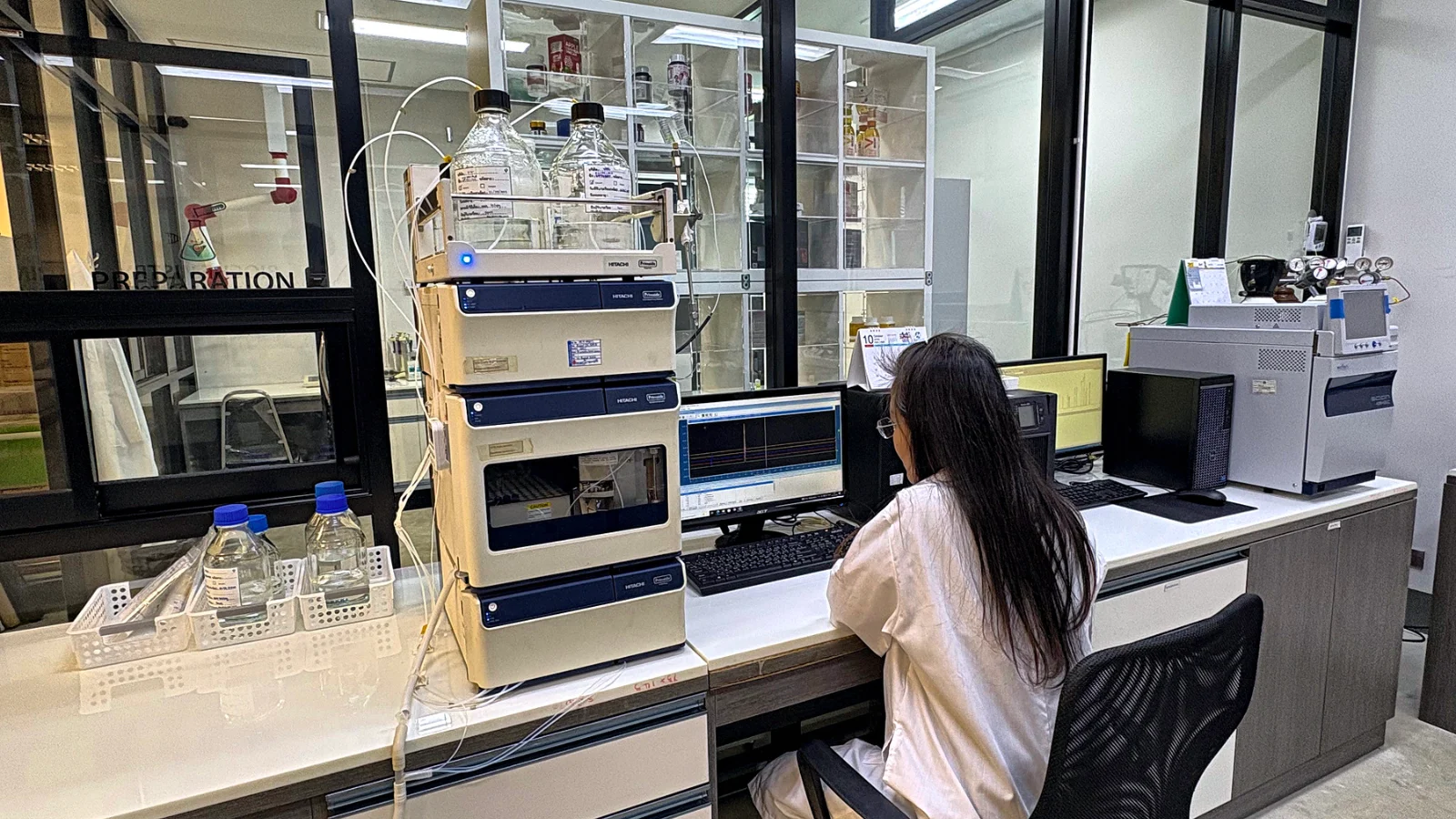
The document that decides whether your product can be sold
A document everyone has, but few know how to read
An analysis report, or Certificate of Analysis (COA), is the document that accompanies every lot of extract. It is the first thing corporate buyers ask to see before deciding, and it must be attached every time you apply for a licence or export.
But from our conversations with brand owners, we find that many people receive this document and file it without reading it. Some do not know what the numbers in it mean, some do not know when a missing item will become a problem, and some compare extract prices from two suppliers without checking whether both figures come from the same analytical method.
This service does not just give you numbers. It explains what each line means and how you should use it, because a document you cannot read is a document you cannot negotiate with.
What an extract COA should contain
Scientific name and plant part used This is the first line to check. The Thai names of many plants can refer to different species, which often causes disputes between buyers and sellers. The scientific name is therefore the only reliable confirmation, and the part of the plant used must also be stated, because the leaves, roots and fruit of the same plant contain different key compounds in different amounts. A COA that gives only a trade name without a scientific name is a warning sign worth noting.
Key compound content and analytical method This is the heart of the document, and the two parts must always be read together. Different analytical methods can give significantly different values, because some methods measure only the target compound while others also include closely related compounds. Comparing figures from two suppliers without looking at the method is therefore meaningless. Another point to ask is whether the value is calculated on a dry basis or on a basis that includes moisture, which is one of the most common causes of disputes.
Extraction ratio and solvent used This tells you how many times more concentrated the extract is by weight and which system it was produced with. Solvent information affects licence applications in some markets and affects claims that a product is natural.
Moisture This is a line buyers often skip, but anyone who works in tableting knows immediately that it matters. Powdered extracts with moisture above the limit clump, flow poorly in filling machines and degrade faster than they should.
Residual solvents Always required when organic solvents are used in production. Acceptable values follow international guidelines (International Council for Harmonisation of Technical Requirements for Pharmaceuticals for Human Use, 2021), and it is an item almost every overseas buyer checks.
Heavy metals Usually four are reported: lead, arsenic, cadmium and mercury. Some plants accumulate more heavy metals from the soil than usual, so this line is directly related to which plot the raw material came from, and there are international guidelines that clearly set out what should be tested in herbal raw materials (World Health Organization, 2007).
Microorganisms Covers total microbial count, yeasts and moulds, and pathogens that must not be detected, according to the limits Thai law sets for food (Notification of the Ministry of Public Health No. 416 B.E. 2563, 2020). If the end product will not be heated again, this line matters even more.
Lot number and date These must match what is on the drum or bag you actually received. If they do not match, this document does not certify this batch, and you should ask for a new one immediately.
Two things a COA does not tell you
It does not tell you the compound will give the effect you hope for. A COA certifies chemical composition, not effects on the body. Efficacy claims must be based on research and stay within what the law allows for the product category, not based on a COA. This misunderstanding leads a number of brands to write label text that goes beyond what is allowed.
It does not tell you the next lot will be the same. Natural extracts vary with the season and growing area. A single COA certifies only that lot. If you need consistency, you must specify it as a quality specification in the contract and use an extract standardisation service alongside.
Analysis services we offer
Key compound assay We choose the method to suit the compound group and state the method used against every value. For herbs that already have quality specifications in the Thai Herbal Pharmacopoeia, we use the method set out in the pharmacopoeia as the reference (Department of Medical Sciences, 2021), so the results can be compared fairly with other manufacturers.
Analysis to confirm specifications before purchase For when you are about to buy raw materials or extracts from another supplier and want to check whether the goods really match what they state. This service is the most cost-effective negotiating tool compared with the losses from accepting goods that are off-specification.
Lot-to-lot comparative analysis To check the consistency of the manufacturer you currently use, or as supporting data when negotiating a contract renewal.
Analysis to the buyer’s list Send us the specifications your buyer or destination factory has sent you, and we put together a test panel that matches what they require, instead of testing first and then finding items are missing.
What you need to prepare
A sample in the minimum quantity per test item, which we will tell you based on the items chosen. You should tell us the plant name and extraction method used, because these determine which analytical method is appropriate.
Specify the items you want tested, or send the end buyer’s specifications for us to put a panel together, and tell us the purpose of the document: a domestic licence application, export, or internal use, because the report format and required items differ by purpose.
If the sample will be passed on to a supplement contract manufacturer or a cosmetics manufacturer, tell us the factory’s name or send their specifications too, because each factory has different mandatory items.
What you will receive
A lot-by-lot analysis report stating the analytical method against every value, with an explanation of the results in practical language rather than just a table of numbers, and advice on which items should be added if you plan to expand your market or export in the future.
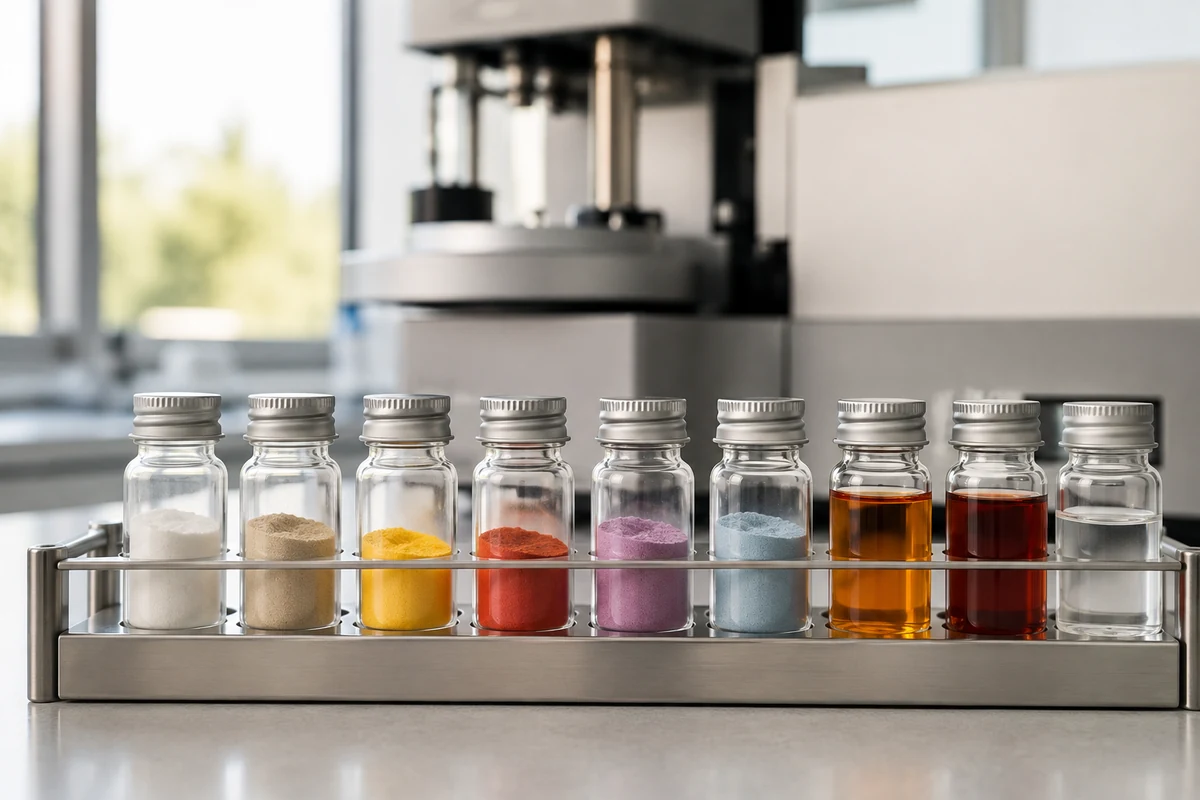
For customers who order analysis on an ongoing basis, we prepare a summary of value trends between lots, so you can see whether the upstream manufacturer’s quality is stable or drifting. This is data you can use to make decisions about raw material sources before problems arise.
Seven questions to ask before accepting a COA
A document that looks good does not necessarily mean the goods are good, and a document that looks ordinary may come from a more rigorous process. The way to tell them apart is to ask every supplier the same set of questions and see who can answer straight away and who has to go away and find out.
First question: is this document for the lot that will be sent to me, or is it a sample certificate from another lot? There is only one acceptable answer: the lot number on the document matches the lot number on the bag delivered. If the supplier sends a COA before knowing which lot will be produced for you, that is a reference certificate, not a certificate for the goods you will receive.
Second question: what method was used to measure this key compound figure? And the third, which must always be asked alongside it: is the value calculated on a dry basis or on a basis that includes moisture? These two questions explain price differences that seem unreasonable better than any other.
Fourth question: who carried out the analysis, the manufacturer’s own in-house laboratory or an external laboratory accredited for competence to an international standard (International Organization for Standardization, 2017)? Both can be used in different contexts, but you should know what you are holding, especially when you have to pass this document on to overseas buyers.
Fifth question: how long after the production date was the analysis done? Microbial results from an analysis several months after production and results from an analysis immediately after production do not tell the same story. Sixth question: are there any items in the agreed specification that do not appear on this document? Items that quietly disappear are often the ones with unflattering results.
Seventh question: if I sent a sample from this same bag to another laboratory for re-analysis, by how many percent would you expect the figure to differ? This question sounds like a challenge, but a competent manufacturer will answer it comfortably, because they know the variability of the method they use. Answering “it cannot differ at all” is the most worrying answer of all.
Frequently asked questions (FAQ)
Q: Do I need a new COA for every lot?
A: Yes, because it is a lot-specific certificate. Using an old certificate for a new batch is both a legal and a business risk if a problem arises and cannot be traced back.
Q: Can I request additional tests later?
A: Only for items for which a retained sample is still available. Some items require samples to be taken during production, so you should tell us the items you need when you place the production order, not when the goods are about to ship.
Q: Why do analysis results from different labs not match?
A: The most common cause is using different analytical methods, followed by calculating on different moisture bases, and sampling from different points in the same batch. We always state both the method and the calculation basis in the document so results can be compared.
Q: Can a COA certify a compound’s efficacy?
A: No. A COA certifies composition only. Efficacy claims must be based on research and stay within the legal framework for the product category; for example, herbal products are governed by their own specific law (Herbal Products Act B.E. 2562, 2019).
Q: How many days does it take?
A: It depends on the items tested. We always state the timeline in the quotation and let you know in advance if any items need to be sent on to a specialist laboratory.
Q: I did not buy the extract from Zubb Biotech. Can I send it just for analysis?
A: Yes. We analyse samples from outside sources and do not use customer data for any other purpose. Analysis to check other suppliers is a service customers use regularly.
Next step
Send the items you want tested, or the end buyer’s specifications, to [email protected] or LINE @zubbbiotech. We will put together a test panel that fits your purpose and come back with a quotation and timeline as quickly as possible. If you would like to see a sample COA with the customer’s name removed before deciding, just ask.
Contact us and request a quotation
Send us the details of your project via Contact us or LINE @zubbbiotech · Tel. +66 89 056 5651 · +66 97 297 1777 · Email [email protected]
References
- Department of Medical Sciences. (2021). Thai herbal pharmacopoeia 2021 [in Thai]. Bureau of Drug and Narcotic, Department of Medical Sciences.
- Notification of the Ministry of Public Health (No. 416) B.E. 2563 Re: Prescribing quality or standards, criteria, conditions and methods for analysis of pathogenic microorganisms in food. (2020, October 9). Royal Thai Government Gazette, 137(Special Part 237 Ngor), 9.
- Herbal Products Act B.E. 2562. (2019, April 30). Royal Thai Government Gazette, 136(Part 56 Kor), 1–29.
- International Council for Harmonisation of Technical Requirements for Pharmaceuticals for Human Use. (2021). Impurities: Guideline for residual solvents Q3C(R8).
- International Organization for Standardization. (2017). General requirements for the competence of testing and calibration laboratories (ISO/IEC 17025:2017).
- World Health Organization. (2007). WHO guidelines for assessing quality of herbal medicines with reference to contaminants and residues.